What the human research shows
The clearest case on this site of evidence being borrowed across products. The long-term human observations that get cited for epitalon were mostly done with Epithalamin, a bovine pineal extract from the same institute. The synthetic tetrapeptide has cell and mouse data behind it, and one uncontrolled human series.
Evidence profile0–5
- Metabolic & weight—0.0
- Cardiovascular—0.0
- Muscle & growth—0.0
- Healing & repair—0.0
- Neuro & sleepD0.0
- Immune & inflammation—0.0
- Sexual & hormonal—0.0
- Skin & appearance—0.0
- Ageing & longevityD0.0
| Outcome | Grade | Effect size | Human studies | Where the evidence comes from |
|---|---|---|---|---|
| Lifespan / mortality | DNo human evidence | Not measurable | Uncontrolled, single group | A 12–15-year observational follow-up of elderly patients from one institute reported lower mortality with Epithalamin (the extract) plus thymus extract. No randomisation, no blinding, and not the synthetic peptide.1 |
| Telomerase activation | DNo human evidence | Not measurable | Cell culture only | Telomerase activity and telomere lengthening reported in cultured human fibroblasts. Never measured in a living person.2 |
| Melatonin / sleep | DNo human evidence | Not measurable | Small uncontrolled | Small studies from the same group report restored night-time melatonin in elderly subjects; uncontrolled and unreplicated.3 |
| Safety in humansadverse | DNo human evidence | Not measurable | None systematic | No adverse-event data collected to modern standards. Unknown is not the same as safe. |
Literature searched to 2 September 2026. Human studies only; animal and cell work informs the mechanism section and nothing else.
What it is
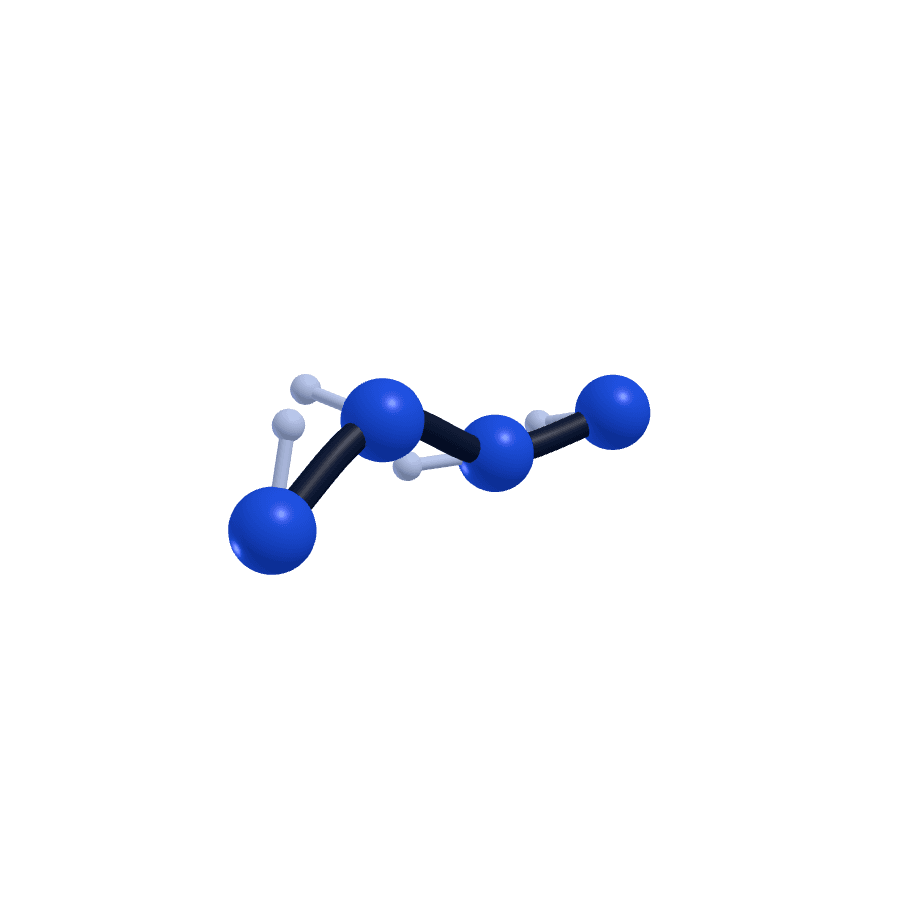
Epitalon is a synthetic peptide designed by Vladimir Khavinson's group at the St Petersburg Institute of Bioregulation and Gerontology to mimic Epithalamin, an extract of cattle pineal glands the same institute had studied since the 1970s. The synthetic version is four amino acids long and is the product sold on the grey market today.
Almost the entire literature — cell, animal and human — comes from that institute and its collaborators, was published largely in Russian-language journals, and has not been independently replicated. That does not make it wrong; it makes it unverified.
How it is thought to work
The proposed mechanism is activation of telomerase, the enzyme that maintains the ends of chromosomes, plus regulation of the pineal gland's melatonin output. Both have support in cell culture and in rodents from the originating group. Neither has been demonstrated in humans.
What is still unknown
- Whether the synthetic peptide does what the pineal extract was reported to do; they are different products.
- Whether any of the cell-culture telomerase findings occur in a living person.
- Whether activating telomerase, if it happened, would be desirable — the same enzyme is switched on in most cancers.
The molecule and how long it lasts
- Formula
- C14H22N4O9
- Molecular weight
- 390.35 g/mol
- CAS number
- 307297-39-8
- PubChem
- CID 219042
PubChem record, read 23 September 2026.
- Route
- Injected or intranasal as sold; no human PK study
- Half-life
- No human pharmacokinetic data
No pharmacokinetic study in people.
Regulatory status
No marketing authorisation in any member state. Supplying it for human use is an offence under national medicines law; 'research use only' labels do not change that. Epithalamin products are authorised in Russia only.
Removed from FDA's Category 2 list on 22 April 2026; the Pharmacy Compounding Advisory Committee recommended it for the 503A bulks list in July 2026 (recommended 24 July 2026). Not on the list yet and not an approved drug. Sold otherwise as an unapproved 'research chemical'.
Not licensed by the MHRA. Selling or supplying it is an offence under the Human Medicines Regulations 2012; importing a small quantity purely for personal use is not itself an offence, but consignments are seized.
Prescription-only substance not on the ARTG. Possession without a prescription is an offence; imports without a prescription are seized.
No Drug Identification Number; selling it is illegal. Residents cannot import prescription drugs by mail.
Not named, but unapproved anywhere, so it falls under S0 (non-approved substances).
Questions people actually ask
Does epitalon extend lifespan?
Does epitalon lengthen telomeres?
Is epitalon safe?
One page per claimed effect
- DDoes Epitalon help with lifespan / mortality?Uncontrolled, single group
- DDoes Epitalon help with telomerase activation?Cell culture only
- DDoes Epitalon help with melatonin / sleep?Small uncontrolled
- DHow common is safety in humans with Epitalon?None systematic
References
- 1Khavinson VKh, Morozov VG. Peptides of pineal gland and thymus prolong human life.Neuro Endocrinol Lett, 2003;24:233–240Uncontrolled long-term observation with Epithalamin (extract) and Thymalin.
- 2Khavinson VKh, et al. Peptide promotes overcoming of the division limit in human somatic cell.Bull Exp Biol Med, 2003;135:503–506Cell-culture telomerase and telomere findings.
- 3Korkushko OV, et al. Geroprotective effect of epithalamine (pineal gland peptide preparation) in elderly subjects with accelerated aging.Bull Exp Biol Med, 2006;142:356–359Uncontrolled; Epithalamin extract, not the synthetic peptide.
Change log
- 2026-09-02Full page. Separated evidence for the synthetic peptide from evidence for the Epithalamin extract; added telomerase, melatonin and safety rows.
- 2026-09-01Initial publication.