What the human research shows
A useful case study in how a real drug earns a real, narrow approval while the broad claims around it stay unproven. The molecule does what it says at the membrane; the clinical record is one accelerated approval in an ultra-rare disease and a string of well-run negative trials in everything larger.
Evidence profile0–5
- Metabolic & weight—0.0
- CardiovascularD0.0
- Muscle & growthC0.7
- Healing & repairC0.7
- Neuro & sleep—0.0
- Immune & inflammation—0.0
- Sexual & hormonal—0.0
- Skin & appearance—0.0
- Ageing & longevity—0.0
| Outcome | Grade | Effect size | Human studies | Where the evidence comes from |
|---|---|---|---|---|
| Barth syndrome (muscle strength & symptoms) | CWeak | Small | 1 crossover RCT + open-label extension (n=12) | TAZPOWER: the 12-week randomised crossover missed both primary endpoints; improvements in walk distance and symptom score emerged only in the open-label extension at 36 weeks. This extension is the basis of the 2025 accelerated approval.1 |
| Primary mitochondrial myopathy | DNo human evidence | Not measurable | 1 phase 3 RCT (n=218) | MMPOWER-3, the pivotal trial in the larger primary-mitochondrial-myopathy population, was negative on both primary endpoints at 24 weeks.2 |
| Heart failure (reduced ejection fraction) | DNo human evidence | Not measurable | 1 phase 2 RCT (n=71) | PROGRESS-HF tested four weeks of daily elamipretide against placebo and found no improvement in left-ventricular end-systolic volume.3 |
| Dry age-related macular degeneration | CWeak | Small | 1 phase 2 RCT (n=176) | ReCLAIM-2 missed its two primary endpoints; a slowing of ellipsoid-zone loss on OCT is a secondary signal the developer is carrying into phase 3.4 |
| Safety in humansadverse | CWeak | Small | Across the trial programme | Consistently well tolerated across trials; the main issue is injection-site reactions. Long-term safety data come mostly from the small Barth open-label extension.2 |
Literature searched to 3 September 2026. Human studies only; animal and cell work informs the mechanism section and nothing else.
Registered trials
ClinicalTrials.gov lists 20 interventional studies naming SS-31 (elamipretide) as an intervention — 14 completed, 2 recruiting, and 14 with results posted to the registry.
A registration is not a result. Anyone can register a study, and many never report — so this list shows what has been attempted, not what has been shown. The graded evidence above is the answer to whether something works.
12 further studies are registered. Participant counts marked * are the sponsor's estimate, not a final enrolment. Source: ClinicalTrials.gov, read directly from the registry and refreshed weekly.
What it is
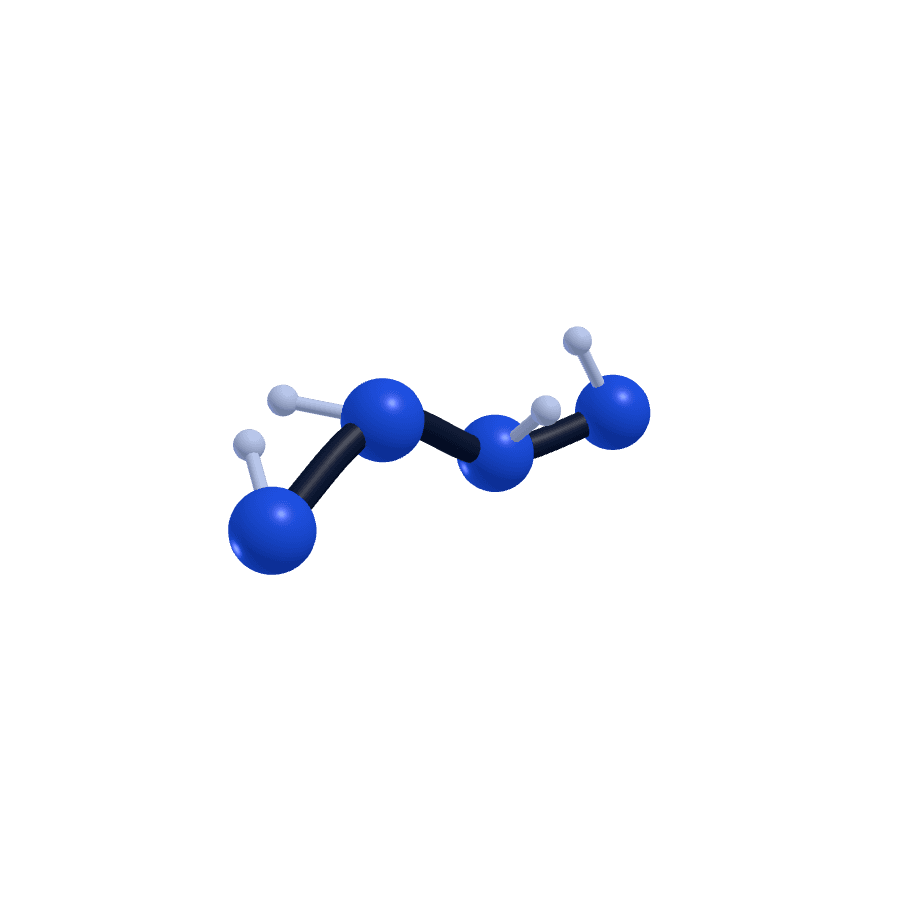
SS-31 (the 'Szeto-Schiller' peptide) is a synthetic tetrapeptide, D-Arg-Dmt-Lys-Phe-NH2, engineered to cross membranes and accumulate in mitochondria, where it binds cardiolipin and is thought to stabilise the machinery of energy production.
Under the name elamipretide it went through more than a decade of trials in heart failure, mitochondrial myopathy and eye disease. Most were negative. In September 2025 the US FDA granted accelerated approval for Barth syndrome — a rare X-linked disorder of cardiolipin metabolism — where cardiolipin is exactly the target.
How it is thought to work
It localises to the inner mitochondrial membrane and associates with cardiolipin, aiming to preserve cristae structure and electron-transport efficiency under stress. The trouble across its history is that a plausible mechanism did not translate into benefit in the larger diseases — which is why the eventual approval is in the one condition defined by a cardiolipin defect.
What is still unknown
- Whether the Barth-syndrome benefit, confirmed only in an open-label extension, holds up in confirmatory data required after accelerated approval.
- Whether the ellipsoid-zone signal in dry AMD becomes a real visual benefit in phase 3.
- Everything about 'mitochondrial support' in healthy people — never tested.
The molecule and how long it lasts
- Formula
- C32H49N9O5
- Molecular weight
- 639.8 g/mol
- CAS number
- 736992-21-5
- PubChem
- CID 11764719
PubChem record, read 23 September 2026.
- Route
- Subcutaneous injection, once daily
- Half-life
- Not stated in the label
- Licensed regimen (Forzinity (elamipretide))
- 40 mg subcutaneously once daily in patients weighing at least 30 kg (Barth syndrome)
From the approved product's prescribing information: Forzinity prescribing information (DailyMed) The regimen is the label's own wording, reproduced as a regulatory fact.
Regulatory status
No EMA marketing authorisation. Supplying it for human use is an offence under national medicines law.
Accelerated approval September 2025 as Forzinity (elamipretide) for Barth syndrome. Any other use, and any product sold as 'SS-31' outside that channel, is unapproved.
No MHRA licence. Sold otherwise as an unlicensed medicine or research chemical.
Prescription-only, unapproved; imports without a prescription are seized.
No Drug Identification Number.
Not named on the 2026 Prohibited List; athletes should still check, since new peptides are added regularly.
Questions people actually ask
Is SS-31 approved?
Is SS-31 the same as elamipretide?
Does it help with ageing or energy?
One page per claimed effect
- CDoes SS-31 (elamipretide) help with barth syndrome?1 crossover RCT + open-label extension (n=12)
- DDoes SS-31 (elamipretide) help with primary mitochondrial myopathy?1 phase 3 RCT (n=218)
- DDoes SS-31 (elamipretide) help with heart failure?1 phase 2 RCT (n=71)
- CDoes SS-31 (elamipretide) help with dry age-related macular degeneration?1 phase 2 RCT (n=176)
- CHow common is safety in humans with SS-31 (elamipretide)?Across the trial programme
References
- 1Thompson WR, et al. A phase 2/3 randomized clinical trial followed by an open-label extension to evaluate elamipretide in Barth syndrome (TAZPOWER).Genet Med, 2021;23:471–47812 subjects; part-1 crossover negative, part-2 extension positive at 36 weeks.
- 2Karaa A, et al. Efficacy and safety of elamipretide in individuals with primary mitochondrial myopathy: the MMPOWER-3 randomized clinical trial.Neurology, 2023;101:e238–e252218 participants; both primary endpoints negative.
- 3Butler J, et al. Effects of elamipretide on left ventricular function in patients with HFrEF: the PROGRESS-HF phase 2 trial.J Card Fail, 2020;26:429–43771 patients; no effect on LVESV.
- 4Ehlers JP, et al. ReCLAIM-2: a randomized phase 2 clinical trial evaluating elamipretide in dry age-related macular degeneration.Ophthalmol Sci, 2025;5:100628176 patients; primaries missed, ellipsoid-zone secondary signal.
- 5US FDA / Stealth BioTherapeutics. Accelerated approval of Forzinity (elamipretide) for Barth syndrome.FDA, September 2025First therapy approved for Barth syndrome; accelerated approval.
Change log
- 2026-09-03Initial publication. Grades reflect one accelerated approval and several negative randomised trials.