What the human research shows
Genuinely interesting biology at the frontier of a new class — mitochondria turn out to encode signalling peptides — and zero human intervention evidence. The observational human work measures MOTS-c that people already have; it says nothing about injecting more.
Evidence profile0–5
- Metabolic & weightD0.0
- Cardiovascular—0.0
- Muscle & growthD0.0
- Healing & repair—0.0
- Neuro & sleep—0.0
- Immune & inflammation—0.0
- Sexual & hormonal—0.0
- Skin & appearance—0.0
- Ageing & longevityD0.0
| Outcome | Grade | Effect size | Human studies | Where the evidence comes from |
|---|---|---|---|---|
| Insulin sensitivity / metabolic health | DNo human evidence | Not measurable | 0 controlled | Mouse models of diet-induced obesity and insulin resistance. Human data is observational — levels correlate with fitness and fall with age — which cannot show what supplementation would do. |
| Exercise capacity | DNo human evidence | Not measurable | 0 controlled | Rodent exercise models; human correlation studies only. |
| Longevity | DNo human evidence | Not measurable | None | Association studies of a mitochondrial variant in a Japanese cohort; not an intervention. |
| Safety in humansadverse | DNo human evidence | Not measurable | None | No human dosing study of any kind. |
Literature searched to 2 September 2026. Human studies only; animal and cell work informs the mechanism section and nothing else.
Registered trials
ClinicalTrials.gov lists 1 interventional study naming MOTS-c as an intervention, 1 recruiting, and none with results posted to the registry.
A registration is not a result. Anyone can register a study, and many never report — so this list shows what has been attempted, not what has been shown. The graded evidence above is the answer to whether something works.
| Study | Phase | Status | Participants | Sponsor | Results |
|---|---|---|---|---|---|
| MOTS-c for Improving Insulin Sensitivity in Adults With Prediabetes and Overweight/ObesityNCT07505745 · started Feb 2026 | Phase 2 | Recruiting | 120* | Hudson Biotech | None |
Participant counts marked * are the sponsor's estimate, not a final enrolment. Source: ClinicalTrials.gov, read directly from the registry and refreshed weekly.
What it is
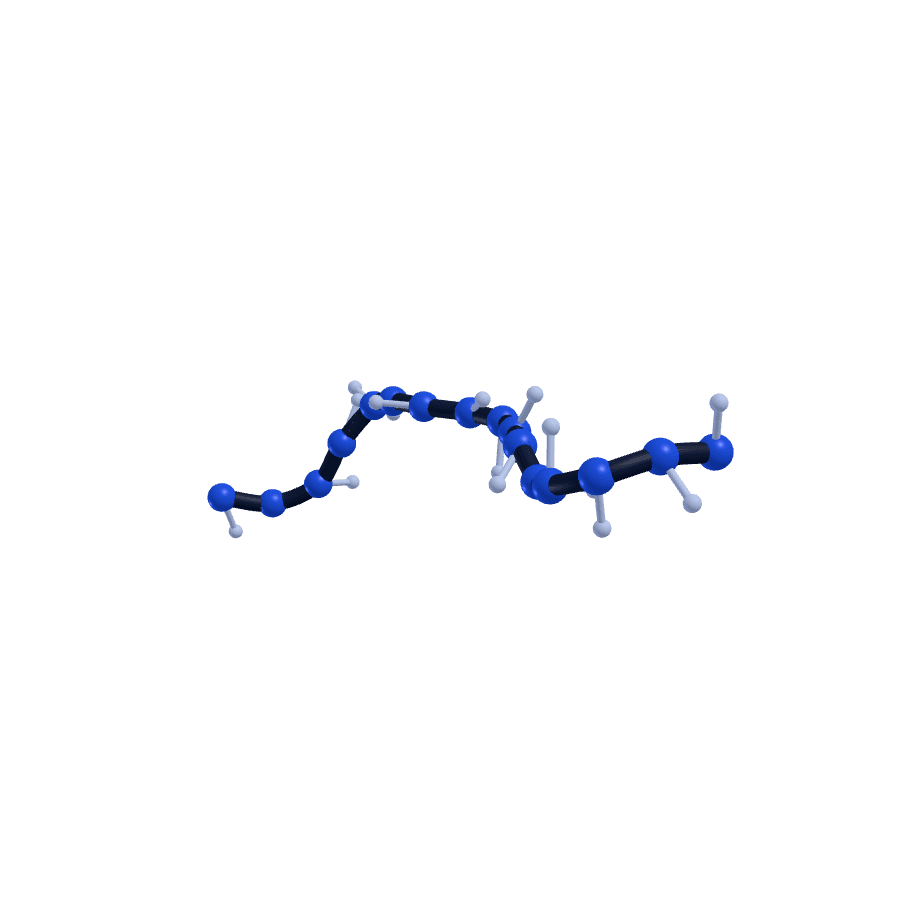
For most of modern biology, mitochondrial DNA was thought to encode only a handful of proteins for energy production. MOTS-c, identified in 2015, is one of a small group of peptides encoded there that act as signals to the rest of the cell — and to other tissues. That is a genuinely novel finding, and it is why the compound gets attention.
The distance between that finding and "inject this" is the entire clinical development process, none of which has been done.
How it is thought to work
It appears to activate AMPK, a cellular energy sensor, and to shift metabolism toward glucose use — in mouse muscle. Human blood levels are lower in older and less fit people, which is an association, not a mechanism established in people.
What is still unknown
- Whether administering it does anything in a human being.
- Dose, route, half-life and safety in humans — none established.
- Whether the age-related decline is a cause of anything or a consequence.
The molecule and how long it lasts
- Formula
- C101H152N28O22S2
- Molecular weight
- 2174.6 g/mol
- CAS number
- 1627580-64-6
- PubChem
- CID 146675088
PubChem record, read 23 September 2026.
- Route
- Injected as sold; no human administration study
- Half-life
- No human pharmacokinetic data
No pharmacokinetic study in people.
Regulatory status
No marketing authorisation in any member state. Supplying it for human use is an offence under national medicines law; 'research use only' labels do not change that.
Removed from FDA's Category 2 list on 22 April 2026; the Pharmacy Compounding Advisory Committee recommended it for the 503A bulks list in July 2026 (7–5, 2 abstentions). Not on the list yet and not an approved drug. Sold otherwise as an unapproved 'research chemical'.
Not licensed by the MHRA. Selling or supplying it is an offence under the Human Medicines Regulations 2012; importing a small quantity purely for personal use is not itself an offence, but consignments are seized.
Prescription-only substance not on the ARTG. Possession without a prescription is an offence; imports without a prescription are seized.
No Drug Identification Number; selling it is illegal. Residents cannot import prescription drugs by mail.
S4.4.1 metabolic modulators: MOTS-c named. Sport Integrity Australia lists it among common prohibited peptides.
Questions people actually ask
Does MOTS-c improve metabolism in humans?
Why do people say it is linked to longevity?
One page per claimed effect
- DDoes MOTS-c help with insulin sensitivity / metabolic health?0 controlled
- DDoes MOTS-c help with exercise capacity?0 controlled
- DDoes MOTS-c help with longevity?None
- DHow common is safety in humans with MOTS-c?None
References
- 1Lee C, et al. The mitochondrial-derived peptide MOTS-c promotes metabolic homeostasis and reduces obesity and insulin resistance.Cell Metab, 2015;21:443–454The discovery paper; mouse models.
Change log
- 2026-09-02Initial publication. All outcomes graded D on absence of human intervention trials.