What the human research shows
The most-discussed healing peptide on the internet has never been tested in a controlled human trial. Every outcome below is graded on animal data, which is why every grade is a D — not because the results are bad, but because they are not yet about people.
Evidence profile0–5
- Metabolic & weight—0.0
- Cardiovascular—0.0
- Muscle & growth—0.0
- Healing & repairD0.0
- Neuro & sleep—0.0
- Immune & inflammation—0.0
- Sexual & hormonal—0.0
- Skin & appearance—0.0
- Ageing & longevity—0.0
| Outcome | Grade | Effect size | Human studies | Where the evidence comes from |
|---|---|---|---|---|
| Tendon & ligament healing | DNo human evidence | Not measurable | 0 controlled | Rodent models of Achilles and MCL injury. Consistent in animals; no human trial has been run.12 |
| Gut mucosal healing | DNo human evidence | Not measurable | 0 controlled | Rat ulcer and colitis models. The original research programme; still preclinical.1 |
| Pain reduction | DNo human evidence | Not measurable | 1 case series (n=12) | A retrospective case report of 12 knee-pain patients given intra-articular injections; no control group. The only human study a 2025 systematic review could find.3 |
| Safety in humansadverse | DNo human evidence | Not measurable | 1 open-label pilot (n=2) | Two healthy adults given intravenous doses in an uncontrolled 2025 pilot showed no biomarker changes. That is the entire human safety literature.345 |
Literature searched to 2 September 2026. Human studies only; animal and cell work informs the mechanism section and nothing else.
Registered trials
ClinicalTrials.gov lists 3 interventional studies naming BPC-157 as an intervention, 1 recruiting, and none with results posted to the registry.
A registration is not a result. Anyone can register a study, and many never report — so this list shows what has been attempted, not what has been shown. The graded evidence above is the answer to whether something works.
| Study | Phase | Status | Participants | Sponsor | Results |
|---|---|---|---|---|---|
| BPC 157 for Acute Hamstring Muscle Strain RepairNCT07437547 · started Feb 2026 | Phase 2 | Recruiting | 120* | Hudson Biotech | None |
| PCO-02 - Safety and Pharmacokinetics TrialNCT02637284 · started Oct 2015 | Phase 1 | Unknown | 42* | PharmaCotherapia d.o.o. | None |
| Impact of BPC-157 on Recovery Following Rotator Cuff Repair SurgeryNCT07803250 · started Jan 2027 | Phase 1 | Not yet recruiting | 30* | University of Arkansas | None |
Participant counts marked * are the sponsor's estimate, not a final enrolment. Source: ClinicalTrials.gov, read directly from the registry and refreshed weekly.
What it is
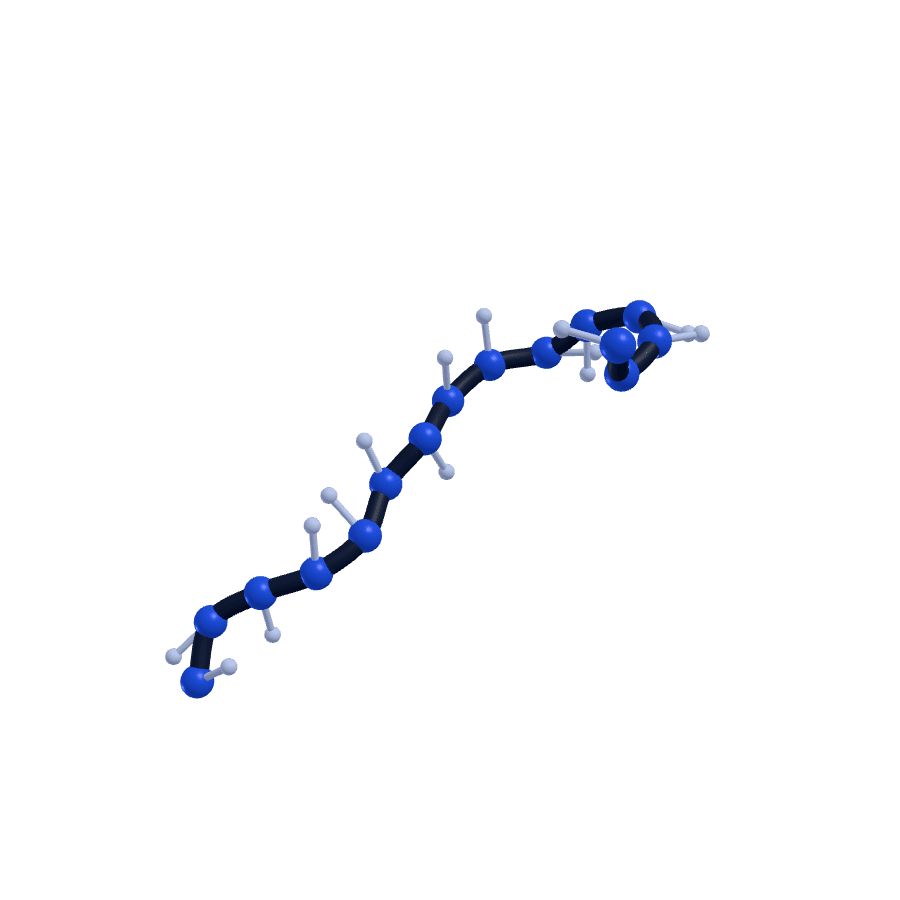
BPC-157 is a fragment of a larger protein, Body Protection Compound, identified in human gastric juice in the early 1990s by a research group in Zagreb. The synthetic fragment is 15 amino acids long, which makes it a small, relatively stable peptide.
Almost the entire published literature comes from a single laboratory and is conducted in rats. That is not disqualifying — many good drugs began that way — but it means the results have not been independently replicated at the scale you would want before drawing conclusions about people.
How it is thought to work
The proposed mechanisms are plausible and overlapping: increased expression of growth-factor receptors at injury sites, promotion of new blood-vessel growth (angiogenesis), and modulation of the nitric-oxide system. Each has support in animal tissue.
None of these mechanisms has been demonstrated in a human study. Mechanism in a rat tendon is a reason to run a human trial, not a substitute for one.
What is still unknown
- Whether it does anything at all in humans at the doses people use.
- Whether promoting blood-vessel growth carries any risk in tissue you would not want to grow — the question is unstudied, not answered.
- What is actually in the vials sold as BPC-157, since there is no approved manufacturer and no regulatory oversight of purity or content.
The molecule and how long it lasts
- Formula
- C62H98N16O22
- Molecular weight
- 1419.5 g/mol
- CAS number
- 137525-51-0
- PubChem
- CID 9941957
PubChem record, read 23 September 2026.
- Route
- Injected or oral as sold; no human study of either
- Half-life
- No human data. In rats and dogs the intravenous half-life was 5–15 minutes
Animal data only — no human pharmacokinetic study: He L, et al. Pharmacokinetics, distribution, metabolism, and excretion of body-protective compound 157 in rats and dogs. Front Pharmacol 2022
Regulatory status
No marketing authorisation in any member state. Supplying it for human use is an offence under national medicines law; 'research use only' labels do not change that.
Removed from FDA's Category 2 list on 22 April 2026; the Pharmacy Compounding Advisory Committee recommended it for the 503A bulks list in July 2026 (8–6, 1 abstention). Not on the list yet and not an approved drug. Sold otherwise as an unapproved 'research chemical'.
Not licensed by the MHRA. Selling or supplying it is an offence under the Human Medicines Regulations 2012; importing a small quantity purely for personal use is not itself an offence, but consignments are seized.
Prescription-only substance not on the ARTG. Obtainable only on prescription (compounded or imported under the Personal Importation Scheme with a prescription). Named in the TGA's April 2026 advisory.
No Drug Identification Number; selling it is illegal. Among the products Health Canada seized from a domestic vendor in August 2025. Residents cannot import prescription drugs by mail.
Named under S0 (non-approved substances) on the Prohibited List since 2022.
Questions people actually ask
Is there any human research on BPC-157?
Why is the grade D if the animal results are so consistent?
Is BPC-157 safe?
Is BPC-157 legal?
One page per claimed effect
- DDoes BPC-157 help with tendon & ligament healing?0 controlled
- DDoes BPC-157 help with gut mucosal healing?0 controlled
- DDoes BPC-157 help with pain reduction?1 case series (n=12)
- DHow common is safety in humans with BPC-157?1 open-label pilot (n=2)
References
- 1Sikiric P, et al. Stable gastric pentadecapeptide BPC 157: novel therapy in gastrointestinal tract.Curr Pharm Des, 2011 (review)Animal data; the originating laboratory.
- 2Chang CH, et al. The promoting effect of pentadecapeptide BPC 157 on tendon healing involves tendon outgrowth, cell survival, and cell migration.J Appl Physiol, 2011Rat Achilles tendon model.
- 3Vasireddi N, Hahamyan H, Salata MJ, et al. Emerging use of BPC-157 in orthopaedic sports medicine: a systematic review.HSS Journal, 2025;21(4):485–495544 articles screened; 36 included — 35 preclinical, 1 clinical (a 12-patient retrospective case report). No clinical safety data found.
- 4Lee E, Burgess J. Intravenous BPC-157 in healthy adults: an open-label pilot.2025 (pilot, n = 2)Uncontrolled; biomarkers only; no efficacy endpoints. Same research group as other human reports.
- 5U.S. FDA. Certain bulk drug substances for use in compounding that may present significant safety risks (BPC-157).FDA, 2023Regulatory status in the United States.
Change log
- 2026-09-02Human-evidence rows made precise: one retrospective case series (n=12) and one open-label IV pilot (n=2) now cited; 2025 systematic review added. Grades unchanged.
- 2026-09-01Initial publication. All outcomes graded D on the basis of no controlled human trials.