What the human research shows
A case where human trials genuinely exist and are about something else entirely. The eye-drop programme tested a pharmaceutical-grade formulation on the ocular surface. Nothing in it speaks to injecting a vendor's fragment for a hamstring tear.
Evidence profile0–5
- Metabolic & weight—0.0
- Cardiovascular—0.0
- Muscle & growth—0.0
- Healing & repairB1.2
- Neuro & sleep—0.0
- Immune & inflammation—0.0
- Sexual & hormonal—0.0
- Skin & appearance—0.0
- Ageing & longevity—0.0
| Outcome | Grade | Effect size | Human studies | Where the evidence comes from |
|---|---|---|---|---|
| Tendon, muscle & ligament healing (injected) | DNo human evidence | Not measurable | 0 completed | No completed phase 2 or 3 randomised trial has tested systemic thymosin beta-4 or TB-500 for tendinopathy, muscle strain or ligament injury. Animal models in rodents and rabbits only.1 |
| Dry eye disease (topical, RGN-259) | BProbable | Small | 2 phase 3 RCTs | ARISE-1 and ARISE-2 tested a pharmaceutical eye drop. Improvements on some ocular-surface measures; primary endpoints not consistently met, and no approval followed.2 |
| Cardiac repair | DNo human evidence | Not measurable | None | Mouse and pig infarct models only. |
| Safety in humans (injected)adverse | DNo human evidence | Not measurable | None systematic | No systemic safety data. Independent testing of vendor products finds wide variation between labelled and actual content. |
Literature searched to 2 September 2026. Human studies only; animal and cell work informs the mechanism section and nothing else.
Registered trials
ClinicalTrials.gov lists 1 interventional study naming TB-500 as an intervention, 1 recruiting, and none with results posted to the registry.
A registration is not a result. Anyone can register a study, and many never report — so this list shows what has been attempted, not what has been shown. The graded evidence above is the answer to whether something works.
| Study | Phase | Status | Participants | Sponsor | Results |
|---|---|---|---|---|---|
| TB-500 (Thymosin Beta 4 17-23 Fragment) for Cardiovascular Biomarkers in Stable ASCVDNCT07487363 · started Feb 2026 | Phase 1 | Recruiting | 80* | Hudson Biotech | None |
Participant counts marked * are the sponsor's estimate, not a final enrolment. Source: ClinicalTrials.gov, read directly from the registry and refreshed weekly.
What it is
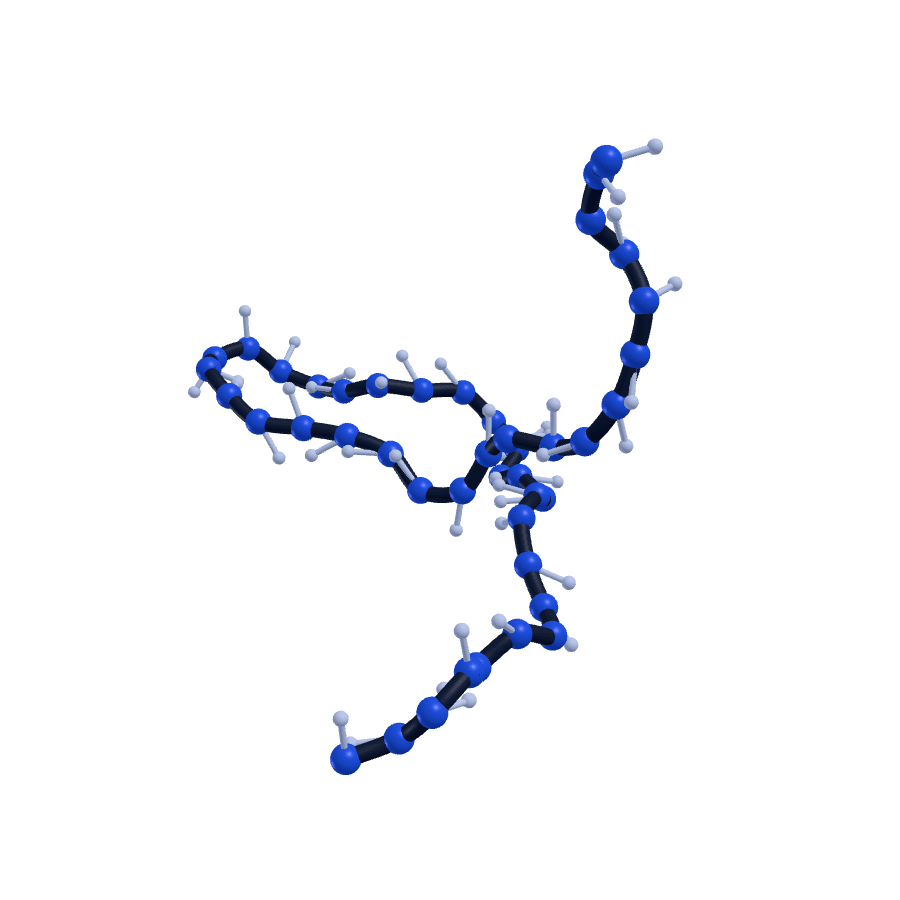
Thymosin beta-4 is a 43-amino-acid protein present in most human cells, where it binds actin and is involved in cell movement, blood-vessel growth and wound repair. TB-500 is a shorter synthetic fragment of it, marketed as a cheaper equivalent.
They are not the same thing, and the distinction matters when reading claims. RegeneRx developed pharmaceutical-grade thymosin beta-4 as RGN-259 and took it through phase 3 — as an eye drop. What is sold as TB-500 online may be the fragment or the full peptide, made to no particular standard.
How it is thought to work
By sequestering actin monomers it influences how cells crawl toward a wound, and it upregulates factors involved in new blood-vessel formation. That is well characterised in cell and animal work, which is why the injury claims sound mechanistically reasonable. Mechanism is not outcome.
What is still unknown
- Whether injected TB-500 does anything for a human injury; the trial has not been run.
- Whether the fragment behaves like the full protein at all in vivo.
- What is in the vials, given the documented gap between label and content.
The molecule and how long it lasts
- Formula
- C212H350N56O78S
- Molecular weight
- 4963 g/mol
- CAS number
- 77591-33-4
- PubChem
- CID 16132341
PubChem record is full-length thymosin β4 (timbetasin); TB-500 as sold is a fragment of it
PubChem record, read 23 September 2026.
- Route
- Intravenous in the only human study (full-length thymosin β4, healthy volunteers)
- Half-life
- Measured but not reported as a figure; the abstract says half-life increased with dose
From a published human pharmacokinetic study: Ruff D, et al. A randomized, placebo-controlled, single and multiple dose study of intravenous thymosin beta4 in healthy volunteers. Ann N Y Acad Sci 2010
Regulatory status
No marketing authorisation in any member state. Supplying it for human use is an offence under national medicines law; 'research use only' labels do not change that.
Removed from FDA's Category 2 list on 22 April 2026; the Pharmacy Compounding Advisory Committee recommended it for the 503A bulks list in July 2026 (8–6, 1 abstention). Not on the list yet and not an approved drug. Sold otherwise as an unapproved 'research chemical'.
Not licensed by the MHRA. Selling or supplying it is an offence under the Human Medicines Regulations 2012; importing a small quantity purely for personal use is not itself an offence, but consignments are seized.
Prescription-only substance not on the ARTG. Obtainable only on prescription (compounded or imported under the Personal Importation Scheme with a prescription). Named in the TGA's April 2026 advisory. Named in NSW law as a prescribed restricted substance.
No Drug Identification Number; selling it is illegal. Among the products Health Canada seized from a domestic vendor in August 2025. Residents cannot import prescription drugs by mail.
S2.3: 'thymosin-β4 and its derivatives, e.g. TB-500'.
Questions people actually ask
Does TB-500 heal injuries?
Is TB-500 the same as thymosin beta-4?
Is TB-500 banned in sport?
One page per claimed effect
- DDoes TB-500 help with tendon, muscle & ligament healing?0 completed
- BDoes TB-500 help with dry eye disease?2 phase 3 RCTs
- DDoes TB-500 help with cardiac repair?None
- DHow common is safety in humans with TB-500?None systematic
References
- 1Review of thymosin beta-4 / TB-500 clinical evidence: no completed systemic musculoskeletal RCT.Evidence review, 2026Secondary source; used for the absence-of-trials claim, which matches registry searches.
- 2RegeneRx. RGN-259 (thymosin beta-4 ophthalmic) ARISE-1 and ARISE-2 phase 3 trials in dry eye disease.Phase 3 programme; mixed endpoint results, no approvalThe only phase 3 human data for the parent molecule.
Change log
- 2026-09-02Initial publication. Injected use graded D; ophthalmic programme graded separately at B.