What the human research shows
The mirror image of half this site: where the growth-hormone releasers promise more, octreotide is the approved medicine that delivers less — on purpose, for people whose bodies make too much.
Evidence profile0–5
- Metabolic & weight—0.0
- Cardiovascular—0.0
- Muscle & growthA5.0
- Healing & repair—0.0
- Neuro & sleep—0.0
- Immune & inflammation—0.0
- Sexual & hormonal—0.0
- Skin & appearance—0.0
- Ageing & longevity—0.0
| Outcome | Grade | Effect size | Human studies | Where the evidence comes from |
|---|---|---|---|---|
| Acromegaly (growth hormone and IGF-1 control) | AEstablished | Large | Approval-grade programmes; many RCTs | Normalises IGF-1 in roughly half of patients and shrinks the pituitary tumour in a majority; first-line medical therapy after or instead of surgery.2 |
| Carcinoid syndrome symptoms | AEstablished | Large | Approval-grade | Reliable control of flushing and diarrhoea from hormone-secreting neuroendocrine tumours — the 1988 approval indication.2 |
| Tumour progression in midgut neuroendocrine tumours | AEstablished | Large | 1 placebo-controlled RCT (n=85) | Time to progression rose from 6 to 14.3 months against placebo, in functionally active and inactive tumours alike; survival could not be assessed because too few patients died.1 |
| Overall survival in neuroendocrine tumours | BProbable | Not measurable | PROMID (underpowered) | A non-significant trend with only 16 deaths at interim; the long-term follow-up remained inconclusive, partly because most placebo patients crossed over.1 |
| Adverse effectsadverse | AEstablished | Moderate | Decades of use | Gallstones in a substantial share of long-term users, abdominal cramps and fatty stools, injection-site pain, and disturbed glucose control in either direction.2 |
Literature searched to 10 September 2026. Human studies only; animal and cell work informs the mechanism section and nothing else.
Registered trials
ClinicalTrials.gov lists 153+ interventional studies naming Octreotide as an intervention — 98 completed, 6 recruiting, and 38 with results posted to the registry.
A registration is not a result. Anyone can register a study, and many never report — so this list shows what has been attempted, not what has been shown. The graded evidence above is the answer to whether something works.
145 further studies are registered. Participant counts marked * are the sponsor's estimate, not a final enrolment. Source: ClinicalTrials.gov, read directly from the registry and refreshed weekly.
What it is
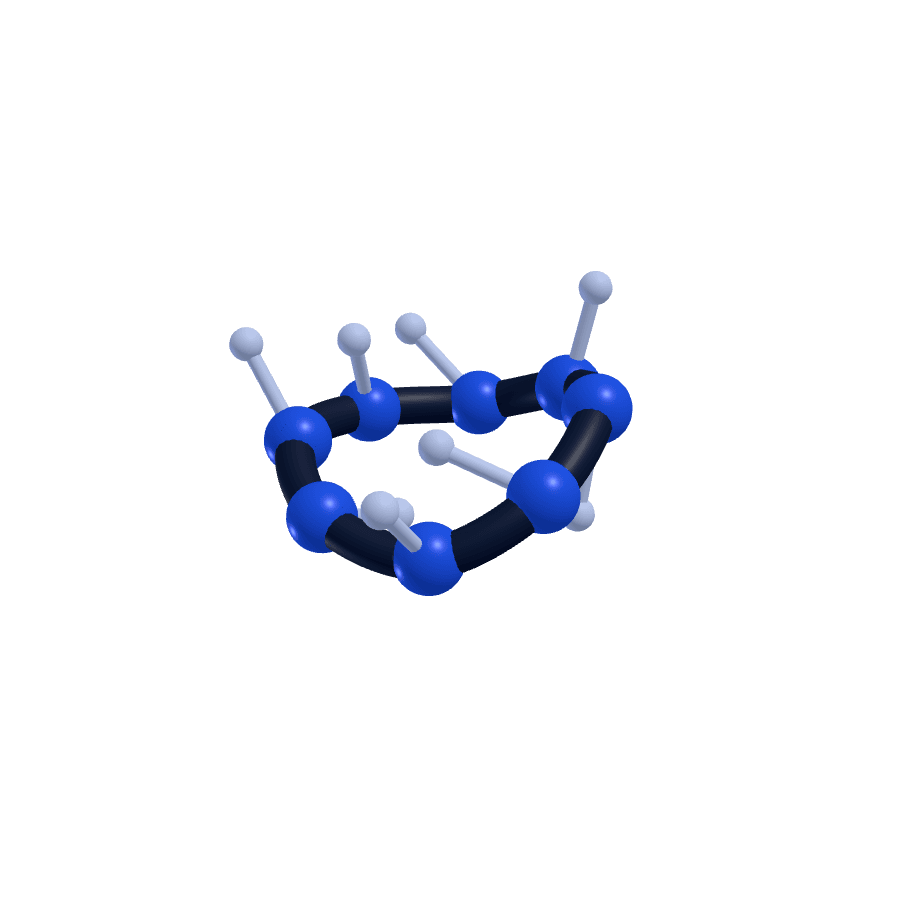
Octreotide was designed at Sandoz in the early 1980s by keeping the four amino acids of somatostatin that do the work and cyclising them into a stable eight-residue ring. Sandostatin was approved in 1988; the monthly LAR depot followed in 1998. Lanreotide and pasireotide are its relatives.
It is also used to stop bleeding from oesophageal varices, to manage gut fistulas and dumping syndrome, and to image and treat neuroendocrine tumours when labelled with a radioisotope.
How it is thought to work
It binds somatostatin receptors — mainly subtype 2 — on pituitary cells and tumour cells, shutting off hormone secretion and, in neuroendocrine tumours, slowing cell growth directly. The same receptors are why radiolabelled octreotide lights those tumours up on a scan.
What is still unknown
- Whether it lengthens life in neuroendocrine tumours; PROMID could not answer it.
- Optimal sequencing with newer options — lanreotide, everolimus, radioligand therapy.
The molecule and how long it lasts
- Formula
- C49H66N10O10S2
- Molecular weight
- 1019.2 g/mol
- CAS number
- 83150-76-9
- PubChem
- CID 448601
PubChem record, read 23 September 2026.
- Route
- Subcutaneous injection (or IV), 2-4 times daily; monthly depot (Sandostatin LAR)
- Half-life
- About 1.7-1.9 hours
- Licensed regimen (Sandostatin (immediate-release injection))
- Acromegaly: 50 mcg three times daily initially, maintenance 100-500 mcg three times daily; carcinoid tumours: 100-600 mcg/day in 2-4 divided doses
From the approved product's prescribing information: Sandostatin injection prescribing information (DailyMed) The regimen is the label's own wording, reproduced as a regulatory fact.
Regulatory status
Authorised in every member state (Sandostatin, LAR) for acromegaly, neuroendocrine tumours and other indications.
FDA-approved since 1988; LAR depot 1998; generics available.
Licensed.
On the ARTG.
Health Canada-authorised.
Somatostatin analogues are not on the Prohibited List.
Questions people actually ask
What is octreotide used for?
Does it shrink tumours?
Is it the opposite of the growth-hormone peptides?
One page per claimed effect
- ADoes Octreotide help with acromegaly?Approval-grade programmes; many RCTs
- ADoes Octreotide help with carcinoid syndrome symptoms?Approval-grade
- ADoes Octreotide help with tumour progression in midgut neuroendocrine tumours?1 placebo-controlled RCT (n=85)
- BDoes Octreotide help with overall survival in neuroendocrine tumours?PROMID (underpowered)
- AHow common is adverse effects with Octreotide?Decades of use
References
- 1Rinke A, Müller HH, Schade-Brittinger C, et al. Placebo-controlled, double-blind, prospective, randomized study on the effect of octreotide LAR in the control of tumor growth in patients with metastatic neuroendocrine midgut tumors: a report from the PROMID Study Group.J Clin Oncol, 200985 patients; interim analysis at 67 progressions.
- 2Octreotide (Sandostatin, Sandostatin LAR) prescribing information and approved indications.FDA / EMA product informationLicensed indications; acromegaly and carcinoid data.
Change log
- 2026-09-10Initial publication. Grade A on approval programmes and PROMID.