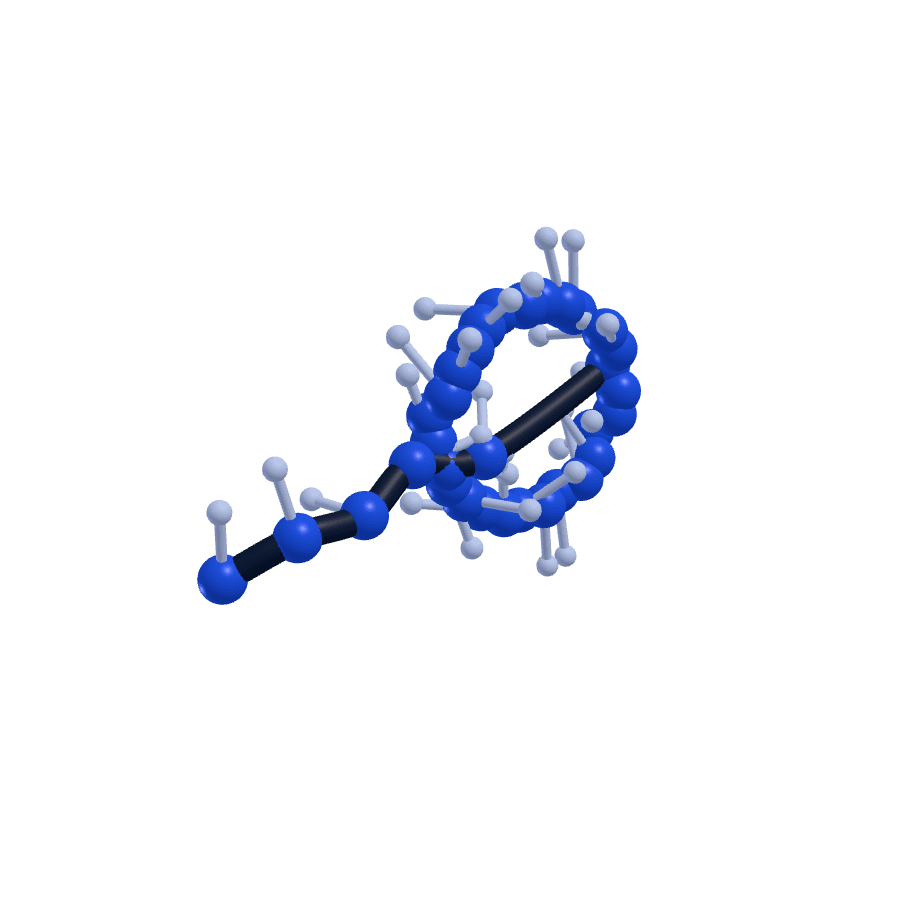
What the human research shows
A settled medicine whose story is the opposite of most on this site: plenty of trial evidence, and the evidence is what retired it. Grade A on certainty; the effect for osteoporosis was small and inconsistent, and the safety file turned negative.
Evidence profile0–5
- Metabolic & weight—0.0
- Cardiovascular—0.0
- Muscle & growth—0.0
- Healing & repair—0.0
- Neuro & sleep—0.0
- Immune & inflammation—0.0
- Sexual & hormonal—0.0
- Skin & appearance—0.0
- Ageing & longevity—0.0
| Outcome | Grade | Effect size | Human studies | Where the evidence comes from |
|---|---|---|---|---|
| Vertebral fracture risk (osteoporosis, nasal spray) | AEstablished | Small | 1 large RCT (n=1,255, 5 yr) | PROOF: the 200 IU dose reduced new vertebral fractures by 33%, but the 100 and 400 IU doses did not — no dose–response, and a trial with 60% dropout. Regulators later judged the benefit marginal.1 |
| Dose–response | AEstablished | Not measurable | Same RCT | Neither the lower nor the higher dose separated from placebo — the finding that made the 200 IU result hard to trust.1 |
| Cancer risk (long-term use)adverse | BProbable | Small | Regulatory meta-analyses of RCTs | The EMA's 2012 review of randomised trials found a higher proportion of cancers in people on calcitonin than on placebo (about 2.4% excess for the nasal spray over long-term use). The signal is small and the mechanism unknown, but it was enough to end chronic use.2 |
| Paget's disease and acute hypercalcaemia | AEstablished | Moderate | Decades of use; older trials | Injectable calcitonin still has short-term licences for Paget's disease, acute bone loss from immobilisation and hypercalcaemia of malignancy, where bisphosphonates have largely replaced it.2 |
Literature searched to 23 September 2026. Human studies only; animal and cell work informs the mechanism section and nothing else.
Registered trials
ClinicalTrials.gov lists 55 interventional studies naming Calcitonin (salmon) as an intervention — 38 completed, 4 recruiting, and 12 with results posted to the registry.
A registration is not a result. Anyone can register a study, and many never report — so this list shows what has been attempted, not what has been shown. The graded evidence above is the answer to whether something works.
| Study | Phase | Status | Participants | Sponsor | Results |
|---|---|---|---|---|---|
| The Use of Intranasal Calcitonin to Improve Pain and Activity in Elderly Pelvic Ring InjuriesNCT03812991 · started Jul 2019 | Phase 4 | Completed | 21 | University of Missouri-Columbia | Posted |
| Hypothyroidism Treated With CalcitoninNCT03342001 · started Jun 2018 | Phase 4 | Completed | 11 | University of Maryland, Baltimore | Posted |
| A Study to Evaluate Oral Salmon Calcitonin in the Treatment of Osteoporosis in Postmenopausal Women Taking Calcium and Vitamin DNCT00525798 · started Mar 2007 | Phase 3 | Completed | 4,665 | Nordic Bioscience A/S | Posted |
| Efficacy and Safety of Oral Salmon Calcitonin in Patients With Knee OsteoarthritisNCT00486434 · started May 2007 | Phase 3 | Completed | 1,176 | Nordic Bioscience A/S | Posted |
| Efficacy and Safety of Oral Salmon Calcitonin in Patients With Knee Osteoarthritis (OA 2 Study)NCT00704847 · started Jun 2008 | Phase 3 | Terminated | 1,030 | Nordic Bioscience A/S | Posted |
| A Study Comparing Oral Calcitonin to Nasal Spray Calcitonin in Postmenopausal Osteoporotic WomenNCT00959764 · started Jun 2009 | Phase 3 | Completed | 565 | Tarsa Therapeutics, Inc. | Posted |
| A Study for Patients With OsteoporosisNCT00414973 · started Dec 2006 | Phase 3 | Completed | 364 | Eli Lilly and Company | Posted |
| A Study of Oral Recombinant Salmon Calcitonin (rsCT) to Prevent Postmenopausal OsteoporosisNCT01292187 · started Jan 2011 | Phase 2 | Completed | 129 | Tarsa Therapeutics, Inc. | Posted |
47 further studies are registered. Participant counts marked * are the sponsor's estimate, not a final enrolment. Source: ClinicalTrials.gov, read directly from the registry and refreshed weekly.
What it is
Calcitonin is made by the C-cells of the thyroid and opposes parathyroid hormone: it tells osteoclasts to stop resorbing bone and pushes calcium into it. Salmon calcitonin differs at half its positions from the human peptide and is 40–50 times more potent at the human receptor, which is why the fish version became the drug.
Novartis's Miacalcin nasal spray was an osteoporosis staple from the 1990s. In 2012 the EMA recommended withdrawing the nasal spray and limiting injections to short courses; the UK, Canada and others followed, and a 2013 FDA advisory committee voted against continued osteoporosis use, though the US product remained with a cancer warning.
How it is thought to work
It binds the calcitonin receptor on osteoclasts and directly inhibits bone resorption within minutes. The effect is real but modest and wanes with continued dosing, which is one reason the fracture data were weak.
What is still unknown
- Whether the cancer signal is causal; it came from pooled trials, not a dedicated study.
- Its analgesic effect in acute vertebral fracture, which is supported by small trials and still used off-label.
The molecule and how long it lasts
- Formula
- C145H240N44O48S2
- Molecular weight
- 3431.9 g/mol
- CAS number
- 47931-85-1
- PubChem
- CID 16220016
Salmon calcitonin (salcatonin)
PubChem record, read 23 September 2026.
- Route
- Subcutaneous or intramuscular injection; nasal spray
- Half-life
- About 1 hour
- Licensed regimen (Miacalcin (calcitonin salmon) injection)
- Paget's disease and postmenopausal osteoporosis: 100 USP Units daily SC or IM; hypercalcaemia: 4 USP Units/kg every 12 hours, up to 8 USP Units/kg every 6 hours
From the approved product's prescribing information: Miacalcin injection prescribing information (DailyMed) The regimen is the label's own wording, reproduced as a regulatory fact.
Regulatory status
Nasal spray marketing authorisations withdrawn following the EMA's July 2012 review; injectable use limited to short courses for Paget's disease, acute immobilisation bone loss and hypercalcaemia of malignancy.
Miacalcin injection and nasal spray remain approved; an FDA advisory committee voted in March 2013 that the nasal spray's benefit for osteoporosis did not outweigh the cancer risk, and the label carries a malignancy warning.
Nasal spray withdrawn in 2012 in line with the EMA decision; injection retained for short-term indications.
Nasal spray products for osteoporosis were withdrawn; injectable use restricted.
Health Canada withdrew nasal calcitonin for osteoporosis in 2013.
Not on the Prohibited List.
Questions people actually ask
Why was calcitonin nasal spray withdrawn?
Is calcitonin still used?
Is calcitonin a peptide?
One page per claimed effect
- ADoes Calcitonin (salmon) help with vertebral fracture risk?1 large RCT (n=1,255, 5 yr)
- ADoes Calcitonin (salmon) help with dose–response?Same RCT
- BHow common is cancer risk with Calcitonin (salmon)?Regulatory meta-analyses of RCTs
- ADoes Calcitonin (salmon) help with paget's disease and acute hypercalcaemia?Decades of use; older trials
References
- 1Chesnut CH 3rd, Silverman S, Andriano K, et al. A randomized trial of nasal spray salmon calcitonin in postmenopausal women with established osteoporosis: the Prevent Recurrence Of Osteoporotic Fractures study (PROOF).Am J Med, 2000;109:267–2761,255 women, 5 years; 511 completed.
- 2European Medicines Agency. European Medicines Agency recommends limiting long-term use of calcitonin medicines (press release, 20 July 2012).EMAWithdrawal of the nasal spray; cancer signal from pooled trials.
Change log
- 2026-09-23Initial publication. Grade A on certainty; small, inconsistent osteoporosis effect and the 2012 withdrawal recorded.