What the human research shows
Better evidenced than most sleep peptides and still not good — which is more informative than no evidence at all. The trials were done, they were small, and they were unconvincing.
Evidence profile0–5
- Metabolic & weight—0.0
- Cardiovascular—0.0
- Muscle & growth—0.0
- Healing & repair—0.0
- Neuro & sleepC0.0
- Immune & inflammation—0.0
- Sexual & hormonal—0.0
- Skin & appearance—0.0
- Ageing & longevity—0.0
| Outcome | Grade | Effect size | Human studies | Where the evidence comes from |
|---|---|---|---|---|
| Sleep in chronic insomnia | CWeak | Not measurable | 1 double-blind RCT (n=16) + small studies | Intravenous DSIP improved measured sleep efficiency and latency against placebo, but the authors judged the effects weak and partly attributable to a change in the placebo group, with no improvement in how patients rated their own sleep.1 |
| Opioid withdrawal | DNo human evidence | Not measurable | 1 open trial | An open-label study in opioid detoxification was published in 1998. Without a control group it cannot separate the peptide from the natural course of withdrawal, and it was not followed up.2 |
| Recovery, stress or performance | DNo human evidence | Not measurable | None | The recovery and anti-stress claims made for DSIP today have no controlled human trial behind them. |
| Safety in humansadverse | DNo human evidence | Not measurable | No systematic data | The old studies were small and short, and none was designed to characterise safety. There is no modern safety dataset at the doses and routes used on the grey market. |
Literature searched to 3 September 2026. Human studies only; animal and cell work informs the mechanism section and nothing else.
What it is
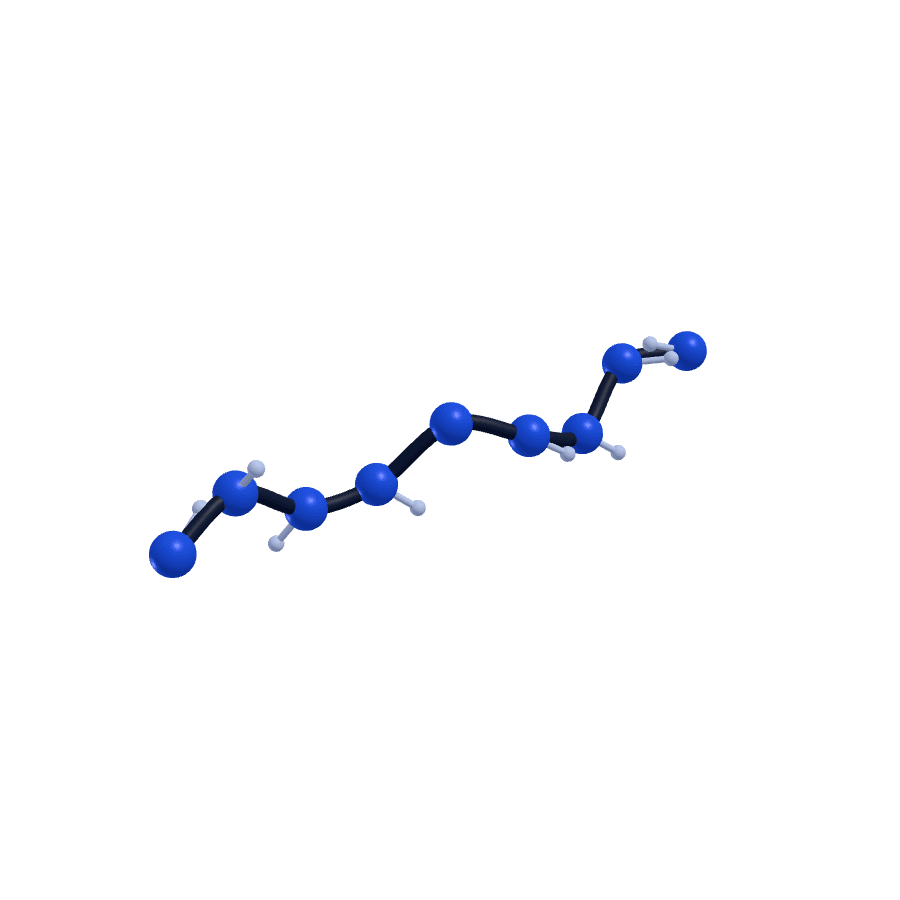
DSIP was identified in the 1970s in the blood of rabbits whose brains had been electrically stimulated into slow-wave sleep, and named for that effect. Its status as a genuine endogenous sleep regulator has never been firmly established.
It is sold as an injectable sleep and recovery peptide. What distinguishes it from most of that category is that it was taken into human trials — which is why it earns a C rather than a D for sleep.
How it is thought to work
No mechanism is established. It has been proposed to act on sleep regulation and on stress hormone release, but the receptor and pathway remain unclear, which is part of why development did not continue.
What is still unknown
- Whether it does anything for sleep at doses and routes used outside a laboratory.
- Whether it is a genuine physiological sleep factor at all.
- Safety with repeated use — never characterised.
The molecule and how long it lasts
- Formula
- C35H48N10O15
- Molecular weight
- 848.8 g/mol
- CAS number
- 62568-57-4
- PubChem
- CID 68816
PubChem record, read 23 September 2026.
- Route
- Intravenous in the 1980s sleep studies, which report no PK
- Half-life
- No human pharmacokinetic data
No pharmacokinetic study in people.
Regulatory status
No marketing authorisation in any member state; supplying it for human use is an offence under national medicines law.
Not an approved drug and not a dietary-supplement ingredient; sold as a research chemical.
No MHRA licence; supply for human use is an offence.
Not on the ARTG; imports are seized.
No Drug Identification Number.
As a non-approved substance it falls under the non-approved-substances class and is prohibited in and out of competition.
Questions people actually ask
Does DSIP help you sleep?
Why is it still sold if the trials were negative?
Is DSIP safe?
One page per claimed effect
- CDoes DSIP (delta sleep-inducing peptide) help with sleep in chronic insomnia?1 double-blind RCT (n=16) + small studies
- DDoes DSIP (delta sleep-inducing peptide) help with opioid withdrawal?1 open trial
- DDoes DSIP (delta sleep-inducing peptide) help with recovery, stress or performance?None
- DHow common is safety in humans with DSIP (delta sleep-inducing peptide)?No systematic data
References
- 1Bes F, et al. Effects of delta sleep-inducing peptide on sleep of chronic insomniac patients: a double-blind study.Neuropsychobiology, 1992;26:193–19716 patients; the best-controlled trial.
- 2Backmund M, et al. Opioid detoxification with delta sleep-inducing peptide: results of an open clinical trial.J Clin Psychopharmacol, 1998Open-label, no control group.
- 3Schneider-Helmert D, et al. Acute and delayed effects of DSIP on human sleep behavior.Int J Clin Pharmacol Ther Toxicol, 1981
Change log
- 2026-09-03Initial publication. Sleep graded C on small trials with a negative conclusion; other claims graded D.