What the human research shows
Registered somewhere is not the same as evidenced. Semax has decades of Russian clinical use behind it, and a literature that international reviewers have repeatedly found too thin and too opaque to grade. That is a statement about the available evidence, not a verdict on the molecule.
Evidence profile0–5
- Metabolic & weight—0.0
- Cardiovascular—0.0
- Muscle & growth—0.0
- Healing & repair—0.0
- Neuro & sleepD0.0
- Immune & inflammation—0.0
- Sexual & hormonal—0.0
- Skin & appearance—0.0
- Ageing & longevity—0.0
| Outcome | Grade | Effect size | Human studies | Where the evidence comes from |
|---|---|---|---|---|
| Cognitive performance | DNo human evidence | Not measurable | Russian-language, mostly uncontrolled | Small studies, often without blinding or a comparison group, published outside the indexed international literature. No independent replication.1 |
| Stroke recovery | DNo human evidence | Not measurable | Russian trials, not independently replicated | The basis of the Russian registration. Not reproduced in trials meeting international reporting standards.1 |
| Anxiety / stress | DNo human evidence | Not measurable | None controlled internationally | Claims derive from animal work and from the related peptide Selank. |
| Safety in humansadverse | DNo human evidence | Not measurable | No systematic international data | Long Russian clinical use is reassuring but not equivalent to pharmacovigilance data. |
Literature searched to 2 September 2026. Human studies only; animal and cell work informs the mechanism section and nothing else.
What it is
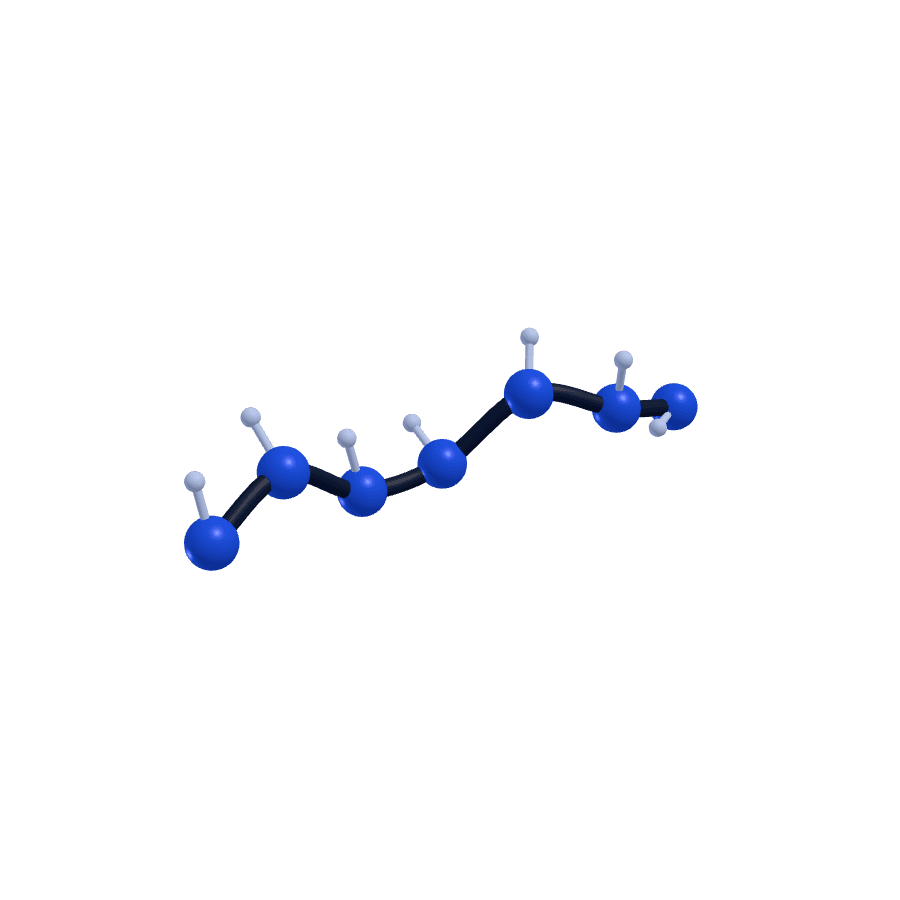
Semax is a fragment of adrenocorticotropic hormone with a three-amino-acid tail added to slow its breakdown. It was developed at the Institute of Molecular Genetics in Moscow and is given as a nasal spray. Russia registers it for stroke, optic-nerve conditions and cognitive complaints.
Almost nothing about it has been tested outside Russia. That is the central fact for anyone reading claims: the absence of Western trials is not evidence that it fails, and the presence of Russian registration is not evidence that it works.
How it is thought to work
It is reported to raise BDNF and NGF — growth factors involved in neuron survival and plasticity — and to modulate dopamine and serotonin systems. The mechanistic work is largely from the originating institutes and in animals.
What is still unknown
- Essentially everything, by international evidence standards: effect size, durability, dose, long-term safety.
- Whether the reported BDNF effects occur in humans at the doses used.
The molecule and how long it lasts
- Formula
- C37H51N9O10S
- Molecular weight
- 813.9 g/mol
- CAS number
- 80714-61-0
- PubChem
- CID 9811102
PubChem record, read 23 September 2026.
- Route
- Intranasal
- Half-life
- No human pharmacokinetic data; rat intranasal kinetics only
Animal data only — no human pharmacokinetic study: Kinetics of Semax penetration into the brain and blood of rats after intranasal administration (Russian)
Regulatory status
Authorised in Russia only. Supplying it for human use in the EU is an offence under national medicines law.
Removed from FDA's Category 2 list on 22 April 2026; the Pharmacy Compounding Advisory Committee recommended it for the 503A bulks list in July 2026 (recommended 24 July 2026). Not on the list yet and not an approved drug. Sold otherwise as an unapproved 'research chemical'.
No MHRA licence; supply for human use is an offence.
Prescription-only substance not on the ARTG. Possession without a prescription is an offence; imports without a prescription are seized.
No Drug Identification Number; selling it is illegal. Residents cannot import prescription drugs by mail.
Approved in Russia, so S0 does not apply, and it is not named.
Questions people actually ask
Semax is approved in Russia — doesn't that count?
Does Semax improve memory or focus?
One page per claimed effect
- DDoes Semax help with cognitive performance?Russian-language, mostly uncontrolled
- DDoes Semax help with stroke recovery?Russian trials, not independently replicated
- DDoes Semax help with anxiety / stress?None controlled internationally
- DHow common is safety in humans with Semax?No systematic international data
References
- 1Searches of PubMed and trial registries for Semax human trials outside Russia.LYO literature search, September 2026No randomised trials meeting international reporting standards were identified.
Change log
- 2026-09-02Initial publication. Graded D on absence of internationally reported controlled evidence; Russian registration noted separately.