What the human research shows
The one grey-market fat-loss peptide with a genuinely striking animal result, and the one whose animal result came with a kidney warning in the same paper. No human has been reported taking it.
Evidence profile0–5
- Metabolic & weightD0.0
- Cardiovascular—0.0
- Muscle & growth—0.0
- Healing & repair—0.0
- Neuro & sleep—0.0
- Immune & inflammation—0.0
- Sexual & hormonal—0.0
- Skin & appearance—0.0
- Ageing & longevity—0.0
| Outcome | Grade | Effect size | Human studies | Where the evidence comes from |
|---|---|---|---|---|
| Fat loss (humans) | DNo human evidence | Not measurable | 0 published | No human efficacy or safety data exists in the literature. The registered phase 1 (prostate cancer, not obesity) has no published result.12 |
| Fat loss (obese primates) | DNo human evidence | Not measurable | Preclinical only | Obese rhesus monkeys lost weight rapidly and improved insulin resistance, with imaging confirming loss of white fat — the result the product is sold on. Grade D because it is not human evidence.1 |
| Kidney toxicity (primates)adverse | DNo human evidence | Not measurable | Preclinical only | At effective doses, monkeys of three species showed predictable, dose-dependent changes in proximal tubule function that reversed when treatment stopped. The mechanism — the homing sequence also binds in the kidney — is the reason development stalled and the reason human use without monitoring is reckless.1 |
Literature searched to 10 September 2026. Human studies only; animal and cell work informs the mechanism section and nothing else.
What it is
Adipotide came from Wadih Arap and Renata Pasqualini's laboratory at MD Anderson, built from a technology that screens peptides for the blood vessels of specific tissues. The fat-vessel homing peptide binds prohibitin; the attached D-amino-acid KLAKLAK sequence disrupts mitochondria and kills the cell. Vessels die, fat starves.
The 2011 Science Translational Medicine paper in monkeys made headlines; a phase 1 trial in men with prostate cancer (to test safety and fat loss) was registered and quietly never reported. The compound has no sponsor advancing it today.
How it is thought to work
Targeted apoptosis of adipose endothelium. It does not act on appetite or metabolism directly; it removes the tissue's blood supply. That is also why it is not selective enough — prohibitin is expressed in kidney tubules, which is where the toxicity appeared.
What is still unknown
- Everything about it in humans: dose, effect, and whether the kidney effect is reversible in people as it was in monkeys.
- Why the phase 1 was never published.
The molecule and how long it lasts
- Formula
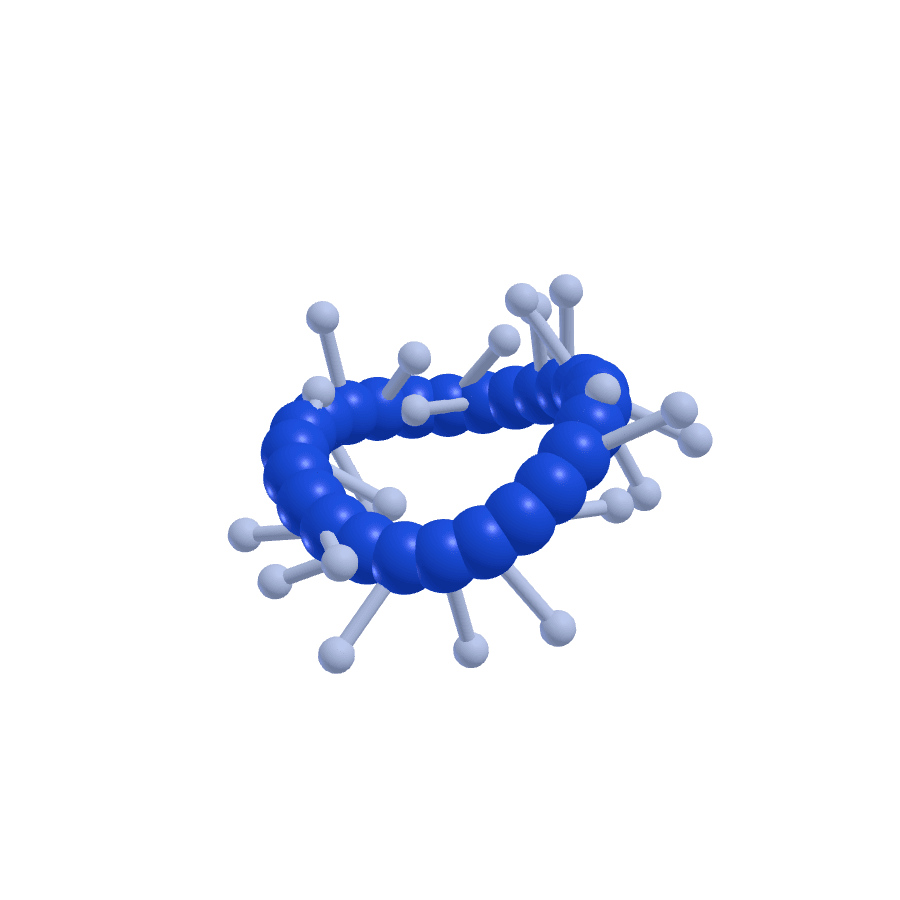
- C111H206N36O28S2
- Molecular weight
- 2557.2 g/mol
- CAS number
- 859216-15-2
- PubChem
- CID 163360068
PubChem record, read 23 September 2026.
- Route
- Injected as sold; monkeys only
- Half-life
- No human pharmacokinetic data
No pharmacokinetic study in people.
Regulatory status
No marketing authorisation anywhere. Supplying it for human use is an offence under national medicines law.
Investigational; one registered phase 1 with no reported result. Sold as a 'research chemical'.
No MHRA licence.
Not on the ARTG; imports are seized.
No Drug Identification Number.
As a non-approved substance it falls under the non-approved-substances class, prohibited in and out of competition.
Questions people actually ask
Does adipotide work for fat loss?
Is adipotide safe?
Why was it never developed?
One page per claimed effect
- DDoes Adipotide help with fat loss?0 published
- DDoes Adipotide help with fat loss?Preclinical only
- DHow common is kidney toxicity with Adipotide?Preclinical only
References
- 1Barnhart KF, Christianson DR, Hanley PW, et al. A peptidomimetic targeting white fat causes weight loss and improved insulin resistance in obese monkeys.Sci Transl Med, 2011Rhesus and other monkeys; preclinical; reversible kidney toxicity reported.
- 2Searches of PubMed and ClinicalTrials.gov for adipotide in humans.LYO literature search, September 2026Seven PubMed results, none clinical; the registered phase 1 (prostate cancer) has no published result.
Change log
- 2026-09-10Initial publication. Grade D: primate data only; kidney signal recorded.