What the human research shows
The most unusual molecule on this site: a venom peptide, delivered by implanted pump into cerebrospinal fluid, for pain that nothing else touches. Graded B rather than A — the trial quoted here is a 111-patient study that the journal later flagged as a duplicate publication, and the therapeutic window is narrow enough that the boxed warning is the first thing to read.
Evidence profile0–5
- Metabolic & weight—0.0
- Cardiovascular—0.0
- Muscle & growth—0.0
- Healing & repairB2.3
- Neuro & sleep—0.0
- Immune & inflammation—0.0
- Sexual & hormonal—0.0
- Skin & appearance—0.0
- Ageing & longevity—0.0
| Outcome | Grade | Effect size | Human studies | Where the evidence comes from |
|---|---|---|---|---|
| Severe cancer or AIDS-related pain | BProbable | Moderate | 1 phase 3 RCT (n=111) | A randomised placebo-controlled trial in 111 patients with severe pain despite intrathecal opioids found a mean 53.1% improvement in pain scores against 18.1% on placebo, sustained through the maintenance phase. The result is real and the record is messy: JAMA later published a notice of duplicate publication about this article and an accompanying editorial.123 |
| Absence of tolerance and dependence | BProbable | Moderate | Phase 3 programme; label | Ziconotide does not act on opioid receptors, so there is no tolerance, no dose escalation of the kind opioids require, and no withdrawal syndrome. The trial's maintenance phase showed no loss of effect. This is the central clinical argument for a drug that is otherwise very hard to use.14 |
| Severe psychiatric and neurological effectsadverse | AEstablished | Large | Label boxed warning; approval programme | The Prialt label's boxed warning states that severe psychiatric symptoms and neurological impairment may occur during treatment, and that the drug is contraindicated in patients with a pre-existing history of psychosis. Hallucinations, confusion, depression and in some cases suicidality have been reported, and monitoring for cognitive and psychiatric change is built into the label. The dose–harm relationship is the limiting factor in practice.4 |
| Delivery burdenadverse | AEstablished | Moderate | Label | Ziconotide is given only by continuous intrathecal infusion through an implanted or external pump — a surgical commitment with the infection and device risks that accompany it, and the reason it is a last-line therapy rather than an alternative to oral analgesia.4 |
Literature searched to 29 October 2026. Human studies only; animal and cell work informs the mechanism section and nothing else.
Registered trials
ClinicalTrials.gov lists 7 interventional studies naming Ziconotide as an intervention — 5 completed, and none with results posted to the registry.
A registration is not a result. Anyone can register a study, and many never report — so this list shows what has been attempted, not what has been shown. The graded evidence above is the answer to whether something works.
| Study | Phase | Status | Participants | Sponsor | Results |
|---|---|---|---|---|---|
| Intrathecal Bolus Doses of ZiconotideNCT01373983 · started Aug 2011 | Phase 4 | Completed | 26 | University Hospital, Linkoeping | None |
| Ziconotide as First-Line IDTNCT03321955 · started Nov 2016 | Phase 4 | Completed | 13 | Albany Medical College | None |
| Single Shot Intrathecal Ziconotide for Painful Neuropathy or MyelopathyNCT01992562 · started Jan 2014 | Phase 4 | Withdrawn | 0 | Aaron Boster | None |
| Ziconotide Effectiveness and Safety Trial in Patients With Chronic Severe PainNCT00076544 · started Feb 2004 | Phase 3 | Completed | 300* | Elan Pharmaceuticals | None |
| Prialt (Ziconotide) In Severe Chronic PainNCT00047749 · started Aug 2002 | Phase 3 | Completed | 220* | Elan Pharmaceuticals | None |
| A Multicenter Phase II/III, Placebo-Controlled Study of SNX-111 Administered Intrathecally to Cancer and AIDS Patients With Chronic PainNCT00002160 · started — | Phase 2 | Completed | 100* | Neurex | None |
| Safety and Activity Study of Intrathecally Administered Ziconotide for Neuropathic Pain in Patients With CancerNCT00996983 · started Sept 2009 | Phase 2 | Unknown | 16* | National Cancer Institute, Naples | None |
Participant counts marked * are the sponsor's estimate, not a final enrolment. Source: ClinicalTrials.gov, read directly from the registry and refreshed weekly.
What it is
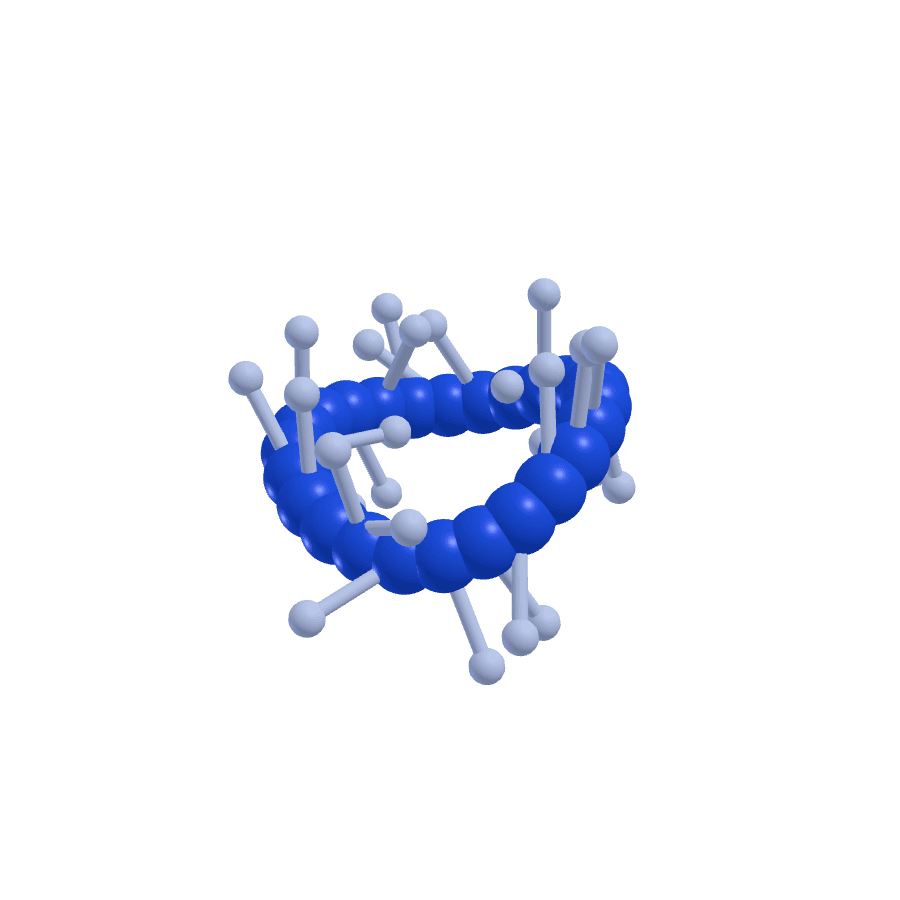
ω-Conotoxin MVIIA is one of the peptide toxins the predatory cone snail Conus magus uses to paralyse fish. It is 25 amino acids held by three disulfide bonds, and ziconotide is its synthetic copy — the first marine-derived peptide drug and still one of very few. Because it does not cross the blood-brain barrier, it has to be delivered directly into cerebrospinal fluid.
Its terminal half-life in CSF is around four and a half hours. It is a genuinely non-opioid analgesic for severe pain, and the clinical literature on it is as much about managing the psychiatric effects as about the analgesia.
How it is thought to work
N-type (Cav2.2) voltage-gated calcium channels sit on the presynaptic terminals of primary nociceptive neurons in the dorsal horn. Blocking them stops the calcium influx that releases glutamate and substance P, so the pain signal is not relayed up the cord. The same channels exist elsewhere in the central nervous system, which is where the psychiatric and cognitive adverse effects come from — the mechanism and the boxed warning are the same pharmacology in different places.
What is still unknown
- How it compares with intrathecal opioids in a modern head-to-head; the trials are twenty years old.
- Whether any dosing strategy avoids the psychiatric effects while keeping the analgesia.
- Which patients respond — no predictor has been established.
The molecule and how long it lasts
- Formula
- C102H172N36O32S7
- Molecular weight
- 2639.2 g/mol
- CAS number
- 107452-89-1
- PubChem
- CID 16135415
- Sequence
- CKGKGAKCSRLMYDCCTGSCRSGKC-NH2
Three disulfide bridges.
PubChem record, read 29 October 2026; the sequence was derived from that record's own structure and checked against the product label where one exists.
- Route
- Intrathecal infusion by implanted or external pump
- Half-life
- About 4.6 hours terminal half-life in cerebrospinal fluid
- Licensed regimen (Prialt)
- A continuous intrathecal infusion started at a low rate and titrated slowly upward within the label's maximum, with psychiatric and neurological monitoring
From the approved product's prescribing information: Prialt prescribing information (DailyMed) The regimen is the label's own wording, reproduced as a regulatory fact.
Regulatory status
Prialt authorised centrally in 2005 for severe chronic pain in patients requiring intrathecal analgesia. Specialist hospital use.
Prialt approved in 2004 for severe chronic pain in patients for whom intrathecal therapy is warranted and who are intolerant of or refractory to other treatment. Boxed warning; contraindicated with a pre-existing history of psychosis.
Prialt licensed by the MHRA for intrathecal use.
Registered for intrathecal use.
No current Drug Identification Number for ziconotide.
Not named on the Prohibited List.
Questions people actually ask
Is ziconotide stronger than morphine?
Why the psychiatric boxed warning?
Can ziconotide be injected or taken orally?
One page per claimed effect
- BDoes Ziconotide help with severe cancer or AIDS-related pain?1 phase 3 RCT (n=111)
- BDoes Ziconotide help with absence of tolerance and dependence?Phase 3 programme; label
- AHow common is severe psychiatric and neurological effects with Ziconotide?Label boxed warning; approval programme
- AHow common is delivery burden with Ziconotide?Label
References
- 1Staats PS, Yearwood T, Charapata SG, et al. Intrathecal ziconotide in the treatment of refractory pain in patients with cancer or AIDS: a randomized controlled trial.JAMA, 2004;291:63–70111 randomised. See the duplicate-publication notice below before citing this trial's size or novelty.
- 2Notice of duplicate publication.JAMA, 2004The journal's notice concerning the ziconotide trial above.
- 3
- 4Prialt (ziconotide) intrathecal infusion prescribing information.DailyMed, read 29 Oct 2026Boxed warning, contraindication in pre-existing psychosis, intrathecal route, CSF terminal half-life about 4.6 hours, and the 25-amino-acid structure with three disulfide bonds.
- 5PubChem compound record: ziconotide.PubChem, read 29 Oct 2026Formula, molecular weight, CAS and the 25-residue sequence used on this page.
Change log
- 2026-10-29Initial publication. Grade B on the pivotal trial, held below A because of the duplicate-publication notice; the psychiatric boxed-warning row graded A.