What the human research shows
An approved medicine whose main trial was negative — and which is still used, because reducing the catecholamine dose is a legitimate goal even when mortality does not move. Grade A throughout: the trials are large and the answers are clear, including the answer "no difference".
Evidence profile0–5
- Metabolic & weight—0.0
- Cardiovascular—0.0
- Muscle & growth—0.0
- Healing & repair—0.0
- Neuro & sleep—0.0
- Immune & inflammation—0.0
- Sexual & hormonal—0.0
- Skin & appearance—0.0
- Ageing & longevity—0.0
| Outcome | Grade | Effect size | Human studies | Where the evidence comes from |
|---|---|---|---|---|
| Mortality in septic shock | AEstablished | Not measurable | 1 large RCT (VASST, n=778) | VASST randomised 778 patients with septic shock to vasopressin or noradrenaline infusion in addition to open-label vasopressors. There was no difference in 28-day or 90-day mortality. A large, well-conducted negative trial, and the reason vasopressin is a catecholamine-sparing adjunct rather than a survival intervention.1 |
| Raising blood pressure in vasodilatory shock | AEstablished | Moderate | Approval programme; label | The licensed indication. Vasopressin raises mean arterial pressure through V1 receptors on vascular smooth muscle by a pathway independent of the adrenergic receptors, which is why it works when catecholamines are failing and why it lets their dose come down.2 |
| Serious adverse eventsadverse | AEstablished | Not measurable | 1 large RCT (VASST, n=778) | In VASST serious adverse events occurred at the same rate in both arms. The clinically watched risks — digital and mesenteric ischaemia from intense vasoconstriction — did not separate the groups at the doses studied.1 |
| Water retention and low sodiumadverse | AEstablished | Moderate | Label; the desmopressin literature | V2 receptor activation in the kidney is the antidiuretic effect, and its consequence is dilutional hyponatraemia — the harm that defines the whole vasopressin family, and the reason its analogue desmopressin carries a sodium warning in older patients.2 |
Literature searched to 29 October 2026. Human studies only; animal and cell work informs the mechanism section and nothing else.
Registered trials
ClinicalTrials.gov lists 18 interventional studies naming Vasopressin as an intervention — 7 completed, 6 recruiting, and none with results posted to the registry.
A registration is not a result. Anyone can register a study, and many never report — so this list shows what has been attempted, not what has been shown. The graded evidence above is the answer to whether something works.
| Study | Phase | Status | Participants | Sponsor | Results |
|---|---|---|---|---|---|
| Vasopressin for Septic Shock Pragmatic TrialNCT06217562 · started Feb 2024 | Phase 4 | Completed | 3,959 | Intermountain Health Care, Inc. | None |
| Early Versus Late Adjunctive Vasopressin in Septic ShockNCT06709573 · started Apr 2025 | Phase 4 | Recruiting | 300* | The Cleveland Clinic | None |
| Renal Outcomes in the Early Use of Vasopressin in the Treatment of Septic ShockNCT06471231 · started May 2024 | Phase 4 | Unknown | 264* | Azienda Usl di Bologna | None |
| NOrepinephrine and VasoprEssin Versus Norepinephrine aLone in Critically Ill Patients With Septic ShockNCT02454348 · started Nov 2015 | Phase 4 | Withdrawn | 0 | University of Arkansas | None |
| Angiotensin II vs. Vasopressin in Septic ShockNCT05193370 · started Jan 2022 | Phase 4 | Withdrawn | 0 | University of New Mexico | None |
| Norepinephrine and Vasopressin for Rescue Versus Early Vasopressin for Vasopressor Dependent SepsisNCT06464510 · started Nov 2024 | Phase 3 | Recruiting | 2,800* | Hospital do Coracao | None |
| VAsopressin and STeroids in Addition to Adrenaline in Cardiac Arrest - a Randomized Clinical TrialNCT05139849 · started Nov 2021 | Phase 3 | Recruiting | 1,276* | Tiohundra AB | None |
| Vasopressin Versus Norepinephrine for the Management of Septic Shock in Cancer PatientsNCT01718613 · started Nov 2012 | Phase 3 | Completed | 250 | Instituto do Cancer do Estado de São Paulo | None |
10 further studies are registered. Participant counts marked * are the sponsor's estimate, not a final enrolment. Source: ClinicalTrials.gov, read directly from the registry and refreshed weekly.
What it is
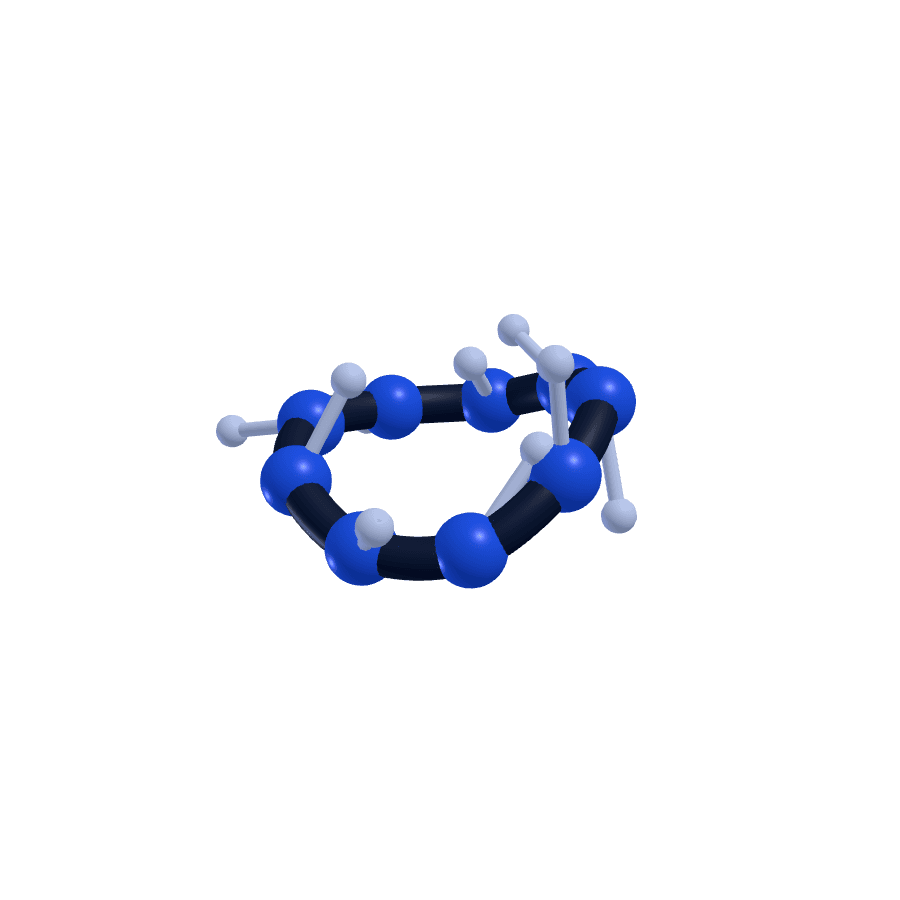
Vasopressin is a nine-residue cyclic peptide made in the hypothalamus and released from the posterior pituitary, with a disulfide bridge between residues 1 and 6. Two receptor families explain everything it does: V1 on vascular smooth muscle, which constricts vessels, and V2 in the kidney's collecting ducts, which retains water. The Vasostrict label gives the structure as cyclo(1-6)Cys-Tyr-Phe-Gln-Asn-Cys-Pro-Arg-Gly-NH2.
Its therapeutic descendants are on this site already: desmopressin is vasopressin re-engineered to keep the water effect and drop the vascular one. Vasopressin itself is a hospital drug given by infusion with continuous monitoring, and has no grey-market presence — which is the point of including it.
How it is thought to work
V1 receptor activation raises intracellular calcium in vascular smooth muscle and constricts arterioles, independently of alpha-adrenergic signalling — the property that makes it useful when noradrenaline alone is not holding blood pressure. V2 receptors insert aquaporin channels into the collecting duct, concentrating urine. Its apparent half-life is minutes, so the effect is titrated by infusion rate and disappears quickly when the infusion stops.
What is still unknown
- Whether earlier initiation, or particular subgroups, would show a mortality benefit; VASST's subgroup signals were not confirmed.
- The optimal place of vasopressin relative to other second-line vasopressors.
The molecule and how long it lasts
- Formula
- C46H65N15O12S2
- Molecular weight
- 1084.2 g/mol
- CAS number
- 113-79-1
- PubChem
- CID 644077
- Sequence
- CYFQNCPRG-NH2
One disulfide bridge, Cys1-Cys6.
Recorded as argipressin, the human (arginine) form
PubChem record, read 29 October 2026; the sequence was derived from that record's own structure and checked against the product label where one exists.
- Route
- Intravenous infusion (hospital use)
- Half-life
- Apparent half-life no more than 10 minutes
- Licensed regimen (Vasostrict)
- A continuous infusion started at a low rate and titrated to the target blood pressure, in monitored care
From the approved product's prescribing information: Vasostrict prescribing information (DailyMed) The regimen is the label's own wording, reproduced as a regulatory fact.
Regulatory status
Argipressin products authorised in several member states for vasodilatory shock and diagnostic use.
Vasostrict approved to increase blood pressure in adults with vasodilatory shock who remain hypotensive despite fluids and catecholamines. Intravenous infusion, hospital use.
Argipressin licensed for vasodilatory shock.
Registered for hospital use.
Vasopressin injection authorised with a Drug Identification Number.
Vasopressin itself is not named; its analogue desmopressin is prohibited as a masking agent (S5), and plasma expanders and masking agents are the relevant category.
Questions people actually ask
Does vasopressin save lives in septic shock?
Is vasopressin the same as desmopressin?
Why is it only used in hospital?
One page per claimed effect
- ADoes Vasopressin help with mortality in septic shock?1 large RCT (VASST, n=778)
- ADoes Vasopressin help with raising blood pressure in vasodilatory shock?Approval programme; label
- AHow common is serious adverse events with Vasopressin?1 large RCT (VASST, n=778)
- AHow common is water retention and low sodium with Vasopressin?Label; the desmopressin literature
References
- 1Russell JA, Walley KR, Singer J, et al. Vasopressin versus norepinephrine infusion in patients with septic shock (VASST).N Engl J Med, 2008;358:877–887778 randomised; no difference in 28-day or 90-day mortality.
- 2Vasostrict (vasopressin injection) prescribing information.DailyMed, read 29 Oct 2026Intravenous infusion; apparent half-life under 10 minutes; indication in vasodilatory shock; chemical structure.
- 3PubChem compound record: argipressin (vasopressin).PubChem, read 29 Oct 2026Formula, molecular weight, CAS and the nine-residue sequence used on this page.
Change log
- 2026-10-29Initial publication. Grade A throughout, including the negative mortality row from VASST.