What the human research shows
A rare case of a peptide with a large, well-run, negative trial. The B reflects decades of moderate-quality positive RCTs in hepatitis and as a vaccine adjunct, cut down by TESTS, which is the highest-quality evidence on the compound and found nothing. Earlier meta-analyses that showed benefit in sepsis were built on trials smaller than this one.
Evidence profile0–5
- Metabolic & weight—0.0
- Cardiovascular—0.0
- Muscle & growth—0.0
- Healing & repair—0.0
- Neuro & sleep—0.0
- Immune & inflammationA1.2
- Sexual & hormonal—0.0
- Skin & appearance—0.0
- Ageing & longevity—0.0
| Outcome | Grade | Effect size | Human studies | Where the evidence comes from |
|---|---|---|---|---|
| Sepsis mortality | AEstablished | Not measurable | 1 large phase 3 RCT + earlier smaller RCTs | TESTS, 1,106 adults in 22 Chinese ICUs, twice-daily injections for 7 days: 28-day mortality 23.4% versus 24.1% on placebo (hazard ratio 0.99, 95% CI 0.77–1.27). No secondary or safety outcome differed. Earlier smaller trials that suggested benefit are superseded.1 |
| Chronic hepatitis B (viral response) | BProbable | Small | 10+ RCTs, mostly small | Trials from the 1990s–2000s show modest increases in sustained response, alone or with interferon; heterogeneous quality. The basis for the Zadaxin approvals.2 |
| Vaccine response in the elderly and dialysis patients | BProbable | Small | Several RCTs | Improved seroconversion to influenza and hepatitis B vaccines in older adults and haemodialysis patients in randomised studies; effect sizes moderate, trials small.2 |
| COVID-19 outcomes | CWeak | Small | Observational + small RCTs | Chinese observational cohorts and small randomised studies reported lower mortality in severe COVID-19; confounded and never confirmed in a large trial.3 |
| Safetyadverse | AEstablished | Not measurable | TESTS + decades of use | Injection-site reactions; no signal for serious harm in TESTS or in long clinical use. Subgroup findings in TESTS (worse in under-60s, better in diabetics) are hypothesis-generating only.1 |
Literature searched to 3 September 2026. Human studies only; animal and cell work informs the mechanism section and nothing else.
Registered trials
ClinicalTrials.gov lists 50 interventional studies naming Thymosin α1 as an intervention — 19 completed, 8 recruiting, and 2 with results posted to the registry.
A registration is not a result. Anyone can register a study, and many never report — so this list shows what has been attempted, not what has been shown. The graded evidence above is the answer to whether something works.
42 further studies are registered. Participant counts marked * are the sponsor's estimate, not a final enrolment. Source: ClinicalTrials.gov, read directly from the registry and refreshed weekly.
What it is
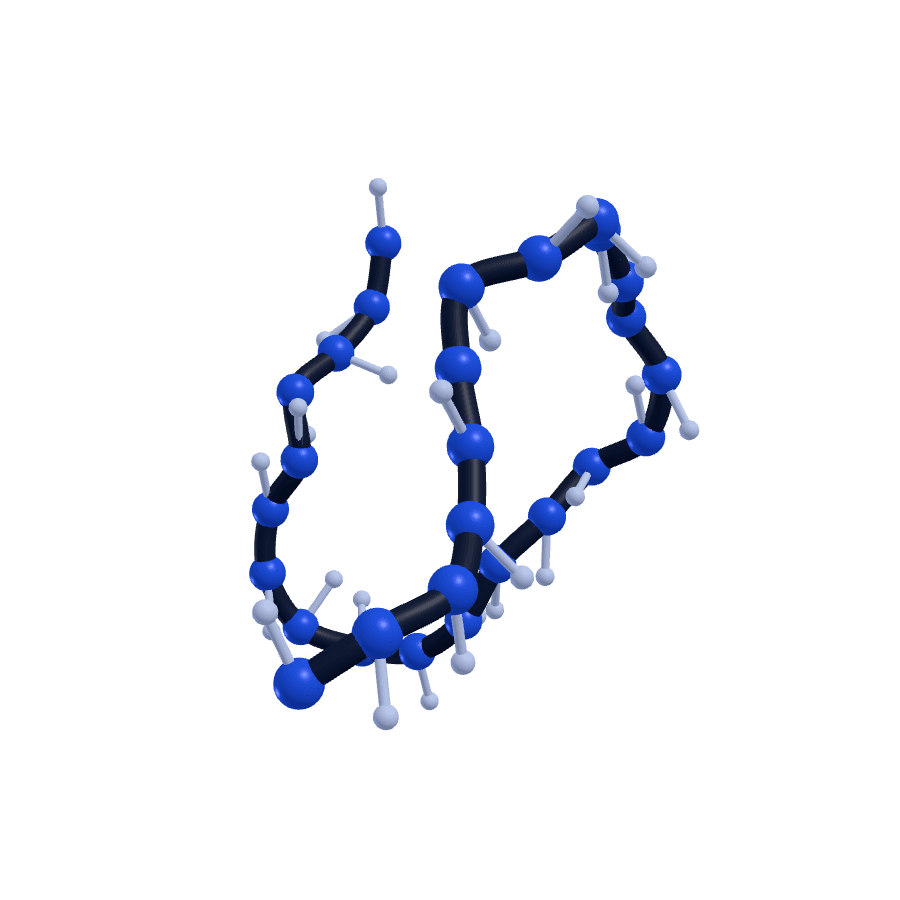
A naturally occurring acetylated peptide, N-terminal fragment of prothymosin α, first isolated from calf thymus in 1977. The synthetic drug (thymalfasin, Zadaxin) was developed by SciClone and is approved in China — its largest market by far — plus Italy and a scattering of countries in Asia, Latin America and the Middle East.
In the United States it has orphan designation for several indications but no approval; in the EU it is authorised only in Italy under national rules. The 'research' vials sold online are unrelated to the licensed product.
How it is thought to work
Acts through Toll-like receptors on dendritic cells and enhances T-cell maturation and function, tilting the immune response toward antiviral and antitumour activity while dampening excessive inflammation. In sepsis the hypothesis was that it would reverse immune paralysis; TESTS did not bear it out.
What is still unknown
- Whether any subgroup in sepsis genuinely benefits — the trial's age and diabetes signals need their own trials.
- Its value as a hepatitis B adjunct in the era of modern antivirals.
The molecule and how long it lasts
- Formula
- C129H215N33O55
- Molecular weight
- 3108.3 g/mol
- CAS number
- 62304-98-7
- PubChem
- CID 16130571
PubChem record, read 23 September 2026.
- Route
- Subcutaneous
- Half-life
- Less than 3 hours (subcutaneous, healthy volunteers)
From a published human pharmacokinetic study: Pharmacokinetics of thymosin alpha1 after subcutaneous injection of three different formulations in healthy volunteers. Int J Clin Pharmacol Ther 1999
Regulatory status
Zadaxin is nationally authorised in Italy; no EU-wide marketing authorisation. Elsewhere in the EU it is an unauthorised medicine.
Orphan designations but no approval. Its 503A compounding nomination is listed as withdrawn (April 2026).
No MHRA licence; unlicensed medicine when supplied for human use.
Not on the ARTG; prescription-only substance.
No DIN.
Approved in several countries, so S0 does not apply; not named in any section.
Questions people actually ask
Is thymosin alpha 1 approved?
Does thymosin alpha 1 help in sepsis?
Is it the same as TB-500?
One page per claimed effect
- ADoes Thymosin α1 help with sepsis mortality?1 large phase 3 RCT + earlier smaller RCTs
- BDoes Thymosin α1 help with chronic hepatitis B?10+ RCTs, mostly small
- BDoes Thymosin α1 help with vaccine response in the elderly and dialysis patients?Several RCTs
- CDoes Thymosin α1 help with COVID-19 outcomes?Observational + small RCTs
- AHow common is safety with Thymosin α1?TESTS + decades of use
References
- 1Wu J, et al. The efficacy and safety of thymosin α1 for sepsis (TESTS): multicentre, double blinded, randomised, placebo controlled, phase 3 trial.BMJ, 2025; 388:e0825831,106 adults; 28-day mortality 23.4% vs 24.1%.
- 2Thymalfasin (Zadaxin) clinical overview: hepatitis B and vaccine-adjuvant randomised trials.Multiple journals, 1996–2015Heterogeneous, mostly small RCTs.
- 3Efficacy of thymosin α1 for sepsis: a systematic review and meta-analysis of randomized controlled trials.Front Cell Infect Microbiol, 2025Includes TESTS; earlier pooled estimates were driven by small trials.
Change log
- 2026-09-03Initial publication, led by the TESTS trial.