What the human research shows
C because there are real randomised trials — and they are equivocal. The larger, better trial was negative on its primary endpoint. Everything about systemic use is animal or cell data, and the biology cuts both ways: LL-37 is implicated in psoriasis, rosacea and autoimmunity, not only in defence.
Evidence profile0–5
- Metabolic & weight—0.0
- Cardiovascular—0.0
- Muscle & growth—0.0
- Healing & repairC0.7
- Neuro & sleep—0.0
- Immune & inflammationD0.0
- Sexual & hormonal—0.0
- Skin & appearance—0.0
- Ageing & longevity—0.0
| Outcome | Grade | Effect size | Human studies | Where the evidence comes from |
|---|---|---|---|---|
| Venous leg ulcer healing (topical) | CWeak | Small | 2 RCTs (n=34, n=148) | Phase 2a (2014): 34 patients, healing rate roughly six-fold faster at 0.5 mg/ml than placebo over 4 weeks. Phase 2b (2021): 148 patients, 13 weeks; complete closure 26.5% and 24.7% versus 25.3% on placebo — no difference overall, a significant benefit only in ulcers of 10 cm² or more (28.1% versus 8.1%).12 |
| Antimicrobial action in people | DNo human evidence | Not measurable | 0 controlled | Kills bacteria in vitro and in animal models; no human trial has tested LL-37 as an anti-infective in any route.3 |
| Systemic 'immune support' or anti-inflammatory use | DNo human evidence | Not measurable | 0 | No human data by injection at all. In cells and mice LL-37 is a driver of inflammation in psoriasis and lupus, which argues against, not for, the marketed use.3 |
| Safety (topical)adverse | CWeak | Not measurable | 2 RCTs | Topical gel well tolerated in both trials; serious adverse events in 7.4% of the phase 2b population, none attributed to the drug. Nothing is known about injected use.2 |
Literature searched to 3 September 2026. Human studies only; animal and cell work informs the mechanism section and nothing else.
Registered trials
ClinicalTrials.gov lists 2 interventional studies naming LL-37 as an intervention — 1 completed, and 1 with results posted to the registry.
A registration is not a result. Anyone can register a study, and many never report — so this list shows what has been attempted, not what has been shown. The graded evidence above is the answer to whether something works.
| Study | Phase | Status | Participants | Sponsor | Results |
|---|---|---|---|---|---|
| Intratumoral Injections of LL37 for MelanomaNCT02225366 · started Jul 2015 | Phase 1 | Completed | 4 | M.D. Anderson Cancer Center | Posted |
| Efficacy of LL-37 Cream on Bacteria Colonization, Inflammation Response and Healing Rate of Diabetic Foot UlcersNCT04098562 · started Oct 2019 | Phase 2 | Unknown | 40* | Fakultas Kedokteran Universitas Indonesia | None |
Participant counts marked * are the sponsor's estimate, not a final enrolment. Source: ClinicalTrials.gov, read directly from the registry and refreshed weekly.
What it is
The active fragment cleaved from the human cathelicidin precursor hCAP18. It is part of innate immunity: released by neutrophils, keratinocytes and epithelial cells, it disrupts bacterial membranes, binds endotoxin and recruits immune cells.
A Swedish company, Pergamum (later Promore Pharma), developed a topical LL-37 gel (LL-37/PXL01 programme) for chronic wounds; the 2021 phase 2b result stalled it. No systemic LL-37 product has ever entered a human trial.
How it is thought to work
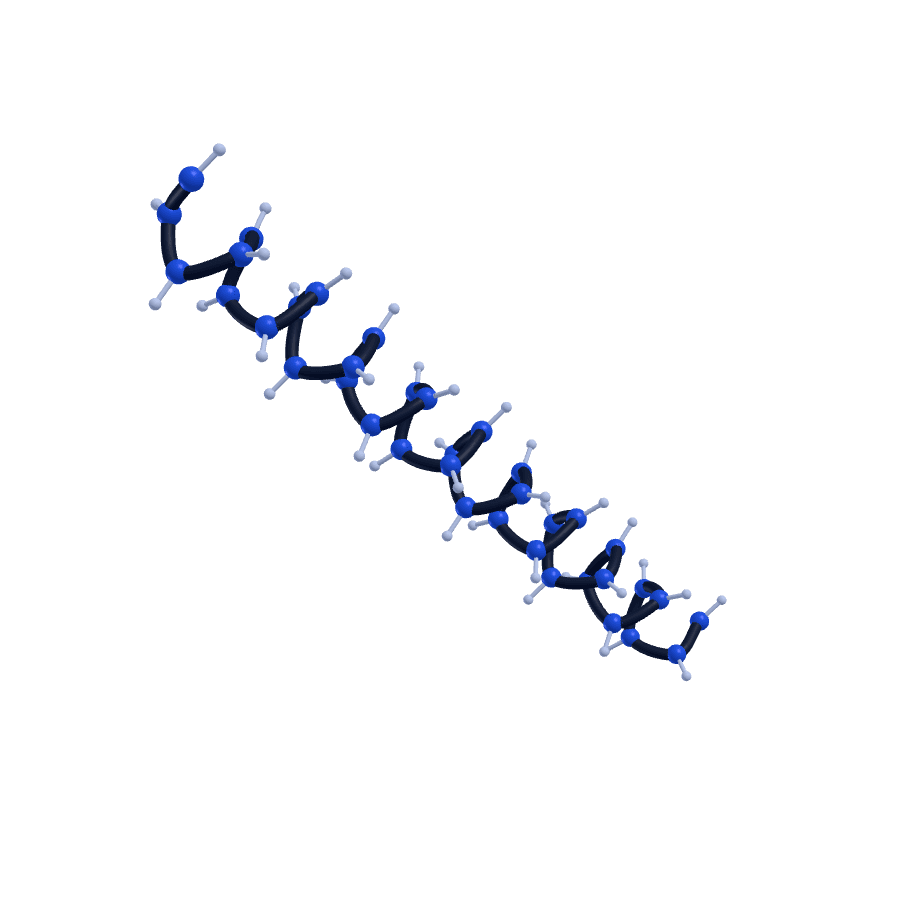
Its amphipathic helix inserts into bacterial membranes. Separately it acts on host receptors — FPR2, P2X7, EGFR — to drive chemotaxis, angiogenesis and re-epithelialisation, which is the wound-healing rationale. The same signalling, sustained, is a feature of inflammatory skin disease.
What is still unknown
- Whether a topical product could work in a defined wound population — the phase 2b subgroup was not pre-specified.
- Anything at all about injected LL-37 in humans.
The molecule and how long it lasts
- Formula
- C205H340N60O53
- Molecular weight
- 4493 g/mol
- CAS number
- 154947-66-7
- PubChem
- CID 16198951
PubChem record, read 23 September 2026.
- Route
- Topical in the trials; injected as sold with no human study
- Half-life
- No human pharmacokinetic data
No pharmacokinetic study in people.
Regulatory status
No marketing authorisation. Supplying it for human use is an offence under national medicines law.
Its 503A nomination (cathelicidin LL-37) is listed as withdrawn since April 2026; it was not among the peptides the advisory committee reviewed in July 2026.
Selling or supplying it for human use is an offence.
Prescription-only substance not on the ARTG.
No DIN; selling it is illegal.
Unapproved anywhere, so it falls under S0 (non-approved substances).
Questions people actually ask
Does LL-37 heal wounds?
Is LL-37 an antibiotic?
Is injected LL-37 anti-inflammatory?
One page per claimed effect
- CDoes LL-37 help with venous leg ulcer healing?2 RCTs (n=34, n=148)
- DDoes LL-37 help with antimicrobial action in people?0 controlled
- DDoes LL-37 help with systemic 'immune support' or anti-inflammatory use?0
- CHow common is safety with LL-37?2 RCTs
References
- 1Grönberg A, et al. Treatment with LL-37 is safe and effective in enhancing healing of hard-to-heal venous leg ulcers: a randomized, placebo-controlled clinical trial.Wound Repair Regen, 2014; DOI 10.1111/wrr.1221134 patients, phase 1/2a.
- 2Mahlapuu M, et al. Evaluation of LL-37 in healing of hard-to-heal venous leg ulcers: a multicentric prospective randomized placebo-controlled clinical trial.Wound Repair Regen, 2021148 patients, phase 2b; primary endpoint not met.
- 3Reviews of LL-37 biology in infection, wound repair and autoimmunity.VariousPreclinical mechanism; no systemic human data.
Change log
- 2026-09-03Initial publication from the two topical wound-healing trials.