What the human research shows
A peptide that solved a problem nothing else solves: reducing dependence on intravenous nutrition in a rare, severe condition. Grade A on a randomised placebo-controlled phase 3 with a hard, patient-relevant endpoint, and a real oncological caution attached.
Evidence profile0–5
- Metabolic & weight—0.0
- Cardiovascular—0.0
- Muscle & growth—0.0
- Healing & repair—0.0
- Neuro & sleep—0.0
- Immune & inflammation—0.0
- Sexual & hormonal—0.0
- Skin & appearance—0.0
- Ageing & longevity—0.0
| Outcome | Grade | Effect size | Human studies | Where the evidence comes from |
|---|---|---|---|---|
| Reduced parenteral support in short bowel syndrome | AEstablished | Moderate | 1 phase 3 RCT (STEPS, n=86, 24 wk) | STEPS randomised 86 adults dependent on parenteral support to daily teduglutide or placebo. The response endpoint — a 20–100% reduction in weekly parenteral volume at weeks 20 and 24 — was reached by 63% against 30% on placebo.1 |
| Days free of intravenous feeding | AEstablished | Moderate | 1 phase 3 RCT (STEPS, n=86, 24 wk) | The outcome patients feel: more than half of treated patients gained at least one night a week off parenteral support, against under a quarter on placebo.1 |
| Colorectal neoplasia riskadverse | AEstablished | Small | Label; approval programme | Because teduglutide is trophic to intestinal mucosa, the Gattex label requires colonoscopy before starting and at intervals thereafter, and lists colorectal polyps and the theoretical risk of neoplasia. An intended mechanism that is also the main long-term caution.2 |
| Gastrointestinal and stoma adverse effectsadverse | AEstablished | Moderate | Approval programme | Abdominal pain and distension, nausea, stoma complications and fluid overload are the common adverse effects in the label — the predictable consequences of making remaining bowel absorb more.2 |
Literature searched to 29 October 2026. Human studies only; animal and cell work informs the mechanism section and nothing else.
Registered trials
ClinicalTrials.gov lists 36 interventional studies naming Teduglutide as an intervention — 32 completed, 1 recruiting, and 19 with results posted to the registry.
A registration is not a result. Anyone can register a study, and many never report — so this list shows what has been attempted, not what has been shown. The graded evidence above is the answer to whether something works.
28 further studies are registered. Participant counts marked * are the sponsor's estimate, not a final enrolment. Source: ClinicalTrials.gov, read directly from the registry and refreshed weekly.
What it is
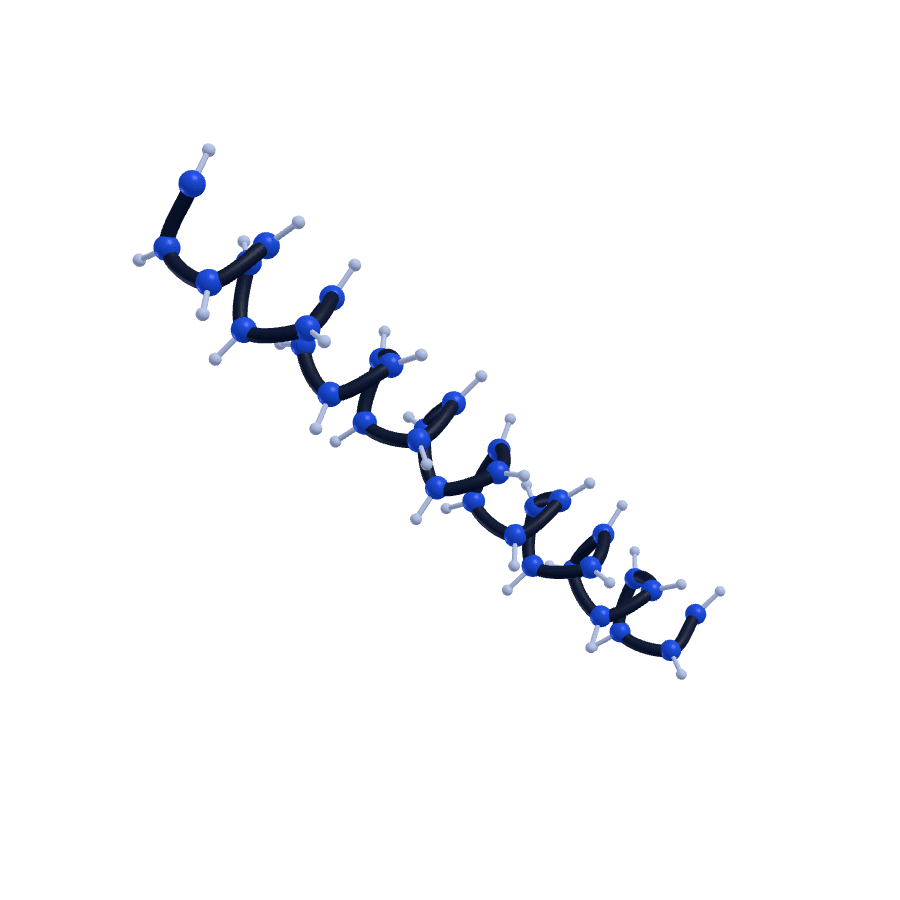
GLP-2 is released by intestinal L-cells and makes remaining bowel grow and absorb more; it is destroyed in minutes by DPP-4. Teduglutide replaces the alanine at position two with glycine, which resists that enzyme and extends the terminal half-life to roughly two hours — enough for daily dosing. The Gattex label describes it as a 33-amino-acid peptide with a molecular weight of 3752.
Short bowel syndrome is rare and its treatment is parenteral nutrition, with the line infections, liver disease and daily burden that come with it. Teduglutide is the only approved drug that reduces how much of it people need, which is why it is on this site: a peptide that changed a standard of care.
How it is thought to work
GLP-2 receptor activation increases villus height and crypt depth, slows transit and raises mesenteric blood flow, so a shortened intestine absorbs more fluid and nutrients. Everything useful and everything concerning about the drug comes from the same action: a trophic signal to intestinal mucosa, which is why the label requires colonoscopic surveillance.
What is still unknown
- Long-term neoplasia risk over decades of use; the surveillance requirement exists because the question is open.
- Whether benefit is sustained indefinitely or wanes, and what happens on stopping.
- Whether the GLP-2 pathway helps in commoner intestinal conditions; the randomised evidence is in short bowel syndrome.
The molecule and how long it lasts
- Formula
- C164H252N44O55S
- Molecular weight
- 3752.1 g/mol
- CAS number
- 197922-42-2
- PubChem
- CID 16139605
- Sequence
- HGDGSFSDEMNTILDNLAARDFINWLIQTKITD
PubChem record, read 29 October 2026; the sequence was derived from that record's own structure and checked against the product label where one exists.
- Route
- Subcutaneous injection, once daily
- Half-life
- About 2 hours in healthy subjects and about 1.3 hours in short bowel syndrome
- Licensed regimen (Gattex)
- 0.05 mg/kg once daily
From the approved product's prescribing information: Gattex prescribing information (DailyMed) The regimen is the label's own wording, reproduced as a regulatory fact.
Regulatory status
Revestive authorised centrally since 2012 for short bowel syndrome in adults and children aged 4 months and above.
Gattex approved in 2012 for adults and, since 2019, children aged 1 year and above dependent on parenteral support.
Revestive licensed by the MHRA.
Revestive registered on the ARTG.
Revestive authorised with a Drug Identification Number.
GLP-2 analogues are not named on the Prohibited List.
Questions people actually ask
What does teduglutide do?
Why does the label require colonoscopy?
Is teduglutide related to the GLP-1 obesity drugs?
One page per claimed effect
- ADoes Teduglutide help with reduced parenteral support in short bowel syndrome?1 phase 3 RCT (STEPS, n=86, 24 wk)
- ADoes Teduglutide help with days free of intravenous feeding?1 phase 3 RCT (STEPS, n=86, 24 wk)
- AHow common is colorectal neoplasia risk with Teduglutide?Label; approval programme
- AHow common is gastrointestinal and stoma adverse effects with Teduglutide?Approval programme
References
- 1Jeppesen PB, Pertkiewicz M, Messing B, et al. Teduglutide reduces need for parenteral support among patients with short bowel syndrome with intestinal failure (STEPS).Gastroenterology, 2012;143:1473–148186 randomised, 24 weeks. NCT00798967.
- 2Gattex (teduglutide) prescribing information.DailyMed, read 29 Oct 2026Route, half-life, licensed regimen, colonoscopy requirement, and the 33-amino-acid structure.
- 3PubChem compound record: teduglutide.PubChem, read 29 Oct 2026Formula, molecular weight, CAS and the sequence used on this page.
Change log
- 2026-10-29Initial publication. Grade A on STEPS and the approval programme.