What the human research shows
A textbook case of a positive phase 2 that did not survive phase 3. The inverse dose–response in the phase 2b — the lowest dose working and the higher ones not — was the warning sign; the futility stop in 2022 confirmed it. Graded C: real randomised human data, and a development programme that ended.
Evidence profile0–5
- Metabolic & weight—0.0
- Cardiovascular—0.0
- Muscle & growth—0.0
- Healing & repair—0.0
- Neuro & sleep—0.0
- Immune & inflammation—0.0
- Sexual & hormonal—0.0
- Skin & appearance—0.0
- Ageing & longevity—0.0
| Outcome | Grade | Effect size | Human studies | Where the evidence comes from |
|---|---|---|---|---|
| Coeliac symptoms on a gluten-free diet | CWeak | Small | 1 phase 2b RCT (n=342, 12 wk) | In a 12-week trial of 342 adults with coeliac disease and persistent symptoms despite a gluten-free diet, the lowest of three doses reduced symptoms against placebo on the primary endpoint. The two higher doses did not. An unexplained inverse dose–response in a single phase 2b is weak ground, and the confirmatory trial did not confirm it.1 |
| Dose–response | CWeak | Not measurable | 1 phase 2b RCT (n=342) | The higher doses were flat. Where a drug's effect does not increase with dose, the most parsimonious explanation for a single positive arm is chance.1 |
| Confirmation in phase 3 | AEstablished | Not measurable | 1 phase 3 RCT stopped at interim analysis | CeDLara, the registrational phase 3 trial, was discontinued in June 2022 after a pre-specified interim analysis of roughly half of a planned 525 patients: the sponsor said the number of additional patients needed to show an effect was too large to support continuing. A futility stop is a negative result, and graded on the strength of the design rather than the direction of the finding.2 |
| Safetyadverse | CWeak | Not measurable | Phase 2 programme | Tolerability across the phase 2 programme was broadly similar to placebo; larazotide is not absorbed to any meaningful extent and acts in the gut lumen. Safety was never the obstacle. |
Literature searched to 29 October 2026. Human studies only; animal and cell work informs the mechanism section and nothing else.
Registered trials
ClinicalTrials.gov lists 13 interventional studies naming Larazotide as an intervention — 11 completed, and none with results posted to the registry.
A registration is not a result. Anyone can register a study, and many never report — so this list shows what has been attempted, not what has been shown. The graded evidence above is the answer to whether something works.
| Study | Phase | Status | Participants | Sponsor | Results |
|---|---|---|---|---|---|
| Study to Evaluate the Efficacy and Safety of Larazotide Acetate for the Relief of CeD SymptomsNCT03569007 · started May 2019 | Phase 3 | Terminated | 307 | 9 Meters Biopharma, Inc. | None |
| A Double-blind Placebo-controlled Study to Evaluate Larazotide Acetate for the Treatment of Celiac DiseaseNCT01396213 · started Nov 2011 | Phase 2 | Completed | 342 | 9 Meters Biopharma, Inc. | None |
| Study to Assess the Efficacy of Larazotide Acetate for the Treatment of Celiac DiseaseNCT00492960 · started Aug 2007 | Phase 2 | Completed | 171 | 9 Meters Biopharma, Inc. | None |
| AT1001 for the Treatment of Long COVIDNCT05747534 · started May 2023 | Phase 2 | Completed | 107 | Massachusetts General Hospital | None |
| Randomized, Double-Blind, Placebo-Controlled Study of Larazotide Acetate in Subjects With Active Celiac DiseaseNCT00620451 · started Feb 2008 | Phase 2 | Completed | 105 | 9 Meters Biopharma, Inc. | None |
| Safety and Tolerability Study of Larazotide Acetate in Celiac Disease SubjectsNCT00362856 · started Sept 2006 | Phase 2 | Completed | 80 | 9 Meters Biopharma, Inc. | None |
| Study of the Efficacy of Larazotide Acetate to Treat Celiac DiseaseNCT00889473 · started Apr 2009 | Phase 2 | Completed | 42 | 9 Meters Biopharma, Inc. | None |
| AT1001 for the Treatment of COVID-19 Related MIS-CNCT05022303 · started Oct 2021 | Phase 2 | Terminated | 12 | Massachusetts General Hospital | None |
5 further studies are registered. Participant counts marked * are the sponsor's estimate, not a final enrolment. Source: ClinicalTrials.gov, read directly from the registry and refreshed weekly.
What it is
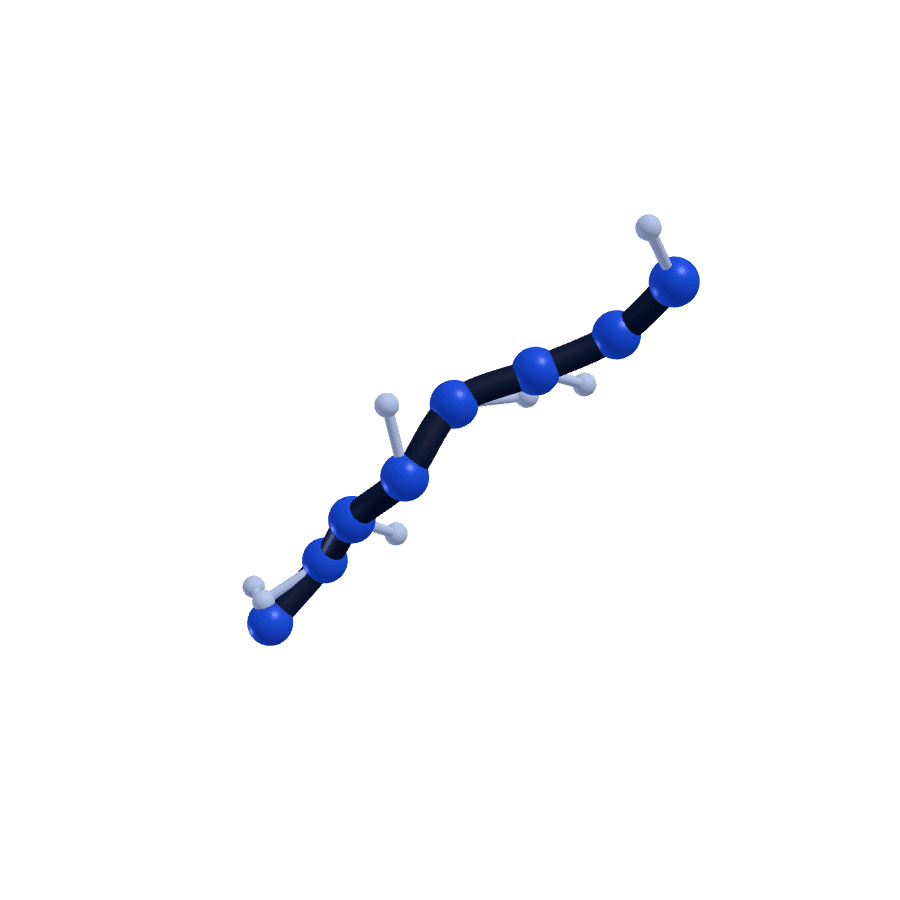
Larazotide acetate is an eight-residue peptide (Gly-Gly-Val-Leu-Val-Gln-Pro-Gly) derived from a cholera-toxin-related protein, given orally and intended to act locally in the small intestine rather than be absorbed. It was the furthest-advanced candidate in coeliac disease, a condition with no drug treatment at all, and passed through Alba Therapeutics, Innovate Biopharmaceuticals and 9 Meters Biopharma.
The target is the leaky tight junction: in coeliac disease gluten fragments cross the epithelium and drive the immune response, and larazotide was intended to narrow that route. The hypothesis has also attracted interest in other "leaky gut" conditions, where it has no controlled human evidence.
How it is thought to work
Zonulin signalling opens intestinal tight junctions; larazotide is a zonulin antagonist, and in preclinical work it reduces the paracellular passage of gliadin peptides. The clinical hypothesis follows: less gluten crossing the barrier, less immune activation, fewer symptoms. The phase 2b is the only randomised result that supports it, and only at one dose.
What is still unknown
- Why the lowest dose outperformed the higher ones; no mechanism has been established.
- Whether any dose has a real effect — the phase 3 was stopped before it could answer.
- Whether tight-junction regulation helps in any other condition; nothing randomised exists outside coeliac disease.
The molecule and how long it lasts
- Formula
- C32H55N9O10
- Molecular weight
- 725.8 g/mol
- CAS number
- 258818-34-7
- PubChem
- CID 9810532
- Sequence
- GGVLVQPG
PubChem record, read 29 October 2026; the sequence was derived from that record's own structure and checked against the product label where one exists.
- Route
- Oral capsule, taken before meals in the trials
- Half-life
- Not established; larazotide acts in the intestinal lumen and is not meaningfully absorbed
From a published human pharmacokinetic study: Larazotide phase 2b trial (Gastroenterology, 2015)
Regulatory status
Investigational; no marketing authorisation.
Investigational. Development discontinued after the 2022 interim analysis of the phase 3 trial. Products sold under the name are not the trial drug.
No MHRA licence.
Investigational only.
No Drug Identification Number.
Unapproved anywhere, so S0 (non-approved substances).
Questions people actually ask
Is larazotide a treatment for coeliac disease?
Does larazotide fix "leaky gut"?
Why did the phase 3 trial stop?
One page per claimed effect
- CDoes Larazotide help with coeliac symptoms on a gluten-free diet?1 phase 2b RCT (n=342, 12 wk)
- CDoes Larazotide help with dose–response?1 phase 2b RCT (n=342)
- ADoes Larazotide help with confirmation in phase 3?1 phase 3 RCT stopped at interim analysis
- CHow common is safety with Larazotide?Phase 2 programme
References
- 1Leffler DA, Kelly CP, Green PH, et al. Larazotide acetate for persistent symptoms of celiac disease despite a gluten-free diet: a randomized controlled trial.Gastroenterology, 2015;148:1311–1319342 randomised; 12 weeks; three doses versus placebo. Primary endpoint met at the lowest dose only.
- 29 Meters Biopharma. Discontinuation of the phase 3 CeDLara trial of larazotide in celiac disease following interim analysis.Press release, 21 Jun 2022 (SEC exhibit 99.1)Interim analysis covered about half of a planned 525 patients; the release says the number of additional patients needed was too large to support trial continuation. NCT03569007.
- 3PubChem compound record: larazotide.PubChem, read 29 Oct 2026Formula, molecular weight, CAS and the GGVLVQPG sequence used on this page.
Change log
- 2026-10-29Initial publication. Grade C: phase 2b positive at one dose only, phase 3 stopped for futility in 2022.