What the human research shows
The clearest demonstration on this site that a peptide does not need to be injected: a cyclic peptide given by mouth, working where it lands, with a phase 3 programme behind it. Grade A on effect size and on the harm, which is the same mechanism taken one step too far.
Evidence profile0–5
- Metabolic & weight—0.0
- Cardiovascular—0.0
- Muscle & growth—0.0
- Healing & repair—0.0
- Neuro & sleep—0.0
- Immune & inflammation—0.0
- Sexual & hormonal—0.0
- Skin & appearance—0.0
- Ageing & longevity—0.0
| Outcome | Grade | Effect size | Human studies | Where the evidence comes from |
|---|---|---|---|---|
| Irritable bowel syndrome with constipation | AEstablished | Moderate | 1 phase 3 RCT (n=804, 26 wk) | A 26-week randomised placebo-controlled trial in 804 patients with IBS-C: a third met the composite FDA responder endpoint for abdominal pain and bowel movements, against a seventh on placebo — a number needed to treat of about five.1 |
| Chronic idiopathic constipation | AEstablished | Moderate | Approval programme | A separate licensed indication with its own phase 3 trials at lower doses; the label carries both, and a paediatric functional-constipation indication was added later.2 |
| Diarrhoeaadverse | AEstablished | Moderate | 1 phase 3 RCT (n=804); approval programme | The mechanism's own side effect and the reason people stop. Otherwise the adverse-event profile matched placebo. The label carries a contraindication in patients under 2 years of age on the basis of deaths in juvenile animal studies.12 |
| Systemic effects | AEstablished | Not measurable | Label pharmacokinetics | The Linzess label describes the drug as minimally absorbed with negligible systemic availability, so no half-life can be calculated. A peptide drug with essentially no systemic exposure — the reason its safety profile is a gastrointestinal one.2 |
Literature searched to 29 October 2026. Human studies only; animal and cell work informs the mechanism section and nothing else.
Registered trials
ClinicalTrials.gov lists 47 interventional studies naming Linaclotide as an intervention — 33 completed, 2 recruiting, and 22 with results posted to the registry.
A registration is not a result. Anyone can register a study, and many never report — so this list shows what has been attempted, not what has been shown. The graded evidence above is the answer to whether something works.
39 further studies are registered. Participant counts marked * are the sponsor's estimate, not a final enrolment. Source: ClinicalTrials.gov, read directly from the registry and refreshed weekly.
What it is
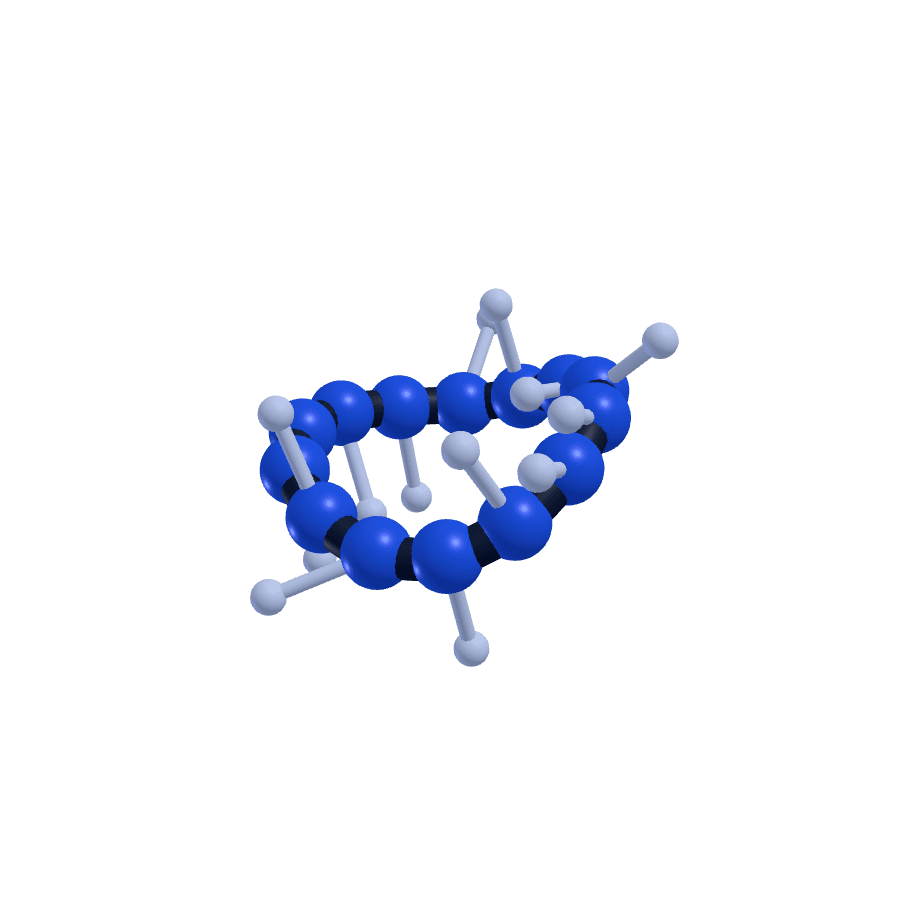
Linaclotide is a 14-residue peptide held in shape by three disulfide bonds, modelled on the bacterial heat-stable enterotoxins that cause travellers' diarrhoea and on the human hormones guanylin and uroguanylin. It is a rare thing: an orally administered peptide drug. It survives the stomach because of its disulfide-constrained structure, and it does not need to be absorbed, because its target is on the surface it is already touching.
The same receptor family explains both the drug and the disease it imitates: turning on guanylate cyclase-C is what enterotoxigenic E. coli does to cause diarrhoea. Linaclotide is that mechanism dosed to a therapeutic amount — which is why diarrhoea is the adverse event.
How it is thought to work
Guanylate cyclase-C activation on the intestinal epithelium raises cyclic GMP, which drives chloride and bicarbonate secretion into the lumen through CFTR, pulling water with it: softer stool and faster transit. Extracellular cyclic GMP also appears to reduce visceral pain signalling, the proposed explanation for the abdominal-pain component of the response.
What is still unknown
- How much of the abdominal-pain benefit is the visceral analgesic effect and how much is relief of constipation.
- Long-term effects over years of continuous use.
The molecule and how long it lasts
- Formula
- C59H79N15O21S6
- Molecular weight
- 1526.8 g/mol
- CAS number
- 851199-59-2
- PubChem
- CID 16158208
- Sequence
- CCEYCCNPACTGCY
Three disulfide bridges.
PubChem record, read 29 October 2026; the sequence was derived from that record's own structure and checked against the product label where one exists.
- Route
- Oral capsule, once daily
- Half-life
- Cannot be calculated: the label describes linaclotide as minimally absorbed with negligible systemic availability
- Licensed regimen (Linzess)
- One capsule once daily on an empty stomach, at a strength set by the indication
From the approved product's prescribing information: Linzess prescribing information (DailyMed) The regimen is the label's own wording, reproduced as a regulatory fact.
Regulatory status
Constella authorised centrally in 2012 for moderate to severe IBS with constipation in adults.
Linzess approved in 2012 for IBS-C and chronic idiopathic constipation in adults, with a paediatric functional-constipation indication added in 2023. Contraindicated under 2 years of age.
Constella licensed by the MHRA.
Constella registered on the ARTG.
Constella authorised with a Drug Identification Number.
Not named on the Prohibited List.
Questions people actually ask
How can a peptide be taken as a capsule?
How well does linaclotide work for IBS-C?
Why does it cause diarrhoea?
One page per claimed effect
- ADoes Linaclotide help with irritable bowel syndrome with constipation?1 phase 3 RCT (n=804, 26 wk)
- ADoes Linaclotide help with chronic idiopathic constipation?Approval programme
- AHow common is diarrhoea with Linaclotide?1 phase 3 RCT (n=804); approval programme
- ADoes Linaclotide help with systemic effects?Label pharmacokinetics
References
- 1Chey WD, Lembo AJ, Lavins BJ, et al. Linaclotide for irritable bowel syndrome with constipation: a 26-week, randomized, double-blind, placebo-controlled trial to evaluate efficacy and safety.Am J Gastroenterol, 2012;107:1702–1712804 patients evaluated; 26 weeks; 290 µg once daily.
- 2Linzess (linaclotide) prescribing information.DailyMed, read 29 Oct 2026Oral route, negligible systemic availability, indications and the contraindication under 2 years of age.
- 3PubChem compound record: linaclotide.PubChem, read 29 Oct 2026Formula, molecular weight, CAS and the 14-residue sequence used on this page.
Change log
- 2026-10-29Initial publication. Grade A on the phase 3 programme.