What the human research shows
Solid B: the phase 3 obesity data are published in a major journal, the effect is real but smaller than tirzepatide's, and the tolerability burden is high. The liver results are what make it more than another GLP-1 — and what will decide whether it gets approved for MASH first.
Evidence profile0–5
- Metabolic & weightB3.5
- Cardiovascular—0.0
- Muscle & growth—0.0
- Healing & repair—0.0
- Neuro & sleep—0.0
- Immune & inflammation—0.0
- Sexual & hormonal—0.0
- Skin & appearance—0.0
- Ageing & longevity—0.0
| Outcome | Grade | Effect size | Human studies | Where the evidence comes from |
|---|---|---|---|---|
| Body weight | BProbable | Moderate | 1 phase 3 RCT + phase 2 | SYNCHRONIZE-1, 725 adults, 76 weeks: −12% (3.6 mg) and −13% (6.0 mg) versus −5% placebo; at least 5% loss in 73%, 72% and 46%. Phase 2: up to −14.9% at 46 weeks.12 |
| Body weight (obesity with type 2 diabetes) | BProbable | Moderate | 1 phase 3 RCT (n=752, 76 wk) | SYNCHRONIZE-2, published in the New England Journal of Medicine on 1 October 2026: −8.2% (3.6 mg) and −9.8% (6.0 mg) versus −3.9% on placebo at 76 weeks, counting all participants whether or not they stayed on treatment; at least 5% loss in 57.6%, 64.5% and 35.1%. HbA1c fell 0.9 and 0.8 points against 0.2, from a baseline of 7.4%. The usual pattern: less weight loss when type 2 diabetes is present.5 |
| Liver disease (MASH resolution) | BProbable | Large | 1 phase 2 RCT; phase 3 running | Phase 2 in 293 patients: MASH improvement without worsening fibrosis in 83% at 4.8 mg versus 18% on placebo at 48 weeks; fibrosis improvement in 52% versus 26%. Phase 3 LIVERAGE ongoing.3 |
| Liver fat and visceral fat | BProbable | Large | Phase 3 (SYNCHRONIZE-MASLD) | Marked reductions in liver fat and visceral fat reported in the phase 3 obesity-with-MASLD trial; consistent with the glucagon component's hepatic action.4 |
| GI side effectsadverse | BProbable | Large | Phase 3 | Mild-to-moderate gastrointestinal symptoms in 81% (3.6 mg) and 90% (6.0 mg) versus 48% on placebo in SYNCHRONIZE-1, with substantial discontinuation. SYNCHRONIZE-2: 72.8% and 77.7% versus 38.6%, generally mild to moderate and transient.15 |
| Heart rate increaseadverse | BProbable | Small | Phase 2 + 3 | Resting heart rate rises a few beats per minute, as with other glucagon-receptor agonists; long-term significance unknown.2 |
Literature searched to 7 October 2026. Human studies only; animal and cell work informs the mechanism section and nothing else.
Registered trials
ClinicalTrials.gov lists 28 interventional studies naming Survodutide as an intervention — 18 completed, 4 recruiting, and 2 with results posted to the registry.
A registration is not a result. Anyone can register a study, and many never report — so this list shows what has been attempted, not what has been shown. The graded evidence above is the answer to whether something works.
20 further studies are registered. Participant counts marked * are the sponsor's estimate, not a final enrolment. Source: ClinicalTrials.gov, read directly from the registry and refreshed weekly.
What it is
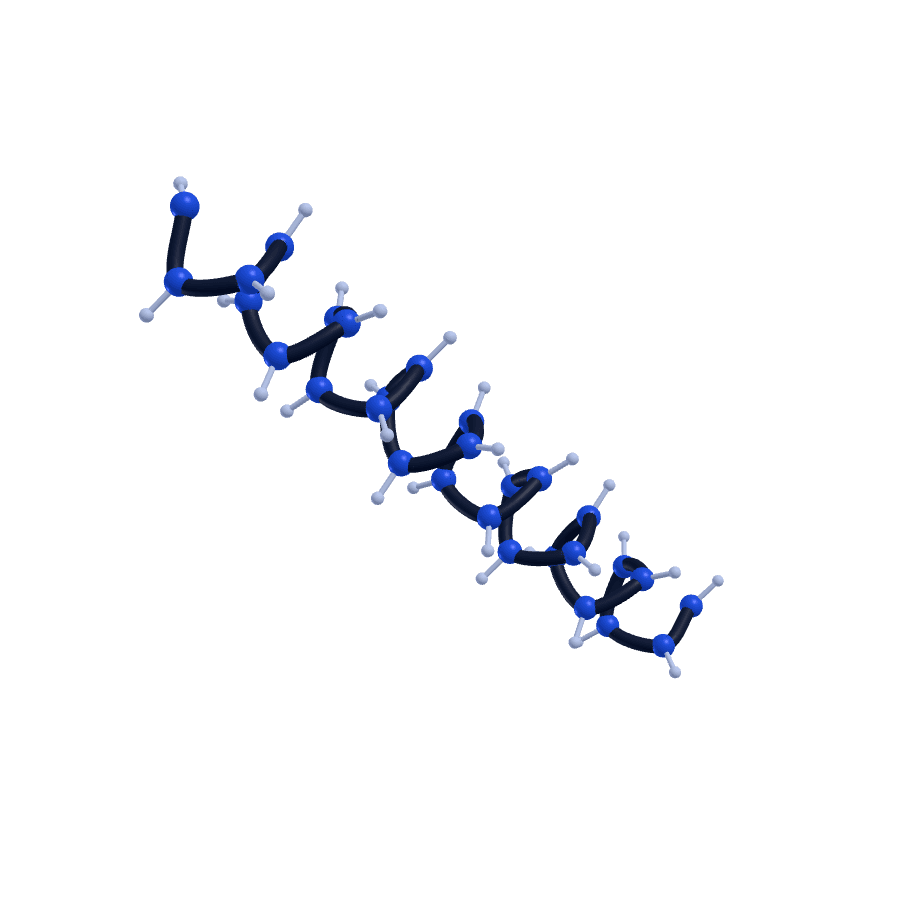
An oxyntomodulin-based 29-amino-acid peptide developed by Zealand Pharma and Boehringer Ingelheim, given once weekly by subcutaneous injection. Oxyntomodulin is the gut hormone that naturally hits both receptors; survodutide is a stabilised version of that idea.
The SYNCHRONIZE phase 3 programme covers obesity, obesity with type 2 diabetes, obesity with liver disease, and cardiovascular outcomes. The first results were published in the New England Journal of Medicine on 7 June 2026; the trial in obesity with type 2 diabetes followed on 1 October 2026.
How it is thought to work
GLP-1 activity reduces appetite and slows gastric emptying; glucagon activity increases energy expenditure and drives fat oxidation in the liver. The combination is designed to lose weight and clear liver fat at the same time — the liver effect is where the data are strongest.
What is still unknown
- Whether regulators approve it for obesity, MASH, or both, and when.
- How it compares head-to-head with tirzepatide or retatrutide; no such trial exists.
- Whether the high discontinuation rate can be managed with slower titration.
The molecule and how long it lasts
- Formula
- C192H289N47O61
- Molecular weight
- 4232 g/mol
- CAS number
- 2805997-46-8
- PubChem
- CID 171378821
PubChem record, read 23 September 2026.
- Route
- Subcutaneous, once weekly
- Half-life
- About 6 days
From a published human pharmacokinetic study: Lawitz EJ, et al. Efficacy, tolerability and pharmacokinetics of survodutide in cirrhosis. J Hepatol 2024;81
Regulatory status
Phase 3; no marketing authorisation. Supply outside trials is unlawful.
Phase 3; FDA has warned sellers marketing 'research' survodutide for human use. Cannot be compounded.
Investigational; supply outside trials is an offence.
Not on the ARTG; no lawful supply outside trials.
Investigational; no DIN.
Unapproved anywhere, so it falls under S0 (non-approved substances).
Questions people actually ask
How much weight does survodutide cause people to lose?
Why is survodutide talked about for liver disease?
Is survodutide available?
One page per claimed effect
- BDoes Survodutide help with body weight?1 phase 3 RCT + phase 2
- BDoes Survodutide help with body weight?1 phase 3 RCT (n=752, 76 wk)
- BDoes Survodutide help with liver disease?1 phase 2 RCT; phase 3 running
- BDoes Survodutide help with liver fat and visceral fat?Phase 3 (SYNCHRONIZE-MASLD)
- BHow common is GI side effects with Survodutide?Phase 3
- BHow common is heart rate increase with Survodutide?Phase 2 + 3
References
- 1Survodutide in adults with obesity: SYNCHRONIZE-1, a randomised, double-blind, placebo-controlled phase 3 trial.N Engl J Med, published online 7 June 2026725 adults, 76 weeks, 3.6 mg and 6.0 mg versus placebo.
- 2le Roux CW, et al. Glucagon and GLP-1 receptor dual agonist survodutide for obesity: a randomised, double-blind, placebo-controlled, dose-finding phase 2 trial.Lancet Diabetes Endocrinol, 2024387 adults, 46 weeks.
- 3Sanyal AJ, et al. A phase 2 randomized trial of survodutide in MASH and fibrosis.N Engl J Med, 2024; DOI 10.1056/NEJMoa2401755293 patients, 48 weeks.
- 4Survodutide in adults with obesity and metabolic dysfunction-associated steatotic liver disease: SYNCHRONIZE-MASLD, a phase 3 trial.2026Liver-fat and visceral-fat outcomes.
- 5Wharton S, et al. Survodutide once weekly in adults with obesity and type 2 diabetes (SYNCHRONIZE-2).N Engl J Med, 2026 (online 1 Oct)752 adults, 76 weeks, 3.6 mg and 6.0 mg versus placebo. NCT06066528.
Change log
- 2026-10-07SYNCHRONIZE-2 (N Engl J Med, 1 Oct 2026) added as a new row for obesity with type 2 diabetes, graded B: −8.2% and −9.8% versus −3.9% at 76 weeks. Other grades unchanged.
- 2026-09-03Initial publication from SYNCHRONIZE-1 and the phase 2 MASH trial.