What the human research shows
Small, real, and historically important: the proof that the amylin pathway works in people, twenty years before CagriSema. Three injections a day with meals is why almost nobody used it.
Evidence profile0–5
- Metabolic & weightA2.3
- Cardiovascular—0.0
- Muscle & growth—0.0
- Healing & repair—0.0
- Neuro & sleep—0.0
- Immune & inflammation—0.0
- Sexual & hormonal—0.0
- Skin & appearance—0.0
- Ageing & longevity—0.0
| Outcome | Grade | Effect size | Human studies | Where the evidence comes from |
|---|---|---|---|---|
| Blood glucose (with insulin) | AEstablished | Small | Approval programme (type 1 and type 2) | Modest HbA1c reductions of a few tenths of a point when added to insulin, with lower post-meal glucose excursions; the licensed indication.2 |
| Body weight (obesity without diabetes) | BProbable | Moderate | 1 RCT (n=411) with 8-month extension | Three-times-daily and higher twice-daily doses produced 3 kg more loss than placebo at four months and 6–7 kg at twelve, with placebo regaining and pramlintide maintaining. Never pursued to approval for obesity.1 |
| Body weight (diabetes, with insulin) | AEstablished | Small | Approval programme | One to two kilograms less than insulin alone — meaningful because insulin usually adds weight.2 |
| Adverse effectsadverse | AEstablished | Moderate | Same trials | Nausea in a large minority early on, fading with time; and, when combined with insulin, a risk of severe hypoglycaemia that carries a boxed warning in the US label.12 |
Literature searched to 10 September 2026. Human studies only; animal and cell work informs the mechanism section and nothing else.
Registered trials
ClinicalTrials.gov lists 55 interventional studies naming Pramlintide as an intervention — 39 completed, 1 recruiting, and 13 with results posted to the registry.
A registration is not a result. Anyone can register a study, and many never report — so this list shows what has been attempted, not what has been shown. The graded evidence above is the answer to whether something works.
47 further studies are registered. Participant counts marked * are the sponsor's estimate, not a final enrolment. Source: ClinicalTrials.gov, read directly from the registry and refreshed weekly.
What it is
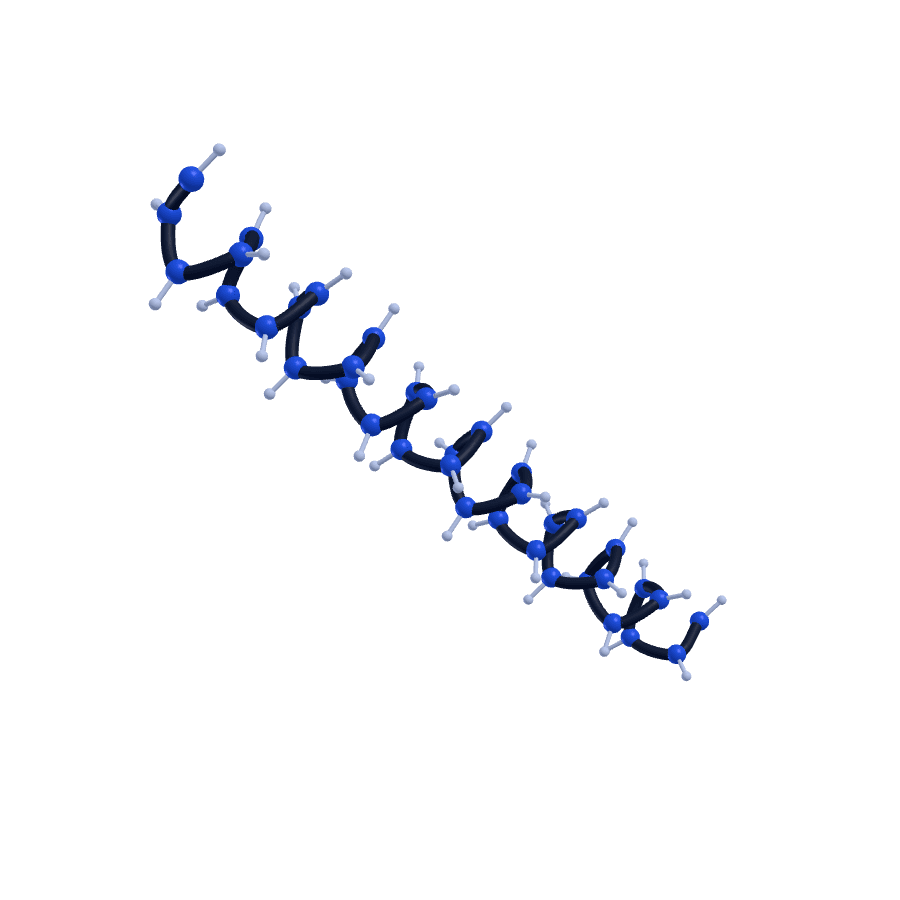
Human amylin clumps into insoluble fibrils — the deposits found in the pancreas in type 2 diabetes — so it cannot be given as a drug. Pramlintide swaps three amino acids for proline, borrowing from rat amylin, to make a soluble version. Amylin Pharmaceuticals brought it to market as Symlin in 2005.
Its commercial life was short: three mealtime injections a day, a hypoglycaemia warning, and then the GLP-1 drugs. Its scientific legacy is the amylin pathway itself — cagrilintide is a weekly version of the same idea, and amycretin puts amylin and GLP-1 activity in one molecule.
How it is thought to work
Amylin is co-secreted with insulin and slows gastric emptying, suppresses glucagon after meals and signals satiety through the brainstem. Pramlintide replaces the amylin that is lost with beta cells in type 1 diabetes and deficient in advanced type 2, and the same satiety signal produces the modest weight loss seen in obesity.
What is still unknown
- Whether a long-acting amylin analogue on its own can match GLP-1 drugs — cagrilintide's monotherapy data suggests not quite.
- Why the EU application was withdrawn; no European trial programme was completed.
The molecule and how long it lasts
- Formula
- C171H267N51O53S2
- Molecular weight
- 3949 g/mol
- CAS number
- 151126-32-8
- PubChem
- CID 70691388
PubChem record, read 23 September 2026.
- Route
- Subcutaneous injection, before each major meal
- Half-life
- About 48 minutes
- Licensed regimen (Symlin)
- Type 1: 15 mcg before major meals, increased in 15 mcg steps to 30 or 60 mcg; Type 2: 60 mcg before major meals, increased to 120 mcg
From the approved product's prescribing information: Symlin prescribing information (DailyMed) The regimen is the label's own wording, reproduced as a regulatory fact.
Regulatory status
A marketing application was withdrawn; no EU approval.
FDA-approved 2005 (Symlin) for type 1 and type 2 diabetes using mealtime insulin. Boxed warning for insulin-induced severe hypoglycaemia.
No MHRA licence.
Not on the ARTG.
No Health Canada authorisation.
Not on the Prohibited List.
Questions people actually ask
Is pramlintide a weight-loss drug?
Why is it only approved in the US?
How does it relate to cagrilintide?
One page per claimed effect
- ADoes Pramlintide help with blood glucose?Approval programme (type 1 and type 2)
- BDoes Pramlintide help with body weight?1 RCT (n=411) with 8-month extension
- ADoes Pramlintide help with body weight?Approval programme
- AHow common is adverse effects with Pramlintide?Same trials
References
- 1Smith SR, Aronne LJ, Burns CM, et al. Sustained weight loss following 12-month pramlintide treatment as an adjunct to lifestyle intervention in obesity.Diabetes Care, 2008411 obese adults without diabetes; 4-month RCT plus 8-month extension.
- 2Pramlintide acetate (Symlin) prescribing information.FDALicensed indications, glucose and weight data, boxed warning.
Change log
- 2026-09-10Initial publication. Grade A for the licensed diabetes use; B for obesity on a single trial.