What the human research shows
A clean D. The biology behind it is real and studied in people — as something muscle makes — and the product built on it has never been tested in anyone.
Evidence profile0–5
- Metabolic & weight—0.0
- Cardiovascular—0.0
- Muscle & growth—0.0
- Healing & repairD0.0
- Neuro & sleep—0.0
- Immune & inflammation—0.0
- Sexual & hormonal—0.0
- Skin & appearance—0.0
- Ageing & longevity—0.0
| Outcome | Grade | Effect size | Human studies | Where the evidence comes from |
|---|---|---|---|---|
| Muscle growth or repair (injected) | DNo human evidence | Not measurable | 0 controlled | No human study of any design has given MGF or PEG-MGF. Claims rest on rodent injections and on human studies that only measured natural MGF expression.12 |
| MGF expression after exercise (the body's own) | DNo human evidence | Not measurable | Several small physiology studies | Human muscle raises MGF messenger RNA after resistance exercise and growth hormone, more in young than old. Real and interesting; it says nothing about injecting a synthetic fragment.1 |
| Safety in humansadverse | DNo human evidence | Not measurable | None | Unknown. A long-acting IGF-1-derived peptide would be expected to share IGF-1's concerns, including effects on glucose and on cell proliferation, and none of that has been measured. |
Literature searched to 10 September 2026. Human studies only; animal and cell work informs the mechanism section and nothing else.
What it is
IGF-1 is spliced differently by different tissues. The muscle variant, IGF-1Ec, carries a 24-amino-acid tail — the 'E domain' — that appears within hours of loading and is thought to prime satellite cells before the standard IGF-1 takes over to build fibres. Researchers named it mechano growth factor in the 1990s.
PEG-MGF is the E-domain peptide alone, pegylated so it survives in blood for hours rather than minutes. It exists as a research reagent and a grey-market product. No company has developed it as a drug.
How it is thought to work
In cell and rodent work the E-domain peptide increases satellite cell proliferation and, injected into rodent muscle, increases size. Whether a pegylated fragment in the bloodstream reaches muscle and does the same in people is the untested question. The 2026 review of performance peptides places MGF among those with no clinical evidence at all.
What is still unknown
- Whether the E-domain peptide has any effect separate from full IGF-1 in humans — debated even in the physiology literature.
- Safety, which has never been characterised for any dose.
- What is in the vials.
The molecule and how long it lasts
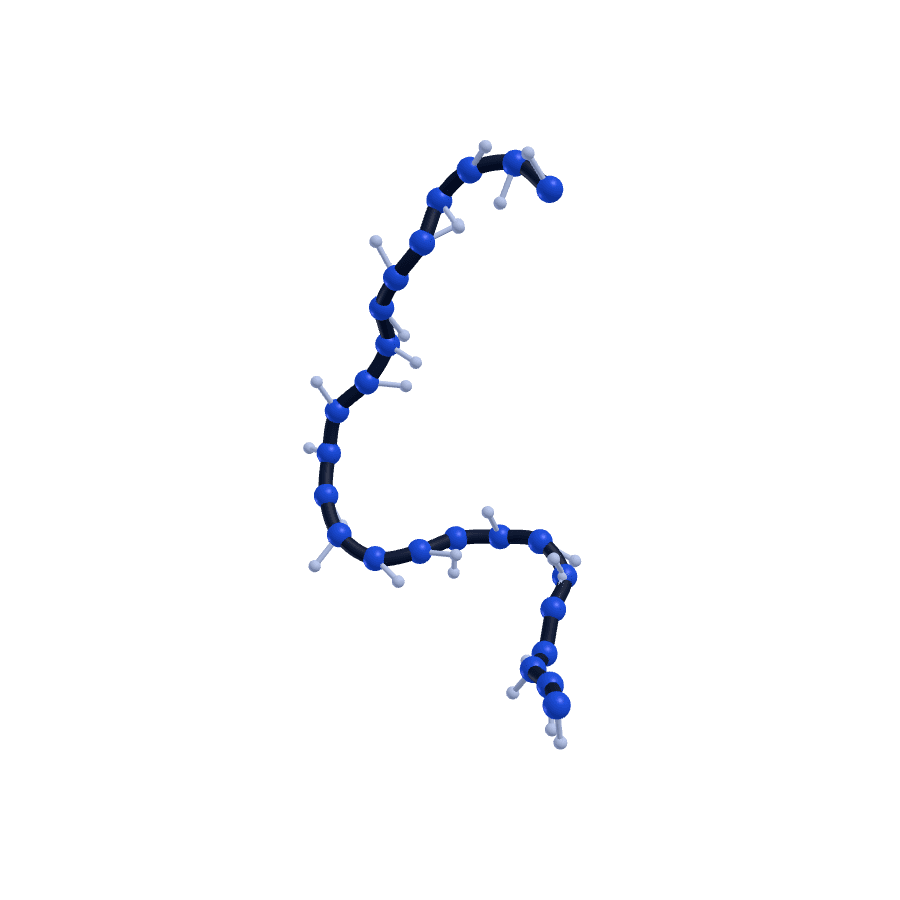
A pegylated peptide with no single defined structure in public databases
- Route
- Injected as sold; no human study
- Half-life
- No human pharmacokinetic data
No pharmacokinetic study in people.
Regulatory status
No marketing authorisation anywhere. Supplying it for human use is an offence under national medicines law.
Research reagent 'not for human use'; no clinical programme.
No MHRA licence.
Not on the ARTG; imports are seized.
No Drug Identification Number.
Mechano growth factors are named on the Prohibited List under growth factors (S2), in and out of competition.
Questions people actually ask
Does PEG-MGF build muscle?
Is MGF real?
Is it legal?
One page per claimed effect
- DDoes PEG-MGF help with muscle growth or repair?0 controlled
- DDoes PEG-MGF help with MGF expression after exercise?Several small physiology studies
- DHow common is safety in humans with PEG-MGF?None
References
- 1Hameed M, Lange KH, Andersen JL, et al. The effect of recombinant human growth hormone and resistance training on IGF-I mRNA expression in the muscles of elderly men.J Physiol, 2004Measures natural MGF expression; nothing administered.
- 2Searches of PubMed and trial registries for administered mechano growth factor or PEG-MGF in humans.LYO literature search, September 2026No human administration study identified.
- 3Dominikowski A, et al. The emerging landscape of performance-enhancing peptides modulating GH-IGF1 axis: bridging the gap between clinical evidence and patient self-administration.Front Endocrinol, 2026Review of the evidence gap across the class.
Change log
- 2026-09-10Initial publication. Grade D: no human administration study exists.