What the human research shows
The most useful compound on this site, for a reason that has nothing to do with what it does. AOD-9604 is the rare grey-market peptide with real human trials behind it — and they were negative. When someone says "there just aren't studies yet," this is the counter-example: sometimes there are studies, and that is why the drug is not on the market.
Evidence profile0–5
- Metabolic & weightD0.0
- Cardiovascular—0.0
- Muscle & growth—0.0
- Healing & repairD0.0
- Neuro & sleep—0.0
- Immune & inflammation—0.0
- Sexual & hormonal—0.0
- Skin & appearance—0.0
- Ageing & longevity—0.0
| Outcome | Grade | Effect size | Human studies | Where the evidence comes from |
|---|---|---|---|---|
| Fat mass reduction | DNo human evidence | Not measurable | Pooled trials, 900+ participants | Early short studies suggested a signal; larger and longer trials did not replicate it. Pooled analysis found no significant difference versus placebo. Development terminated for lack of efficacy.1 |
| Body weight | DNo human evidence | Not measurable | Pooled trials | No significant difference from placebo.1 |
| Osteoarthritis / cartilage | DNo human evidence | Not measurable | None conclusive | A later development direction; no positive controlled human result. |
| Safety in humansadverse | CWeak | Not measurable | Trial programme | Generally well tolerated in the trials — which is the one thing a failed efficacy programme does establish. |
Literature searched to 2 September 2026. Human studies only; animal and cell work informs the mechanism section and nothing else.
What it is
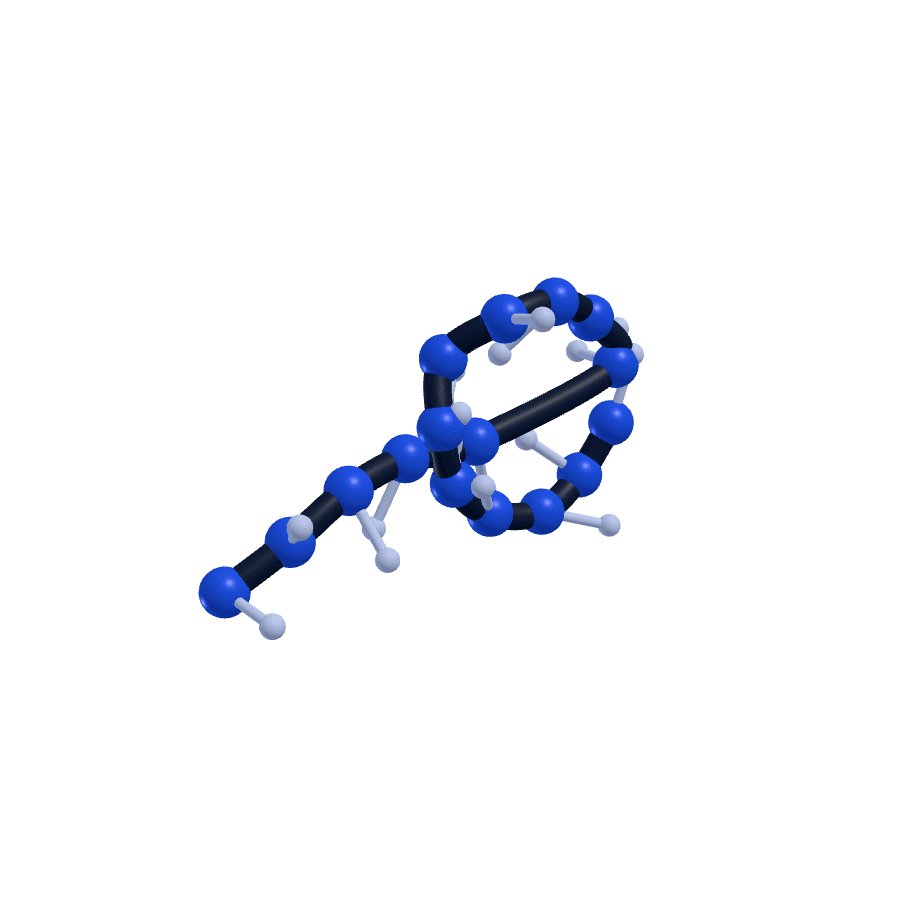
Human growth hormone has a region — amino acids 176 to 191 — associated with fat breakdown. AOD-9604 is that fragment, isolated on the theory that it would produce growth hormone's fat-loss effect without the growth-promoting effects. Metabolic Pharmaceuticals in Australia developed it through phase 2 as an anti-obesity drug.
It has since been marketed as a food ingredient in some jurisdictions and appears in supplements, which is a regulatory status rather than an efficacy claim.
How it is thought to work
In animal and cell models it stimulates lipolysis and inhibits fat formation without affecting IGF-1 or blood glucose. The mechanism was attractive precisely because it appeared to separate the useful part of growth hormone from the rest. In humans it did not produce the outcome.
What is still unknown
- Little. This is one of the few peptides where the important question was asked and answered.
The molecule and how long it lasts
- Formula
- C78H123N23O23S2
- Molecular weight
- 1815.1 g/mol
- CAS number
- 221231-10-3
- PubChem
- CID 71300630
PubChem record, read 23 September 2026.
- Route
- Oral and intravenous in the human trials, which report no PK
- Half-life
- No human pharmacokinetic data. Pig intravenous half-life about 3 minutes
Animal data only — no human pharmacokinetic study: Stier H, Vos E, Kenley D. Safety and tolerability of the hexadecapeptide AOD9604 in humans. J Endocrinol Metab 2013;3:7–15
Regulatory status
No marketing authorisation in any member state. Supplying it for human use is an offence under national medicines law; 'research use only' labels do not change that.
The advisory committee voted 0–12 against AOD-9604 on 4 December 2024; the nomination is listed as withdrawn since April 2026.
Not licensed by the MHRA. Selling or supplying it is an offence under the Human Medicines Regulations 2012; importing a small quantity purely for personal use is not itself an offence, but consignments are seized.
Prescription-only substance not on the ARTG. Possession without a prescription is an offence; imports without a prescription are seized.
No Drug Identification Number; selling it is illegal. Among the products Health Canada seized from a domestic vendor in August 2025. Residents cannot import prescription drugs by mail.
S2.2.3: growth hormone fragments, AOD-9604 named.
Questions people actually ask
Does AOD-9604 burn fat?
Why is it still sold if it failed?
One page per claimed effect
- DDoes AOD-9604 help with fat mass reduction?Pooled trials, 900+ participants
- DDoes AOD-9604 help with body weight?Pooled trials
- DDoes AOD-9604 help with osteoarthritis / cartilage?None conclusive
- CHow common is safety in humans with AOD-9604?Trial programme
References
- 1Pooled analysis of published and unpublished AOD-9604 human trials (900+ participants): no significant difference in fat mass or body weight versus placebo.Evidence review, 2025Secondary source summarising the trial programme and its termination for lack of efficacy.
Change log
- 2026-09-02Initial publication. Graded D on negative human trials — distinct from D for absence of trials.