What the human research shows
One of the most-studied peptides in psychiatry, and a cautionary tale about promising pilot data. The injectable hormone is genuine, licensed obstetric medicine. The nasal spray that people actually buy has been through large, careful randomised trials — and mostly failed them.
Evidence profile0–5
- Metabolic & weightC0.7
- Cardiovascular—0.0
- Muscle & growth—0.0
- Healing & repair—0.0
- Neuro & sleepB0.0
- Immune & inflammation—0.0
- Sexual & hormonal—0.0
- Skin & appearance—0.0
- Ageing & longevity—0.0
| Outcome | Grade | Effect size | Human studies | Where the evidence comes from |
|---|---|---|---|---|
| Social function in autism | BProbable | Not measurable | 1 large phase 2 RCT (n=290) | SOARS-B, the definitive 24-week trial in children and adolescents, found no difference from placebo on its primary social-withdrawal measure or on secondary outcomes.1 |
| Weight loss in obesity | CWeak | Not measurable | 1 RCT (n=61) | Eight weeks of intranasal oxytocin four times daily produced no weight change versus placebo, though it modestly reduced intake at a single test meal.2 |
| Appetite / caloric intake (acute) | CWeak | Small | Small crossover studies | A single dose lowered food intake at a laboratory test meal in the obesity trial and in earlier crossover work — an acute effect that did not translate into weight change over eight weeks.2 |
| Safety (intranasal, short-term)adverse | BProbable | Small | Multiple RCTs | Short-term intranasal use is well tolerated, with adverse events similar to placebo in the large trials. Long-term safety of daily self-dosing is not established.1 |
Literature searched to 3 September 2026. Human studies only; animal and cell work informs the mechanism section and nothing else.
Registered trials
ClinicalTrials.gov lists 157+ interventional studies naming Oxytocin (intranasal) as an intervention — 92 completed, 15 recruiting, and 30 with results posted to the registry.
A registration is not a result. Anyone can register a study, and many never report — so this list shows what has been attempted, not what has been shown. The graded evidence above is the answer to whether something works.
| Study | Phase | Status | Participants | Sponsor | Results |
|---|---|---|---|---|---|
| Low-Dose Versus High-Dose Oxytocin Dosing for Induction and Augmentation of LaborNCT05782816 · started Apr 2023 | Phase 4 | Completed | 170 | The University of Texas Medical Branch, Galveston | Posted |
| Effects of Intranasal Oxytocin on Cigarette SmokingNCT02595749 · started Jul 2016 | Phase 4 | Completed | 83 | University of Southern California | Posted |
| Carbetocin Versus Oxytocin and Hemodynamic EffectsNCT00977769 · started Nov 2009 | Phase 4 | Completed | 76 | Oslo University Hospital | Posted |
| Intranasal Oxytocin and Social Cognition, Implicit Preferences and Craving in Alcohol DrinkersNCT01829516 · started May 2013 | Phase 4 | Completed | 32 | University of California, San Francisco | Posted |
| Effects of Intranasal Oxytocin on Satiety Signaling in People With SchizophreniaNCT01614093 · started Jun 2012 | Phase 4 | Completed | 24 | University of Maryland, Baltimore | Posted |
| Study of the Effectiveness of Cervical Ripening Balloon With and Without OxytocinNCT03138252 · started Nov 2014 | Phase 3 | Completed | 180 | University Hospitals Cleveland Medical Center | Posted |
| High Dose Oxytocin Nasal Spray for Treatment of TinnitusNCT04210310 · started Jan 2020 | Phase 3 | Terminated | 33 | NYU Langone Health | Posted |
| Study of Oxytocin in Autism to Improve Reciprocal Social BehaviorsNCT01944046 · started Aug 2014 | Phase 2 | Completed | 290 | Linmarie Sikich | Posted |
149 further studies are registered. Participant counts marked * are the sponsor's estimate, not a final enrolment. Source: ClinicalTrials.gov, read directly from the registry and refreshed weekly.
What it is
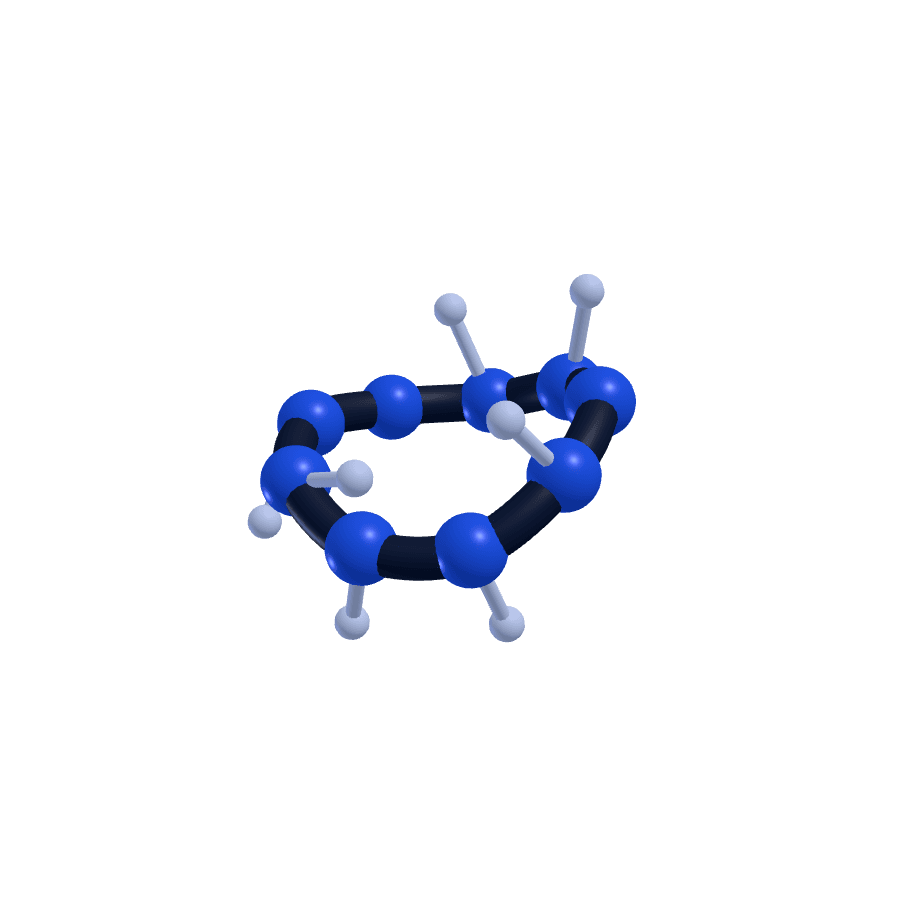
Oxytocin is a nine-amino-acid peptide hormone made in the hypothalamus. As an injection it is core obstetric medicine — inducing labour, controlling postpartum bleeding — and has been licensed for that for more than half a century.
The 'oxytocin' of wellness and peptide marketing is a nasal spray aimed at bonding, trust, appetite and social behaviour. That is a different route, a different dose and a different evidence base from the licensed injection.
How it is thought to work
Given intranasally, a small and debated fraction may reach the brain and act on oxytocin receptors involved in social and feeding behaviour. Whether enough reaches central targets to matter, and in whom, is exactly what the large trials were designed to settle — and their answer, for autism and for weight, was no.
What is still unknown
- Whether any subgroup benefits from intranasal oxytocin where the overall trials were null.
- How much intranasal oxytocin actually reaches the brain.
- Long-term safety and hormonal effects of chronic self-administration.
The molecule and how long it lasts
- Formula
- C43H66N12O12S2
- Molecular weight
- 1007.2 g/mol
- CAS number
- 50-56-6
- PubChem
- CID 439302
PubChem record, read 23 September 2026.
- Route
- Intravenous infusion (labour) or intramuscular injection (postpartum)
- Half-life
- About 1-6 minutes
- Licensed regimen (Pitocin)
- Labour induction: IV infusion 0.5-1 mU/min initially, increased by 1-2 mU/min every 30-60 min; postpartum: 10-40 units IV infusion or 10 units IM
From the approved product's prescribing information: Pitocin prescribing information (DailyMed) The regimen is the label's own wording, reproduced as a regulatory fact.
Regulatory status
Oxytocin injection is authorised across the EU for obstetric use. A nasal spray (Syntocinon) was historically used for breastfeeding; general 'bonding' or weight use is off-label or unlicensed.
The injection is FDA-approved for obstetric indications. Intranasal oxytocin is not FDA-approved and is sold via compounding pharmacies and the grey market.
Syntocinon injection is MHRA-licensed for obstetric use; other routes and indications are unlicensed.
Injectable oxytocin is on the ARTG for obstetric use; intranasal products are not registered for the marketed 'wellness' uses.
Injectable oxytocin carries a DIN; nasal 'wellness' products do not.
Not on the 2026 Prohibited List.
Questions people actually ask
Does oxytocin nasal spray help autism?
Will oxytocin help me lose weight?
Is the injection different from the spray?
One page per claimed effect
- BDoes Oxytocin (intranasal) help with social function in autism?1 large phase 2 RCT (n=290)
- CDoes Oxytocin (intranasal) help with weight loss in obesity?1 RCT (n=61)
- CDoes Oxytocin (intranasal) help with appetite / caloric intake?Small crossover studies
- BHow common is safety with Oxytocin (intranasal)?Multiple RCTs
References
- 1Sikich L, et al. Intranasal oxytocin in children and adolescents with autism spectrum disorder (SOARS-B).N Engl J Med, 2021;385:1462–1473290 participants, 24 weeks; primary and secondary outcomes null.
- 2Plessow F, et al. Intranasal oxytocin for obesity.NEJM Evidence, 2024;3:EVIDoa230034961 adults, 8 weeks; no weight change, reduced single-meal intake.
Change log
- 2026-09-03Initial publication. Grades reflect large, well-conducted but mostly null intranasal trials.