What the human research shows
One of the most-used peptide medicines in the world, on evidence that is old, large and settled. The interesting rows are the side effects — the price of switching a hormone axis off — and the fact that the same family of molecules, pulsed instead of continuous, does the reverse.
Evidence profile0–5
- Metabolic & weight—0.0
- Cardiovascular—0.0
- Muscle & growth—0.0
- Healing & repair—0.0
- Neuro & sleep—0.0
- Immune & inflammation—0.0
- Sexual & hormonalA5.0
- Skin & appearance—0.0
- Ageing & longevity—0.0
| Outcome | Grade | Effect size | Human studies | Where the evidence comes from |
|---|---|---|---|---|
| Metastatic prostate cancer (hormone suppression) | AEstablished | Large | RCT vs DES (n=199) + 40 years of trials | Objective response in 86% against 85% on diethylstilbestrol, with equivalent testosterone suppression and fewer serious side effects — the trial that made GnRH agonists the standard of care.1 |
| Testosterone suppression to castrate levels | AEstablished | Large | Approval-grade | Reliable suppression to castrate range within weeks, after an initial surge — the pharmacology every indication rests on.12 |
| Central precocious puberty | AEstablished | Large | Approval-grade programmes | Halts pubertal progression in children with early central puberty; a licensed indication in every major market.2 |
| Endometriosis and uterine fibroids | AEstablished | Moderate | Multiple RCTs | Reduces pain and lesion or fibroid volume by inducing a reversible low-oestrogen state; use is limited by bone loss and menopausal symptoms, usually to six months with add-back therapy.2 |
| Adverse effectsadverse | AEstablished | Large | Same trials + surveillance | The consequences of hormone deprivation: hot flushes, loss of libido and bone density, muscle loss, fatigue, and in men a cardiovascular and metabolic risk signal with long-term use. The initial hormone surge can worsen symptoms in the first weeks.12 |
Literature searched to 10 September 2026. Human studies only; animal and cell work informs the mechanism section and nothing else.
Registered trials
ClinicalTrials.gov lists 143+ interventional studies naming Leuprolide (leuprorelin) as an intervention — 64 completed, 13 recruiting, and 49 with results posted to the registry.
A registration is not a result. Anyone can register a study, and many never report — so this list shows what has been attempted, not what has been shown. The graded evidence above is the answer to whether something works.
| Study | Phase | Status | Participants | Sponsor | Results |
|---|---|---|---|---|---|
| A Study to Assess the Safety and Efficacy of Leuprorelin in Central Precocious Puberty in Chinese ParticipantsNCT02427958 · started Aug 2015 | Phase 4 | Completed | 307 | Takeda | Posted |
| Menopur® Versus Follistim® in Polycystic Ovarian Syndrome (PCOS)NCT00805935 · started Jan 2009 | Phase 4 | Completed | 110 | Ferring Pharmaceuticals | Posted |
| A Study of Leuprolide Acetate Depot in Children With Central Precocious PubertyNCT05341115 · started Mar 2023 | Phase 4 | Completed | 79 | Takeda | Posted |
| Evaluate Recovery of Testosterone for Patients Using EligardNCT01136226 · started Oct 2003 | Phase 4 | Completed | 42 | Chesapeake Urology Research Associates | Posted |
| Polycystic Ovary Syndrome (PCOS) and Sleep ApneaNCT00203996 · started Sept 2003 | Phase 4 | Terminated | 37 | University of Chicago | Posted |
| Endometrial Markers and Response of Endometriosis Patients to Prolonged GnRH Agonist Prior to IVFNCT00621179 · started Mar 2003 | Phase 4 | Completed | 37 | Colorado Center for Reproductive Medicine | Posted |
| Study of Dual Trigger Ovulation in Oocyte DonorsNCT01443546 · started Jan 2013 | Phase 4 | Terminated | 26 | Weill Medical College of Cornell University | Posted |
| Maximal Stimulation and Delayed Fertilization for Diminished Ovarian Reserve: a Randomized Pilot StudyNCT01921166 · started Jan 2011 | Phase 4 | Completed | 23 | Wake Forest University Health Sciences | Posted |
135 further studies are registered. Participant counts marked * are the sponsor's estimate, not a final enrolment. Source: ClinicalTrials.gov, read directly from the registry and refreshed weekly.
What it is
Leuprolide is GnRH with two substitutions that make it far more potent and longer-lasting, developed by Takeda and Abbott and approved in 1985 as Lupron. Depot formulations lasting one to six months followed, and it is sold under many names — Eligard, Prostap, Lucrin — with generics.
Its family — goserelin, triptorelin, buserelin — share the mechanism. Gonadorelin, the natural hormone, sits on the other side of the same axis and is covered separately.
How it is thought to work
Timing decides everything. GnRH pulsed every hour or two keeps the pituitary releasing LH and FSH; GnRH present continuously desensitises the receptor and stops them. Leuprolide is engineered to be present continuously, so after a surge lasting one to two weeks the axis shuts down and testosterone or oestrogen falls to near zero. Stop the drug and it recovers.
What is still unknown
- Long-term cardiovascular and cognitive effects of androgen deprivation in prostate cancer, still being quantified.
- Long-term outcomes of puberty suppression outside precocious puberty, where evidence remains limited and contested.
The molecule and how long it lasts
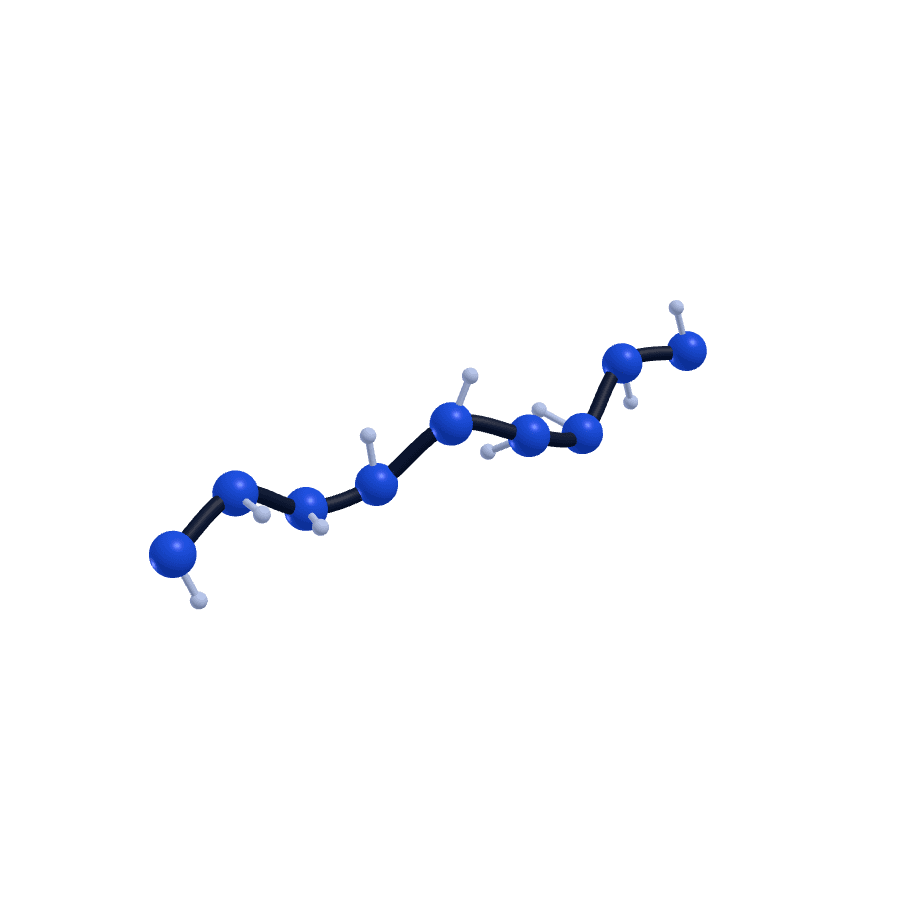
- Formula
- C59H84N16O12
- Molecular weight
- 1209.4 g/mol
- CAS number
- 53714-56-0
- PubChem
- CID 657181
PubChem record, read 23 September 2026.
- Route
- Intramuscular depot injection, every 1, 3, 4 or 6 months
- Half-life
- About 3 hours (the peptide itself, intravenous)
- Licensed regimen (Lupron Depot)
- 7.5 mg IM every 4 weeks, 22.5 mg every 12 weeks, 30 mg every 16 weeks, or 45 mg every 24 weeks (advanced prostate cancer)
From the approved product's prescribing information: Lupron Depot prescribing information (DailyMed) The regimen is the label's own wording, reproduced as a regulatory fact.
Regulatory status
Authorised in every member state for prostate cancer, endometriosis, fibroids and precocious puberty.
FDA-approved since 1985 (Lupron); multiple depot products.
Licensed (Prostap and others).
On the ARTG (Lucrin, Eligard).
Health Canada-authorised.
Leuprorelin is named on the Prohibited List among gonadotrophin-releasing factors, prohibited in males.
Questions people actually ask
Does leuprolide raise or lower testosterone?
Is leuprolide the same as gonadorelin?
Is it reversible?
One page per claimed effect
- ADoes Leuprolide (leuprorelin) help with metastatic prostate cancer?RCT vs DES (n=199) + 40 years of trials
- ADoes Leuprolide (leuprorelin) help with testosterone suppression to castrate levels?Approval-grade
- ADoes Leuprolide (leuprorelin) help with central precocious puberty?Approval-grade programmes
- ADoes Leuprolide (leuprorelin) help with endometriosis and uterine fibroids?Multiple RCTs
- AHow common is adverse effects with Leuprolide (leuprorelin)?Same trials + surveillance
References
- 1The Leuprolide Study Group. Leuprolide versus diethylstilbestrol for metastatic prostate cancer.N Engl J Med, 1984199 men; the trial that established GnRH agonists in prostate cancer.
- 2Leuprolide acetate (Lupron Depot) prescribing information and approved indications.FDA / EMA product informationLicensed indications.
Change log
- 2026-09-10Initial publication. Grade A across licensed indications.