What the human research shows
Twelve weeks, 93 people, split-face design, vehicle control, two independent measurement methods — methodologically the strongest cosmetic-peptide trial on this site, and funded and run by the company that sells it. Graded C: one industry trial with a modest effect is evidence, not establishment.
Evidence profile0–5
- Metabolic & weight—0.0
- Cardiovascular—0.0
- Muscle & growth—0.0
- Healing & repair—0.0
- Neuro & sleep—0.0
- Immune & inflammation—0.0
- Sexual & hormonal—0.0
- Skin & appearance—0.0
- Ageing & longevity—0.0
| Outcome | Grade | Effect size | Human studies | Where the evidence comes from |
|---|---|---|---|---|
| Wrinkles and fine lines (topical) | CWeak | Small | 1 split-face RCT (n=93, 12 wk) | A 12-week double-blind split-face study in 93 women aged 35–55 applied 3 ppm pal-KTTKS in a moisturiser to one side of the face and vehicle to the other. Both quantitative image analysis and expert graders found significant improvement in wrinkles and fine lines on the treated side. Split-face design controls for the person; it does not control for the sponsor, which developed and sells the ingredient.1 |
| Collagen synthesis | DNo human evidence | Not measurable | None in vivo | The mechanism rests on fibroblast culture work showing that KTTKS stimulates collagen I, collagen III and fibronectin production. No human study has measured collagen synthesis in skin after topical pal-KTTKS. |
| Safety (topical)adverse | CWeak | Not measurable | 1 RCT (n=93, 12 wk) | The trial reported the peptide was well tolerated by the skin over twelve weeks. Decades of cosmetic use at parts-per-million concentrations have produced no safety signal.1 |
Literature searched to 29 October 2026. Human studies only; animal and cell work informs the mechanism section and nothing else.
What it is
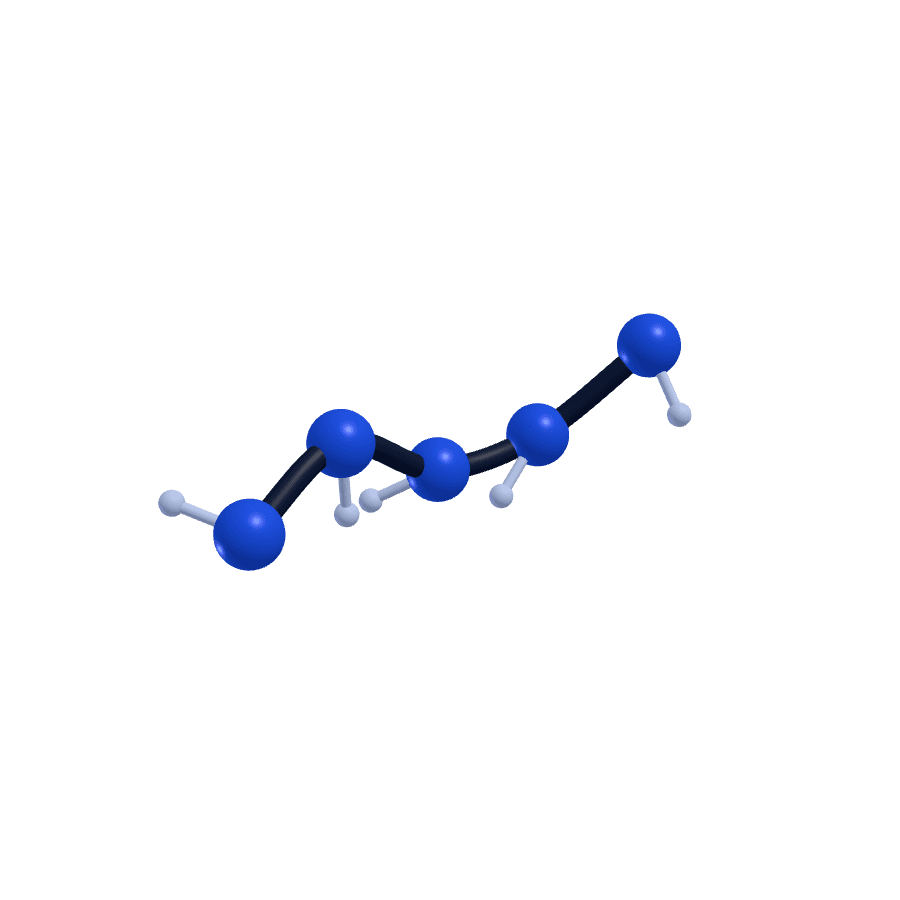
KTTKS (Lys-Thr-Thr-Lys-Ser) is a fragment released when type I procollagen is processed, and in cell culture it feeds back on fibroblasts to stimulate collagen production. On its own it does not get through skin, so a 16-carbon palmitic acid chain was attached to the N-terminus; that lipid tail is what makes pal-KTTKS deliverable in a cream. The ingredient dates from the 1990s and is used at a few parts per million.
"Matrixyl 3000" and "Matrixyl synthe'6" are different products from the same supplier containing different peptides — palmitoyl tripeptide-1 and palmitoyl tetrapeptide-7 in the former. The trial on this page tested pal-KTTKS alone, and does not transfer to those blends.
How it is thought to work
A matrikine: a peptide released by collagen breakdown that signals the matrix needs rebuilding. In fibroblast culture KTTKS raises collagen I, collagen III and fibronectin synthesis. The palmitoyl tail provides skin penetration. Whether the measured wrinkle changes come from that signalling pathway, from the barrier effects of the lipid, or from the moisturiser carrying it, the trial cannot say.
What is still unknown
- Whether the effect is the peptide or its lipid tail and vehicle — no trial has separated them.
- Whether topical application changes collagen in human skin, as opposed to appearance measures.
- Whether the result replicates outside the sponsor's laboratory; no independent trial exists.
The molecule and how long it lasts
- Formula
- C39H75N7O10
- Molecular weight
- 802.1 g/mol
- CAS number
- 214047-00-4
- PubChem
- CID 9897237
- Sequence
- Pal-KTTKS
PubChem record, read 29 October 2026; the sequence was derived from that record's own structure and checked against the product label where one exists.
- Route
- Topical (cosmetic serum or cream)
- Half-life
- No human pharmacokinetic study; the palmitoyl tail is added to aid skin penetration, which has not been quantified in people
No pharmacokinetic study in people.
Regulatory status
Lawful in cosmetics. No authorised health claim.
Sold in cosmetics without pre-market approval; not an approved drug.
Lawful in cosmetics under the UK Cosmetics Regulation.
Topical cosmetic use is not regulated as a medicine.
Permitted in cosmetics; subject to cosmetic notification.
Not on the Prohibited List.
Questions people actually ask
Is Matrixyl better evidenced than argireline?
Is Matrixyl 3000 the same thing?
Does Matrixyl build collagen in skin?
One page per claimed effect
- CDoes Matrixyl help with wrinkles and fine lines?1 split-face RCT (n=93, 12 wk)
- DDoes Matrixyl help with collagen synthesis?None in vivo
- CHow common is safety with Matrixyl?1 RCT (n=93, 12 wk)
References
- 1Robinson LR, Fitzgerald NC, Doughty DG, Dawes NC, Berge CA, Bissett DL. Topical palmitoyl pentapeptide provides improvement in photoaged human facial skin.Int J Cosmet Sci, 2005;27:155–16093 women aged 35–55; 12-week double-blind split-face study of 3 ppm pal-KTTKS versus vehicle. Procter & Gamble authors.
- 2PubChem compound record: palmitoyl pentapeptide-4.PubChem, read 29 Oct 2026Formula, molecular weight, CAS and the Pal-KTTKS sequence used on this page.
Change log
- 2026-10-29Initial publication. Grade C on one industry-run split-face trial.