What the human research shows
A cosmetic ingredient with one small, short, positive randomised trial behind it — and a publication record that makes the literature look three times larger than it is. Graded C: real randomised human data, far too little of it to call the effect established, and nothing at all comparable to the injectable it is marketed against.
Evidence profile0–5
- Metabolic & weight—0.0
- Cardiovascular—0.0
- Muscle & growth—0.0
- Healing & repair—0.0
- Neuro & sleep—0.0
- Immune & inflammation—0.0
- Sexual & hormonal—0.0
- Skin & appearanceC0.7
- Ageing & longevity—0.0
| Outcome | Grade | Effect size | Human studies | Where the evidence comes from |
|---|---|---|---|---|
| Periorbital wrinkles and skin roughness (topical) | CWeak | Small | 1 RCT (n=60, 4 wk) | A Chinese randomised, placebo-controlled trial applied a 10% argireline solution twice daily around the eyes in 60 people for four weeks, randomised 3:1. Objective roughness parameters fell in the treated group and not on placebo, and the investigators' subjective rating gave 48.9% total anti-wrinkle efficacy against 0%. Four weeks, 60 people, one centre, and the same dataset was published three times.12 |
| Subjective wrinkle improvement (topical) | CWeak | Small | 1 RCT (n=60, 4 wk) | The subjective arm of the same trial. A 48.9%-versus-0% split is a large number from a small unreplicated study, and subjective grading in a topical trial is the endpoint most sensitive to expectation.1 |
| Comparison with botulinum toxin | DNo human evidence | Not measurable | None | No trial has compared argireline with botulinum toxin injections. The marketing comparison rests on a shared molecular target in vitro, not on any head-to-head result. |
| Safety (topical)adverse | CWeak | Not measurable | 1 RCT (n=60) | No adverse effects were reported in the four-week trial, consistent with its long use as a cosmetic ingredient. Four weeks in 60 people is a weak basis for a safety claim, though a topically applied hexapeptide is a low-risk proposition.1 |
Literature searched to 29 October 2026. Human studies only; animal and cell work informs the mechanism section and nothing else.
Registered trials
ClinicalTrials.gov lists 1 interventional study naming Argireline as an intervention, and 1 with results posted to the registry.
A registration is not a result. Anyone can register a study, and many never report — so this list shows what has been attempted, not what has been shown. The graded evidence above is the answer to whether something works.
| Study | Phase | Status | Participants | Sponsor | Results |
|---|---|---|---|---|---|
| Acetyl Hexapeptide-8 for BlepharospasmNCT01750346 · started Nov 2012 | Phase 2 | Terminated | 8 | National Institute of Neurological Disorders and Stroke (NINDS) | Posted |
Participant counts marked * are the sponsor's estimate, not a final enrolment. Source: ClinicalTrials.gov, read directly from the registry and refreshed weekly.
What it is
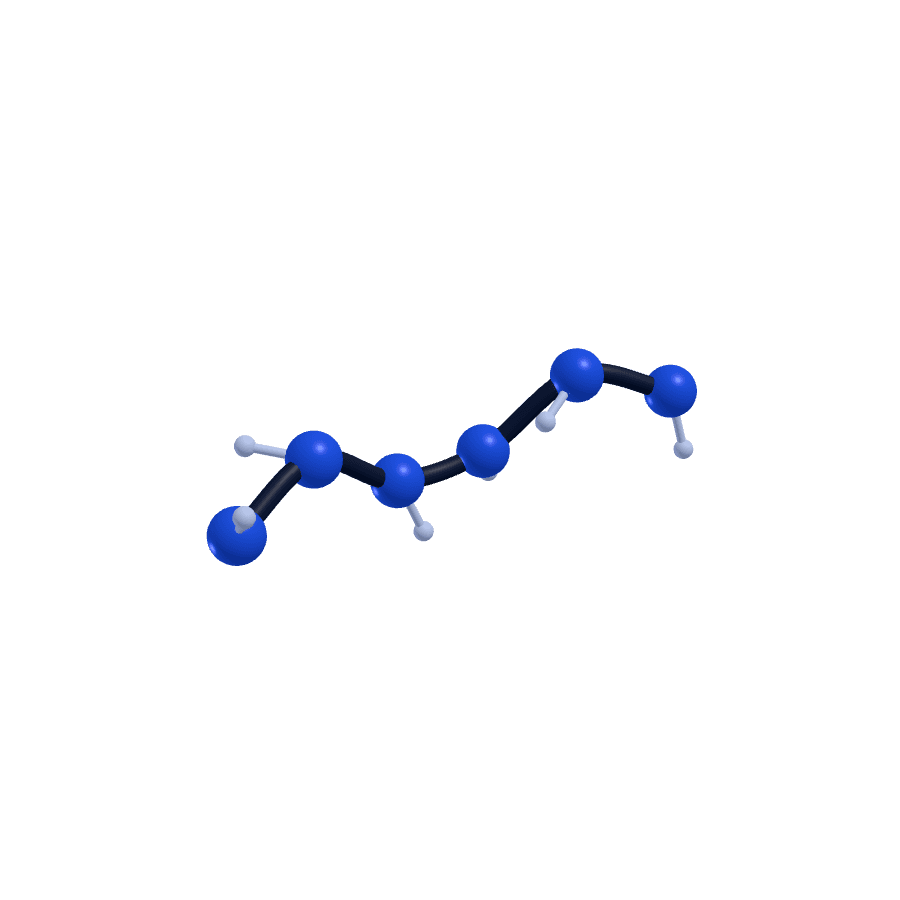
Argireline is the trade name Lipotec gave to acetyl hexapeptide-8, a six-amino-acid peptide (Ac-Glu-Glu-Met-Gln-Arg-Arg-NH2) that mimics the N-terminal end of SNAP-25 — one of the proteins in the complex that releases acetylcholine at the neuromuscular junction, and the protein botulinum toxin type A cleaves. The idea is competitive interference with that complex, producing less muscle contraction and so fewer expression lines.
It appears on ingredient lists under two INCI names: acetyl hexapeptide-3, the original, and acetyl hexapeptide-8, the current one. They are the same molecule; PubChem files the record under the older name. It is one of the most widely used peptides in cosmetics and is sold in serums at concentrations from a fraction of a percent to around 10%.
How it is thought to work
The proposed mechanism is that the peptide competes with SNAP-25 for a place in the SNARE complex, reducing vesicle fusion and therefore acetylcholine release. That has been shown in cell and tissue systems. Whether a hexapeptide applied to the skin surface reaches motor nerve terminals in meaningful quantity is the unanswered question: peptides of this size cross the stratum corneum poorly, and the trial's modest, short-term roughness changes are equally consistent with an ordinary moisturising effect.
What is still unknown
- Whether any effect persists beyond four weeks — no longer trial exists.
- Whether the peptide reaches neuromuscular junctions after topical application at cosmetic concentrations.
- Whether the single positive trial replicates in an independent centre; the three 2013 papers are one study.
The molecule and how long it lasts
- Formula
- C34H60N14O12S
- Molecular weight
- 889.0 g/mol
- CAS number
- 616204-22-9
- PubChem
- CID 11228338
- Sequence
- Ac-EEMQRR-NH2
Derived from the acetate-salt record; the peptide is the same.
PubChem files the acetate salt record under the former INCI name acetyl hexapeptide-3; the free peptide is CID 71587772
PubChem record, read 29 October 2026; the sequence was derived from that record's own structure and checked against the product label where one exists.
- Route
- Topical (cosmetic serum or cream)
- Half-life
- No human pharmacokinetic study; skin penetration of the intact hexapeptide has not been quantified in people
No pharmacokinetic study in people.
Regulatory status
Lawful in cosmetics. No authorised health claim; a product claiming to treat wrinkles as a medical effect would be making a medicinal claim.
Sold in cosmetics without pre-market approval. Not an approved drug and not a recognised compounding substance.
Lawful in cosmetics under the UK Cosmetics Regulation.
Topical cosmetic use is not regulated as a medicine.
Permitted in cosmetics; subject to cosmetic notification.
Not on the Prohibited List; a topical cosmetic raises no doping question.
Questions people actually ask
Does argireline actually work on wrinkles?
Is argireline like Botox?
Are acetyl hexapeptide-3 and acetyl hexapeptide-8 different?
One page per claimed effect
- CDoes Argireline help with periorbital wrinkles and skin roughness?1 RCT (n=60, 4 wk)
- CDoes Argireline help with subjective wrinkle improvement?1 RCT (n=60, 4 wk)
- DDoes Argireline help with comparison with botulinum toxin?None
- CHow common is safety with Argireline?1 RCT (n=60)
References
- 1Wang Y, Wang M, Xiao S, Pan P, Li P, Huo J. The anti-wrinkle efficacy of argireline, a synthetic hexapeptide, in Chinese subjects: a randomized, placebo-controlled study.Am J Clin Dermatol, 2013;14:147–15360 subjects, randomised 3:1, 4 weeks, twice-daily periorbital application.
- 2Duplicate publications of the same 60-subject study.2013The same dataset also appears as PMID 23464592 and PMID 23607739. One study, three papers — counting them separately overstates the evidence threefold.
- 3PubChem compound record: acetyl hexapeptide-3 (argireline).PubChem, read 29 Oct 2026Formula, molecular weight, CAS and the sequence used on this page.
Change log
- 2026-10-29Initial publication. Grade C on one small randomised trial; the triple publication of that trial is recorded in the references.