What the human research shows
The peptide that shows how far marketing can drift from evidence. The pharmacology is real — it does release growth hormone, more selectively than older secretagogues. But the one proper trial failed on its endpoint, the developer walked away, and every claim made for it since rests on that pharmacology rather than on any measured outcome in people.
Evidence profile0–5
- Metabolic & weight—0.0
- Cardiovascular—0.0
- Muscle & growthC1.3
- Healing & repairC0.0
- Neuro & sleepD0.0
- Immune & inflammation—0.0
- Sexual & hormonal—0.0
- Skin & appearance—0.0
- Ageing & longevity—0.0
| Outcome | Grade | Effect size | Human studies | Where the evidence comes from |
|---|---|---|---|---|
| Growth hormone release | CWeak | Moderate | Small early-phase studies | Acute, dose-dependent GH rises demonstrated in healthy volunteers in Novo Nordisk's early programme; more selective than GHRP-6, with little cortisol or prolactin rise.12 |
| Post-operative ileus (gut recovery) | CWeak | Not measurable | 1 RCT (n=117) | Median time to tolerate a solid meal 25.3 h vs 32.6 h on placebo — not statistically significant (p=0.15). No difference on secondary endpoints. Phase 3 was not pursued.3 |
| Body composition | DNo human evidence | Not measurable | None controlled | No trial has measured muscle or fat change in people. |
| Sleep or recovery | DNo human evidence | Not measurable | None | Unstudied in humans. |
| Safety in humansadverse | CWeak | Not measurable | 1 RCT + early-phase | Well tolerated over seven days of IV dosing in the ileus trial. No long-term human safety data at the doses and durations used on the grey market.3 |
Literature searched to 2 September 2026. Human studies only; animal and cell work informs the mechanism section and nothing else.
Registered trials
ClinicalTrials.gov lists 2 interventional studies naming Ipamorelin as an intervention — 2 completed, and none with results posted to the registry.
A registration is not a result. Anyone can register a study, and many never report — so this list shows what has been attempted, not what has been shown. The graded evidence above is the answer to whether something works.
| Study | Phase | Status | Participants | Sponsor | Results |
|---|---|---|---|---|---|
| Safety and Efficacy of Ipamorelin Compared to Placebo for the Recovery of Gastrointestinal FunctionNCT01280344 · started Apr 2011 | Phase 2 | Completed | 320 | Helsinn Therapeutics (U.S.), Inc | None |
| Safety and Efficacy of Ipamorelin for Management of Post-Operative IleusNCT00672074 · started Apr 2008 | Phase 2 | Completed | 117 | Helsinn Therapeutics (U.S.), Inc | None |
Participant counts marked * are the sponsor's estimate, not a final enrolment. Source: ClinicalTrials.gov, read directly from the registry and refreshed weekly.
What it is
Ipamorelin was developed by Novo Nordisk in the 1990s as a growth-hormone secretagogue — a compound that makes the pituitary release its own growth hormone by mimicking the hunger hormone ghrelin. Its selling point in the original paper was selectivity: it raised growth hormone without the cortisol and prolactin rises seen with earlier peptides in the class.
Helsinn later licensed it and ran a phase 2 trial for post-operative ileus, the gut shutdown that follows abdominal surgery, on the theory that a ghrelin mimetic would restart motility. It did not work, and that was the end of its clinical development.
How it is thought to work
It binds the ghrelin receptor (GHS-R1a) in the pituitary and hypothalamus, triggering a pulse of growth hormone. The pulse is short-lived, which is why the grey-market practice is multiple daily injections — a regimen that has never been studied.
What is still unknown
- Whether repeated dosing changes body composition at all; no one has measured it.
- Long-term effects of raising growth hormone and IGF-1 in healthy adults.
- What is in the vials sold under the name, since there is no approved manufacturer.
The molecule and how long it lasts
- Formula
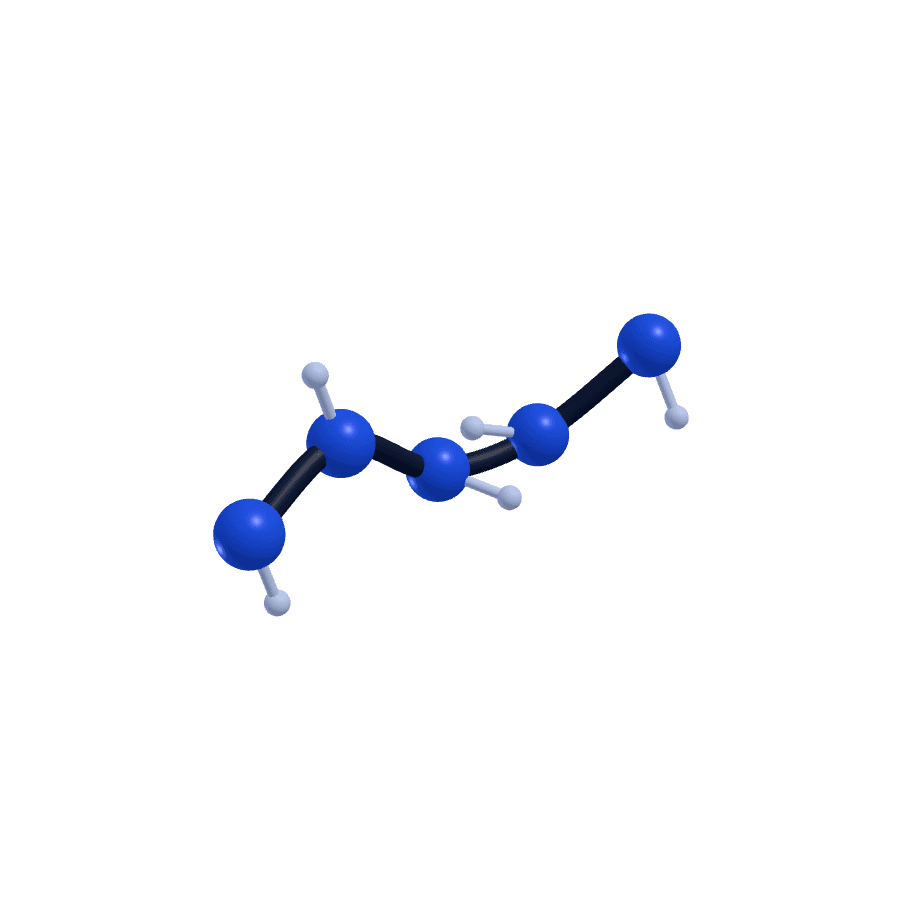
- C38H49N9O5
- Molecular weight
- 711.9 g/mol
- CAS number
- 170851-70-4
- PubChem
- CID 9831659
PubChem record, read 23 September 2026.
- Route
- Intravenous infusion in the human study; injected subcutaneously as sold
- Half-life
- About 2 hours (terminal, intravenous, healthy men)
From a published human pharmacokinetic study: Gobburu JV, et al. Pharmacokinetic-pharmacodynamic modeling of ipamorelin, a growth hormone releasing peptide, in human volunteers. Pharm Res 1999;16:1412–1416
Regulatory status
No marketing authorisation in any member state. Supplying it for human use is an offence under national medicines law; 'research use only' labels do not change that.
The advisory committee voted 0–12 against ipamorelin on 29 October 2024. Ipamorelin acetate remains in Category 2 for outsourcing facilities; its 503A nomination is listed as withdrawn (April 2026).
Not licensed by the MHRA. Selling or supplying it is an offence under the Human Medicines Regulations 2012; importing a small quantity purely for personal use is not itself an offence, but consignments are seized.
Prescription-only substance not on the ARTG. Obtainable only on prescription (compounded or imported under the Personal Importation Scheme with a prescription). Named in the TGA's April 2026 advisory. Named in NSW law as a prescribed restricted substance.
No Drug Identification Number; selling it is illegal. Among the products Health Canada seized from a domestic vendor in August 2025. Residents cannot import prescription drugs by mail.
Growth hormone secretagogue: S2.2.4.
Questions people actually ask
Does ipamorelin build muscle?
Is ipamorelin safe?
Why was ipamorelin never approved?
One page per claimed effect
- CDoes Ipamorelin help with growth hormone release?Small early-phase studies
- CDoes Ipamorelin help with post-operative ileus?1 RCT (n=117)
- DDoes Ipamorelin help with body composition?None controlled
- DDoes Ipamorelin help with sleep or recovery?None
- CHow common is safety in humans with Ipamorelin?1 RCT + early-phase
References
- 1Raun K, et al. Ipamorelin, the first selective growth hormone secretagogue.Eur J Endocrinol, 1998;139:552–561Pharmacology; animal and early human data.
- 2Gobburu JV, et al. Pharmacokinetic-pharmacodynamic modeling of ipamorelin, a growth hormone releasing peptide, in human volunteers.Pharm Res, 1999;16:1412–1416Dose–response for GH release in healthy adults.
- 3Beck DE, Sweeney WB, McCarter MD, et al. Prospective, randomized, controlled, proof-of-concept study of the ghrelin mimetic ipamorelin for the management of postoperative ileus in bowel resection patients.Int J Colorectal Dis, 2014;29:1527–1534117 patients; primary endpoint not met (p=0.15).
Change log
- 2026-09-02Full page. Added the negative post-operative-ileus RCT, safety row, regional status and FAQ.
- 2026-09-01Initial publication.