What the human research shows
Historically important — it helped map the ghrelin system — and clinically it is a diagnostic-grade GH stimulus, nothing more. The physique reputation has no trial behind it.
Evidence profile0–5
- Metabolic & weightC0.7
- Cardiovascular—0.0
- Muscle & growthB2.3
- Healing & repair—0.0
- Neuro & sleep—0.0
- Immune & inflammation—0.0
- Sexual & hormonal—0.0
- Skin & appearance—0.0
- Ageing & longevity—0.0
| Outcome | Grade | Effect size | Human studies | Where the evidence comes from |
|---|---|---|---|---|
| Growth hormone release (diagnostic) | BProbable | Moderate | Diagnostic comparison studies | GHRP-6, alone or with GHRH, stimulated growth hormone as sensitively and specifically as the insulin tolerance test for diagnosing adult GH deficiency.1 |
| Appetite | CWeak | Small | Small human studies | As a ghrelin-receptor agonist it increases hunger; the human appetite data are smaller and less quantified than for GHRP-2.1 |
| Body composition | DNo human evidence | Not measurable | None | No controlled trial has tested whether repeated GHRP-6 changes muscle or fat in people.1 |
| Safety in humansadverse | CWeak | Small | Diagnostic use | As a single diagnostic dose, flushing was the only side effect reported. Repeated-use safety is not established.1 |
Literature searched to 3 September 2026. Human studies only; animal and cell work informs the mechanism section and nothing else.
What it is
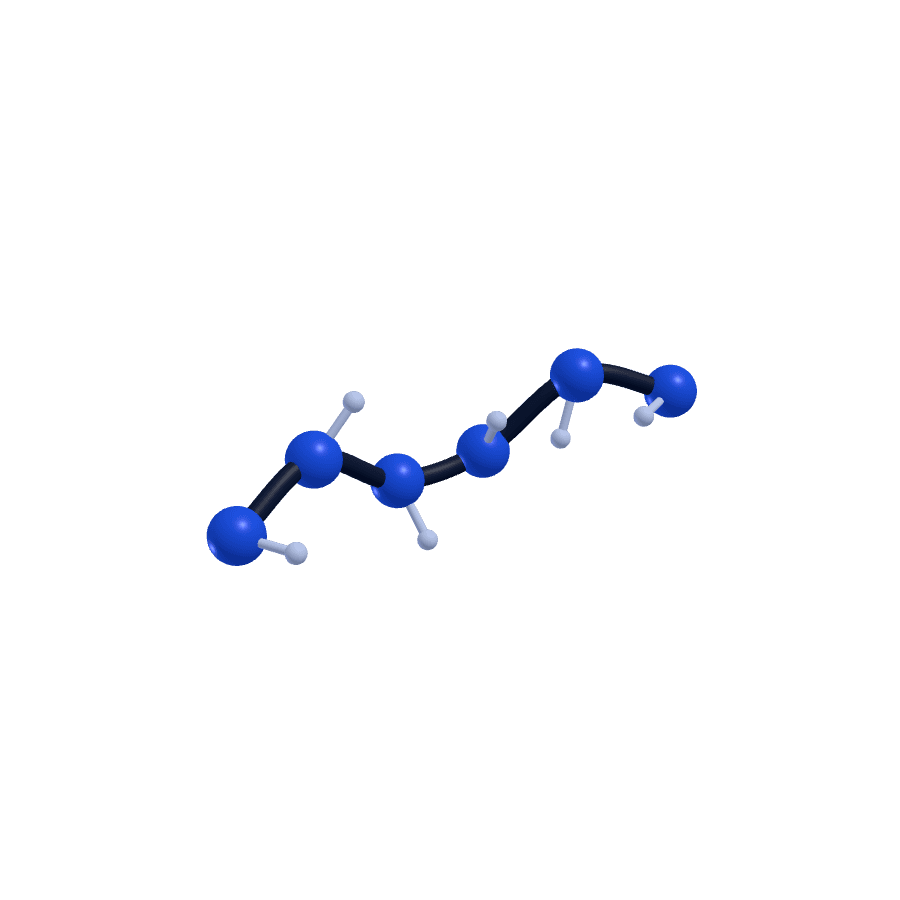
GHRP-6 is the original growth-hormone-releasing peptide, a hexapeptide discovered while mapping how the body controls growth-hormone secretion. That work eventually led to the discovery of ghrelin and its receptor.
It is sold on the grey market for muscle and recovery, uses it has never been shown to have in a trial.
How it is thought to work
It activates the GH-secretagogue (ghrelin) receptor, releasing growth hormone and stimulating appetite. A single dose is a clean diagnostic stimulus; chronic use for physique is untested.
What is still unknown
- Whether repeated dosing does anything to body composition — never tested.
- Long-term safety and receptor desensitisation.
- The size and reliability of the appetite effect relative to GHRP-2.
The molecule and how long it lasts
- Formula
- C46H56N12O6
- Molecular weight
- 873.0 g/mol
- CAS number
- Not listed
- PubChem
- CID 4345065
PubChem record, read 23 September 2026.
- Route
- Intravenous bolus (9 healthy men)
- Half-life
- About 2.5 hours elimination half-life; distribution half-life about 8 minutes
From a published human pharmacokinetic study: Cabrales A, et al. Pharmacokinetic study of growth hormone-releasing peptide 6 (GHRP-6) in nine male healthy volunteers. Eur J Pharm Sci 2013;48:40–46
Regulatory status
No marketing authorisation in any member state. Supplying it for human use is an offence under national medicines law; a 'research use only' label does not change that.
Not an approved drug and not a dietary-supplement ingredient. Sold as a 'research chemical' outside the medical system; the FDA has warned against several compounds in this class.
Not licensed by the MHRA. Selling or supplying it for human use is an offence under the Human Medicines Regulations 2012.
Not on the ARTG. Supply without a prescription is unlawful; imports are seized.
No Drug Identification Number; selling it for human use is illegal.
WADA class S2.2: growth-hormone secretagogues and GH-releasing peptides are banned in and out of competition.
Questions people actually ask
What is GHRP-6 actually good for?
Does it build muscle?
How is it different from GHRP-2?
One page per claimed effect
- BDoes GHRP-6 help with growth hormone release?Diagnostic comparison studies
- CDoes GHRP-6 help with appetite?Small human studies
- DDoes GHRP-6 help with body composition?None
- CHow common is safety in humans with GHRP-6?Diagnostic use
References
- 1Petersenn S, et al. Diagnosis of growth hormone deficiency in adults by testing with GHRP-6 alone or with GHRH: comparison with the insulin tolerance test.Eur J Endocrinol, 2002;146:667–67220 patients; diagnostic performance equal to the ITT.
Change log
- 2026-09-03Initial publication. Grade reflects diagnostic-grade GH data and no outcome trials.