What the human research shows
The clearest example in this class of a real, approved use (a one-off diagnostic injection) being stretched into an unproven daily one (physique). The GH spike and the appetite bump are genuine; the body-composition claims have never been tested in a trial.
Evidence profile0–5
- Metabolic & weightC1.3
- Cardiovascular—0.0
- Muscle & growthA3.3
- Healing & repair—0.0
- Neuro & sleep—0.0
- Immune & inflammation—0.0
- Sexual & hormonal—0.0
- Skin & appearance—0.0
- Ageing & longevity—0.0
| Outcome | Grade | Effect size | Human studies | Where the evidence comes from |
|---|---|---|---|---|
| Growth hormone release (diagnostic) | AEstablished | Moderate | Approval-grade diagnostic studies | GHRP-2 produces a large, reproducible GH rise that cleanly separates GH-deficient from healthy people — the basis of its Japanese approval as a diagnostic agent.1 |
| Appetite | CWeak | Moderate | Small crossover study (n=7) | As a ghrelin mimic, GHRP-2 increased food intake in healthy men in a controlled infusion study — a real acute effect, studied in very few people.2 |
| Body composition | DNo human evidence | Not measurable | None | No controlled trial has tested whether repeated GHRP-2 changes muscle or fat in humans. The physique claims are extrapolation from the acute GH rise.1 |
| Safety in humansadverse | CWeak | Small | Diagnostic use | As a single diagnostic dose it is well tolerated, with flushing the main effect. Safety of repeated self-dosing is not established, and it raises cortisol and prolactin more than the most selective secretagogues.1 |
Literature searched to 3 September 2026. Human studies only; animal and cell work informs the mechanism section and nothing else.
What it is
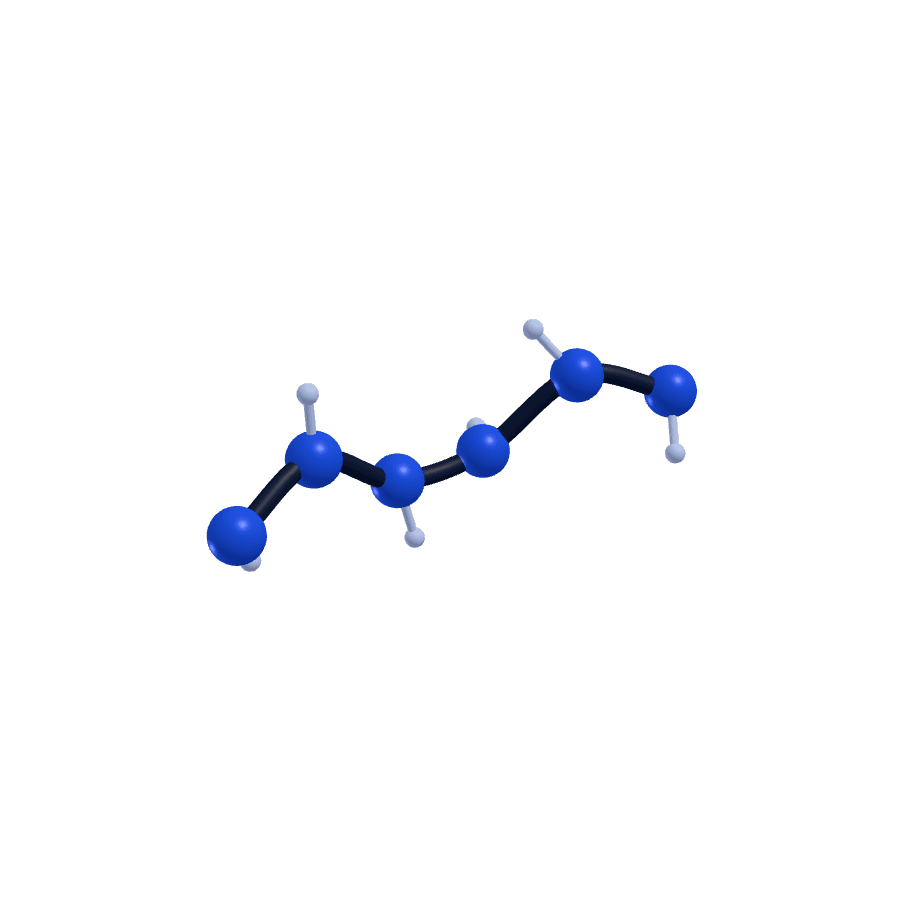
GHRP-2 (pralmorelin) is a hexapeptide growth-hormone secretagogue — a synthetic ghrelin mimic. It stimulates a pulse of growth-hormone release and, separately, appetite.
In Japan it is an approved diagnostic: a single injection to test the pituitary's capacity to release growth hormone. Everywhere else it is sold as a physique and 'anti-ageing' research chemical.
How it is thought to work
It activates the GH-secretagogue (ghrelin) receptor in the hypothalamus and pituitary, producing GH release and, via the same system, hunger. A diagnostic test uses one dose; the marketed use is chronic — a very different proposition that has not been studied for benefit.
What is still unknown
- Whether repeated dosing changes body composition at all — never tested.
- Long-term safety, including desensitisation and the effect of raised appetite.
- Whether the cortisol and prolactin rises matter with chronic use.
The molecule and how long it lasts
- Formula
- C45H55N9O6
- Molecular weight
- 818.0 g/mol
- CAS number
- 158861-67-7
- PubChem
- CID 6918245
PubChem record, read 23 September 2026.
- Route
- Intravenous (diagnostic use in Japan as pralmorelin)
- Half-life
- Human intravenous use is documented; no primary half-life figure was found
From a published human pharmacokinetic study: Pralmorelin. Drugs R D 2004;5:236–239
Regulatory status
No EMA authorisation. Supplying it for human use is an offence under national medicines law.
Not an FDA-approved drug; sold as a research chemical. The FDA has flagged GHRPs among peptides that should not be in compounded products.
No MHRA licence; supply for human use is an offence.
Not on the ARTG; imports without a prescription are seized.
Pralmorelin (GHRP Kaken) is approved as a diagnostic agent for growth-hormone secretion — not as a treatment.
WADA class S2.2: GH-releasing peptides are banned in and out of competition.
Questions people actually ask
Is GHRP-2 approved?
Does it build muscle?
Why does it make you hungry?
One page per claimed effect
- ADoes GHRP-2 help with growth hormone release?Approval-grade diagnostic studies
- CDoes GHRP-2 help with appetite?Small crossover study (n=7)
- DDoes GHRP-2 help with body composition?None
- CHow common is safety in humans with GHRP-2?Diagnostic use
References
- 1Chihara K, et al. A simple diagnostic test using GH-releasing peptide-2 in adult GH deficiency.Eur J Endocrinol, 2007;157:19–2777 healthy + 58 GH-deficient adults; the diagnostic basis.
- 2Laferrère B, et al. Growth hormone releasing peptide-2 (GHRP-2), like ghrelin, increases food intake in healthy men.J Clin Endocrinol Metab, 2005;90:611–6147 lean men; the appetite data.
Change log
- 2026-09-03Initial publication. Grade A for the diagnostic GH response, D for the marketed physique use.