What the human research shows
Real, large effects in the people it was designed for, shown in trials small enough to count on your fingers. The grade is B because of the design, not the result — and it says nothing about obesity without a genetic cause.
Evidence profile0–5
- Metabolic & weightB3.5
- Cardiovascular—0.0
- Muscle & growth—0.0
- Healing & repair—0.0
- Neuro & sleep—0.0
- Immune & inflammation—0.0
- Sexual & hormonal—0.0
- Skin & appearance—0.0
- Ageing & longevity—0.0
| Outcome | Grade | Effect size | Human studies | Where the evidence comes from |
|---|---|---|---|---|
| Weight loss in POMC / LEPR deficiency obesity | BProbable | Large | 2 single-arm phase 3 trials (n=10, n=11) with 8-wk placebo withdrawal | Eight of ten POMC-deficient and five of eleven LEPR-deficient participants lost at least 10% of body weight at about a year, with weight regained during the blinded placebo-withdrawal weeks. Large effects; tiny trials.1 |
| Hunger in POMC / LEPR deficiency | BProbable | Large | Same trials | The 'most hunger' score fell by 27% and 44% — the mechanism working as designed in people whose hunger signal is broken.1 |
| Weight loss in Bardet-Biedl syndrome | BProbable | Moderate | 1 phase 3 with 14-wk placebo-controlled period (n=38) | The basis of the 2022 approval extension; the only setmelanotide trial with a randomised placebo period.3 |
| Weight loss in acquired hypothalamic obesity | BProbable | Large | 1 phase 3 RCT (TRANSCEND, n=120, 52 wk) | TRANSCEND, published in the New England Journal of Medicine in July 2026: 120 people aged 4 to 66 whose obesity followed a hypothalamic tumour, lesion or injury were randomised 2:1 to setmelanotide or placebo. BMI fell 16.5% on setmelanotide and rose 3.3% on placebo at 52 weeks, and hunger scores fell further on the drug. Serious adverse events were reported in 28% against 8%. One randomised trial, so B. Health Canada approved this use on 22 September 2026.45 |
| Common (polygenic) obesity | DNo human evidence | Not measurable | No approved use; early trials only | Not developed for obesity without a monogenic cause. Early-phase work in general obesity showed effects too small to pursue; no controlled trial supports the use and no regulator has approved it.2 |
| Adverse effectsadverse | BProbable | Moderate | Same trials | Injection-site reactions and skin darkening in every participant, nausea and vomiting in a third to a half; hyperpigmentation is the MC1-receptor effect the drug cannot avoid.1 |
Literature searched to 7 October 2026. Human studies only; animal and cell work informs the mechanism section and nothing else.
Registered trials
ClinicalTrials.gov lists 25 interventional studies naming Setmelanotide as an intervention — 19 completed, 2 recruiting, and 14 with results posted to the registry.
A registration is not a result. Anyone can register a study, and many never report — so this list shows what has been attempted, not what has been shown. The graded evidence above is the answer to whether something works.
17 further studies are registered. Participant counts marked * are the sponsor's estimate, not a final enrolment. Source: ClinicalTrials.gov, read directly from the registry and refreshed weekly.
What it is
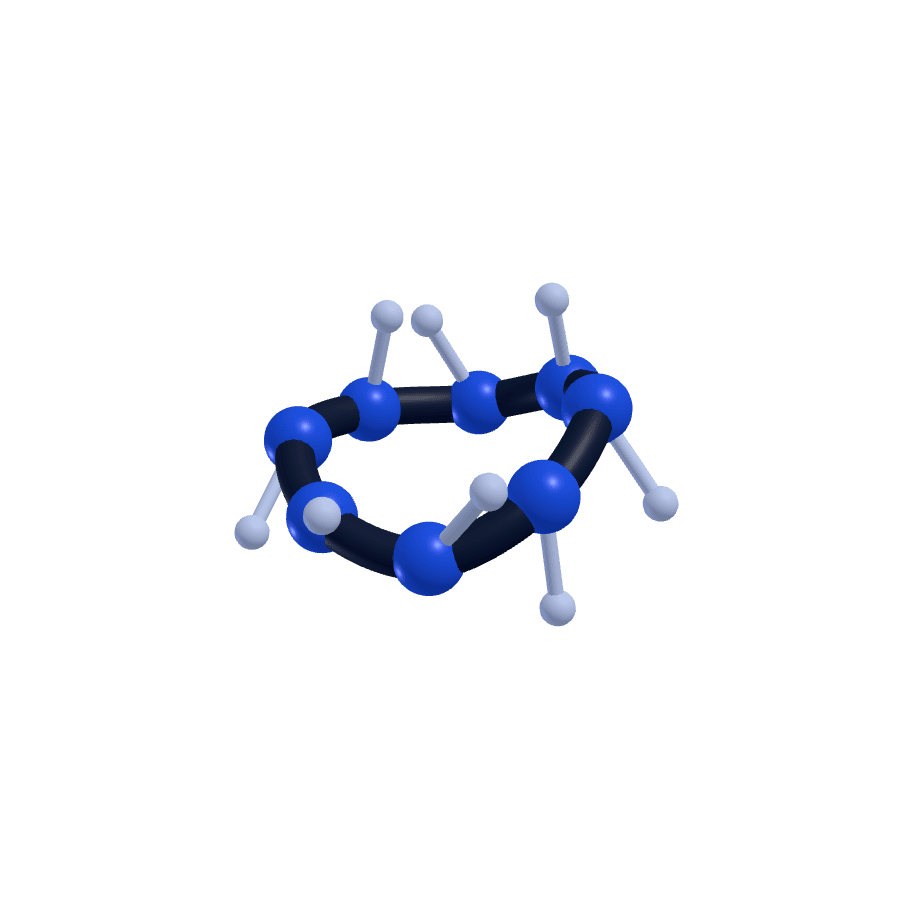
Setmelanotide is an eight-amino-acid cyclic peptide developed by Rhythm Pharmaceuticals and approved as Imcivree in the US in 2020 and the EU in 2021 for obesity due to POMC, PCSK1 or LEPR deficiency, extended in 2022 to Bardet-Biedl syndrome. It is a daily injection.
It is the first medicine to treat obesity by fixing a specific broken pathway rather than suppressing appetite generally — which is exactly why it does not transfer to obesity without that pathway defect.
How it is thought to work
Leptin signals fat stores to the hypothalamus; POMC neurons convert that into α-MSH; α-MSH activates MC4R to reduce hunger. Mutations in LEPR, POMC or PCSK1 break the chain above MC4R. Setmelanotide activates MC4R directly, bypassing the break. In people whose chain is intact, there is no break to bypass.
What is still unknown
- Durability and safety over decades — treatment is lifelong and the trials are short.
- Whether other, commoner genetic variants in the pathway respond; Rhythm is testing several.
The molecule and how long it lasts
- Formula
- C49H68N18O9S2
- Molecular weight
- 1117.3 g/mol
- CAS number
- 920014-72-8
- PubChem
- CID 11993702
PubChem record, read 23 September 2026.
- Route
- Subcutaneous injection, once daily
- Half-life
- About 11 hours
- Licensed regimen (Imcivree)
- Adults and children ≥12 years: 2 mg daily for 2 weeks, then 3 mg daily; 6 to <12 years: 1 mg daily for 2 weeks, then 3 mg daily
From the approved product's prescribing information: Imcivree prescribing information (DailyMed) The regimen is the label's own wording, reproduced as a regulatory fact.
Regulatory status
Centrally authorised (Imcivree) 2021 for POMC, PCSK1 or LEPR deficiency obesity; 2022 for Bardet-Biedl syndrome. Genetic confirmation required.
FDA-approved November 2020 for POMC, PCSK1 or LEPR deficiency; June 2022 for Bardet-Biedl syndrome.
Licensed for the same genetic indications.
LYO did not verify an ARTG entry at review; no approval for common obesity anywhere.
According to the manufacturer, Health Canada approved Imcivree in 2023 for obesity due to Bardet-Biedl syndrome or POMC, PCSK1 or LEPR deficiency (age 6 and over), and on 22 September 2026 for acquired hypothalamic obesity (age 4 and over).
Not on the Prohibited List.
Questions people actually ask
Can setmelanotide be used for ordinary obesity?
Why is an approved drug graded B?
How is it different from Melanotan II or PT-141?
One page per claimed effect
- BDoes Setmelanotide help with weight loss in POMC / LEPR deficiency obesity?2 single-arm phase 3 trials (n=10, n=11) with 8-wk placebo withdrawal
- BDoes Setmelanotide help with hunger in POMC / LEPR deficiency?Same trials
- BDoes Setmelanotide help with weight loss in Bardet-Biedl syndrome?1 phase 3 with 14-wk placebo-controlled period (n=38)
- BDoes Setmelanotide help with weight loss in acquired hypothalamic obesity?1 phase 3 RCT (TRANSCEND, n=120, 52 wk)
- DDoes Setmelanotide help with commonobesity?No approved use; early trials only
- BHow common is adverse effects with Setmelanotide?Same trials
References
- 1
- 2Imcivree (setmelanotide) — European public assessment report.EMA, 2021 onwardLicensed indications; genetic confirmation required.
- 3Haqq AM, et al. Efficacy and safety of setmelanotide in Bardet-Biedl syndrome: a phase 3 randomised, placebo-controlled trial.Lancet Diabetes Endocrinol, 2022n=38; 14-week placebo-controlled period.
- 4Miller JL, et al. Setmelanotide for the treatment of acquired hypothalamic obesity (TRANSCEND).N Engl J Med, 2026;395(2):138–150120 randomised 2:1, 52 weeks; BMI −16.5% vs +3.3%. NCT05774756.
- 5Rhythm Pharmaceuticals. Health Canada approval of Imcivree (setmelanotide) for weight management in adult and paediatric patients 4 years of age and older with acquired hypothalamic obesity.Press release, 22 Sep 2026Also states the 2023 Canadian approval for Bardet-Biedl syndrome and POMC, PCSK1 or LEPR deficiency. Company source.
Change log
- 2026-10-07New row for acquired hypothalamic obesity from the published TRANSCEND trial (N Engl J Med, July 2026; n=120), graded B. Canada row updated: approved, including the acquired hypothalamic obesity indication of 22 Sep 2026. Other grades unchanged.
- 2026-09-10Initial publication. Grade B for the genetic indications on tiny single-arm trials; D for common obesity.