What the human research shows
One of the few grey-market peptides that graduated into a real medicine — for a disease most people have never heard of. The tanning use it started life as has never been approved anywhere.
Evidence profile0–5
- Metabolic & weight—0.0
- Cardiovascular—0.0
- Muscle & growth—0.0
- Healing & repairA3.3
- Neuro & sleep—0.0
- Immune & inflammation—0.0
- Sexual & hormonal—0.0
- Skin & appearanceB3.5
- Ageing & longevity—0.0
| Outcome | Grade | Effect size | Human studies | Where the evidence comes from |
|---|---|---|---|---|
| Pain-free sun exposure in erythropoietic protoporphyria | AEstablished | Moderate | 2 phase 3 RCTs (EU n=74, US n=94) | In both trials patients on afamelanotide implants spent significantly longer in direct sunlight without pain; the EU trial also counted fewer phototoxic reactions. Quality of life improved in both.1 |
| Skin pigmentation (tanning) | BProbable | Large | Early trials + the phase 3 programme | It darkens skin reliably — that is its mechanism, and hyperpigmentation is the expected effect in every trial. What has never been studied is the safety of using it for cosmetic tanning in healthy people, and no regulator has approved that use.1 |
| Vitiligo repigmentation | CWeak | Small | Small RCTs with phototherapy | Small trials combining the implant with narrowband UVB reported faster repigmentation than phototherapy alone. Not an approved indication.3 |
| Adverse effectsadverse | AEstablished | Small | Phase 3 + registry | Nausea, headache and implant-site reactions; darkening of skin and moles, which requires skin monitoring on treatment. Serious events in the trials were not judged drug-related.1 |
Literature searched to 10 September 2026. Human studies only; animal and cell work informs the mechanism section and nothing else.
Registered trials
ClinicalTrials.gov lists 22 interventional studies naming Afamelanotide (Melanotan I) as an intervention — 17 completed, and 12 with results posted to the registry.
A registration is not a result. Anyone can register a study, and many never report — so this list shows what has been attempted, not what has been shown. The graded evidence above is the answer to whether something works.
| Study | Phase | Status | Participants | Sponsor | Results |
|---|---|---|---|---|---|
| Multicentre Phase III Erythropoietic Protoporphyria StudyNCT04053270 · started May 2007 | Phase 3 | Completed | 100 | Clinuvel Pharmaceuticals Limited | Posted |
| Phase III Confirmatory Study in Erythropoietic ProtoporphyriaNCT01605136 · started May 2012 | Phase 3 | Completed | 93 | Clinuvel Pharmaceuticals Limited | Posted |
| Phase III Confirmatory Study in Erythropoietic Protoporphyria (EPP)NCT00979745 · started Sept 2009 | Phase 3 | Completed | 74 | Clinuvel Pharmaceuticals Limited | Posted |
| Afamelanotide in Patients Suffering From Polymorphic Light Eruption (PLE)NCT04704713 · started May 2010 | Phase 3 | Completed | 31 | Clinuvel Pharmaceuticals Limited | Posted |
| A Safety Extension Study in Patients With Erythropoietic Protoporphyria (EPP)NCT04578496 · started Jul 2011 | Phase 3 | Completed | 16 | Clinuvel Pharmaceuticals Limited | Posted |
| Phase II Confirmatory Study in Erythropoietic Protoporphyria (EPP)NCT01097044 · started Apr 2010 | Phase 2 | Completed | 77 | Clinuvel Pharmaceuticals Limited | Posted |
| Afamelanotide and Narrow-Band Ultraviolet B (NB-UVB) Phototherapy in the Treatment of Nonsegmental Vitiligo (NSV)NCT04525157 · started Jun 2014 | Phase 2 | Completed | 21 | Clinuvel Pharmaceuticals Limited | Posted |
| Afamelanotide as Adjunctive Therapy in Patients Undergoing Photodynamic Therapy (PDT) Utilising Porfimer SodiumNCT04425746 · started Aug 2008 | Phase 2 | Completed | 16 | Clinuvel Pharmaceuticals Limited | Posted |
14 further studies are registered. Participant counts marked * are the sponsor's estimate, not a final enrolment. Source: ClinicalTrials.gov, read directly from the registry and refreshed weekly.
What it is
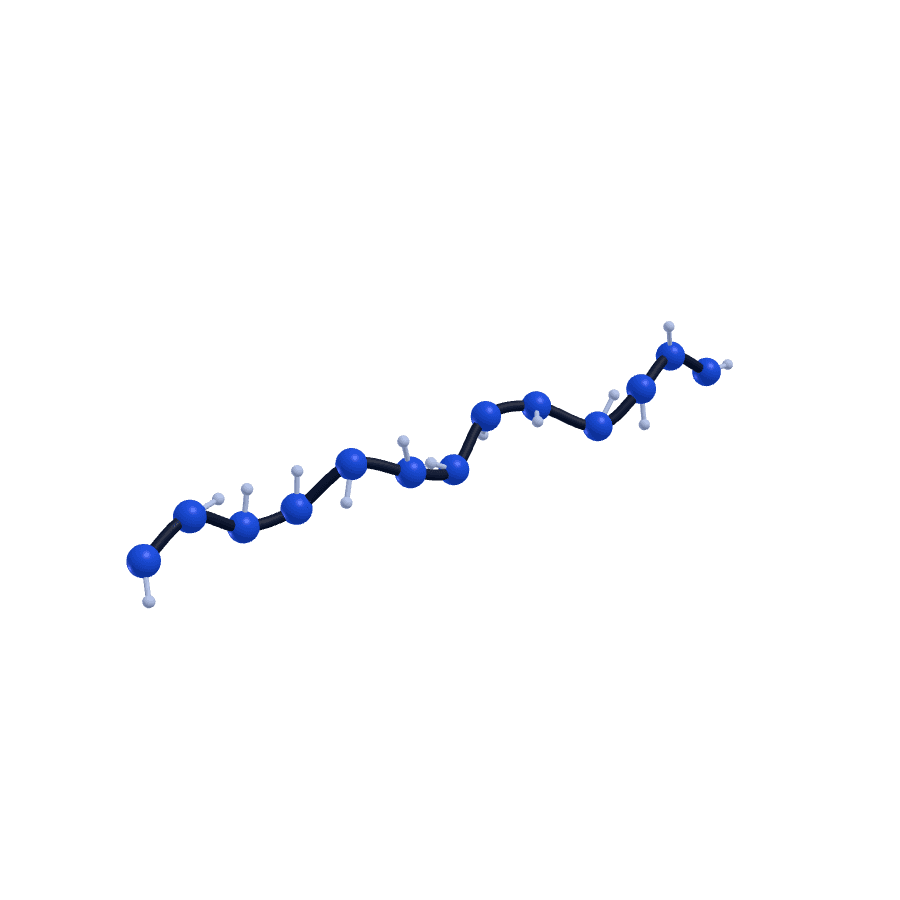
Afamelanotide is α-MSH with two substitutions that make it far more potent and longer-lasting, designed at the University of Arizona in the 1980s — the same programme that produced Melanotan II. Clinuvel developed it as Scenesse, a 16 mg implant the size of a grain of rice, inserted under the skin every 60 days.
It was approved in the EU in 2014 under exceptional circumstances, in the United States in 2019, and in Australia — the first medicine of its kind for erythropoietic protoporphyria.
How it is thought to work
It activates the MC1 receptor on melanocytes, increasing eumelanin — the photoprotective brown-black pigment — without UV exposure. In protoporphyria, where light triggers a toxic reaction in the skin, more pigment means more light absorbed before it reaches the sensitive layers.
What is still unknown
- Long-term effects on melanocytic naevi and melanoma risk, which is why treated patients are monitored; registry data so far have not shown an excess.
- Safety in healthy people using it cosmetically — never studied.
The molecule and how long it lasts
- Formula
- C78H111N21O19
- Molecular weight
- 1646.8 g/mol
- CAS number
- 75921-69-6
- PubChem
- CID 16197727
PubChem record, read 23 September 2026.
- Route
- Subcutaneous implant, every 2 months
- Half-life
- About 15 hours (apparent, from implant)
- Licensed regimen (Scenesse)
- Single 16 mg implant inserted subcutaneously every 2 months
From the approved product's prescribing information: Scenesse prescribing information (DailyMed) The regimen is the label's own wording, reproduced as a regulatory fact.
Regulatory status
Centrally authorised (Scenesse) in 2014 under exceptional circumstances for erythropoietic protoporphyria. Tanning use is not authorised; injectable 'Melanotan' products are illegal.
FDA-approved October 2019 for erythropoietic protoporphyria, implant only.
Licensed for erythropoietic protoporphyria. The MHRA has repeatedly warned against injectable tanning products.
On the ARTG for erythropoietic protoporphyria; the developer is Australian.
LYO found no Health Canada authorisation at review.
Not on the Prohibited List.
Questions people actually ask
Is Melanotan I the same as Melanotan II?
Can you get afamelanotide for tanning?
Does it cause skin cancer?
One page per claimed effect
- ADoes Afamelanotide (Melanotan I) help with pain-free sun exposure in erythropoietic protoporphyria?2 phase 3 RCTs (EU n=74, US n=94)
- BDoes Afamelanotide (Melanotan I) help with skin pigmentation?Early trials + the phase 3 programme
- CDoes Afamelanotide (Melanotan I) help with vitiligo repigmentation?Small RCTs with phototherapy
- AHow common is adverse effects with Afamelanotide (Melanotan I)?Phase 3 + registry
References
- 1Langendonk JG, Balwani M, Anderson KE, et al. Afamelanotide for erythropoietic protoporphyria.N Engl J Med, 2015Two phase 3 trials; EU n=74, US n=94.
- 2Scenesse (afamelanotide) — European public assessment report.EMA, 2014 onwardLicensed indication and conditions.
- 3Afamelanotide with narrowband UV-B phototherapy for vitiligo — randomised trials.PubMed searchSmall trials; not an approved indication.
Change log
- 2026-09-10Initial publication. Grade A for erythropoietic protoporphyria on two phase 3 RCTs.