What the human research shows
The largest weight-loss numbers published for one molecule. Until September 2026 the obesity results existed only as press releases, which held body weight at B. TRIUMPH-1 and TRIUMPH-2 are now in the New England Journal of Medicine and The Lancet, so body weight and gut side effects move to A — at 25.0% and 18.8%, below the 28.3% and 20.8% first announced; the papers count everyone randomised, whether or not they stayed on treatment. The overall grade stays B: retatrutide is unapproved, two phase 3 trials are still press releases, and no cardiovascular outcomes trial has reported.
Evidence profile0–5
- Metabolic & weightA5.0
- Cardiovascular—0.0
- Muscle & growth—0.0
- Healing & repairB2.3
- Neuro & sleepB2.3
- Immune & inflammation—0.0
- Sexual & hormonal—0.0
- Skin & appearance—0.0
- Ageing & longevity—0.0
| Outcome | Grade | Effect size | Human studies | Where the evidence comes from |
|---|---|---|---|---|
| Body weight | AEstablished | Large | 2 phase 3 + 1 phase 2 RCT published; 2 phase 3 topline | TRIUMPH-1, published in the New England Journal of Medicine on 29 September 2026 (2,339 adults with obesity and no diabetes, 80 weeks): −17.6% on 4 mg, −23.7% on 9 mg and −25.0% on 12 mg versus −3.9% on placebo. TRIUMPH-2, published in The Lancet the same day (1,152 adults with obesity and type 2 diabetes, 80 weeks): −11.9%, −16.8% and −18.8% versus −5.1%. Both papers count every participant randomised; the figures first announced by press release, 28.3% and 20.8% on 12 mg, were higher. Phase 2: −24.2% at 48 weeks on 12 mg. Still press releases only: TRIUMPH-4 (−28.7% at 68 weeks vs −2.1% placebo), TRIUMPH-3 (1,949 adults with severe obesity and cardiovascular disease: −22.6% vs −3.2%) and the 104-week TRIUMPH-1 extension in people with a BMI of 35 or more (−30.3%).781236 |
| Blood glucose (HbA1c) | AEstablished | Large | 1 phase 3 + 1 phase 2 RCT | TRANSCEND-T2D-1, a published 40-week phase 3 trial in 537 adults with type 2 diabetes uncontrolled by diet and exercise: HbA1c fell 1.69–1.94 percentage points across doses versus 0.81 on placebo. The earlier phase 2 trial agreed.45 |
| Knee osteoarthritis pain | BProbable | Moderate | 1 phase 3 RCT published (subgroup n=574); 1 phase 3 topline | TRIUMPH-1, now published, included 574 participants with knee osteoarthritis: WOMAC pain fell 3.9 points on 9 mg and 4.1 on 12 mg versus 2.5 on placebo, counting everyone randomised (differences −1.4 and −1.6; both P<0.001). TRIUMPH-4, still a press release, enrolled only adults with obesity and knee osteoarthritis: up to 4.5 points (75.8%) vs 2.4 (40.3%) on placebo. Weight loss likely explains much of it.72 |
| Obstructive sleep apnoea | BProbable | Moderate | 1 phase 3 RCT (subgroup n=243) | In the 243 TRIUMPH-1 participants with obstructive sleep apnoea, the apnoea–hypopnoea index fell by 34.3 events per hour on 9 mg and 32.1 on 12 mg versus 9.6 on placebo at 80 weeks, counting everyone randomised (differences −24.7 and −22.5; both P<0.001). One subgroup of one trial, so B. The sleep-apnoea results from TRIUMPH-2 have not been reported yet.7 |
| GI side effectsadverse | AEstablished | Large | 2 phase 3 + 1 phase 2 RCT published; phase 3 topline | TRIUMPH-2, published: diarrhoea in 27–34% vs 13% on placebo and nausea in 14–28% vs 8%; 12% on 9 mg and 8% on 12 mg stopped treatment because of adverse events or death, against 5% on placebo. TRIUMPH-1, published, also names gastrointestinal events as the most common. Press releases: TRIUMPH-4, nausea 38–43% vs 11%, vomiting 20–21% vs 0%, discontinuation for adverse events 12–18% vs 4%; TRIUMPH-1, 11.3% stopped on 12 mg vs 4.9% placebo; TRIUMPH-3, 13.5% vs 4.8%.871236 |
| Dysesthesia (skin sensation changes)adverse | BProbable | Small | 1 phase 3 RCT published; phase 3 topline | TRIUMPH-2, published: dysesthesia in 4%, 6% and 7% on 4, 9 and 12 mg versus 1% on placebo; hypotension was also more frequent (1%, 5% and 6% vs under 1%). Press releases: 9–21% of treated participants vs 0.7% on placebo in TRIUMPH-4, and 4.5–7.3% vs 0.7–1.3% in TRIUMPH-2 and -3 — an effect not prominent with older GLP-1 drugs.826 |
Literature searched to 7 October 2026. Human studies only; animal and cell work informs the mechanism section and nothing else.
Registered trials
ClinicalTrials.gov lists 32 interventional studies naming Retatrutide as an intervention — 21 completed, 2 recruiting, and 2 with results posted to the registry.
A registration is not a result. Anyone can register a study, and many never report — so this list shows what has been attempted, not what has been shown. The graded evidence above is the answer to whether something works.
24 further studies are registered. Participant counts marked * are the sponsor's estimate, not a final enrolment. Source: ClinicalTrials.gov, read directly from the registry and refreshed weekly.
What it is
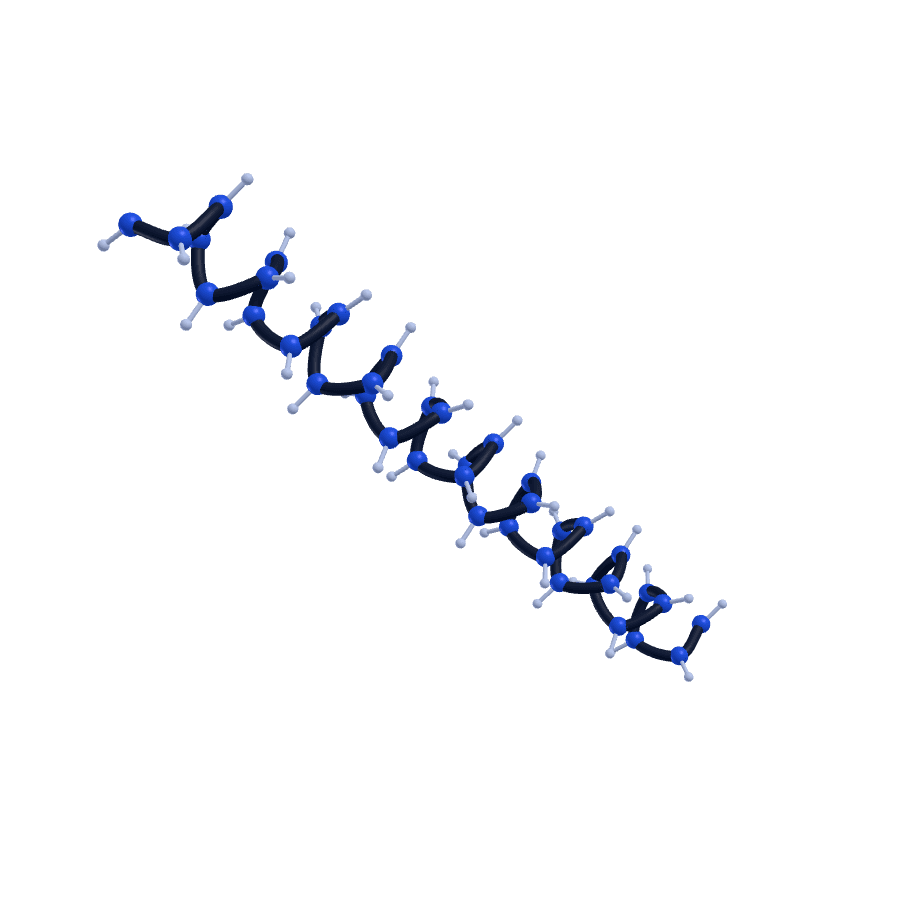
Retatrutide is a single peptide engineered to act on three hormone receptors that older drugs hit one or two at a time: GLP-1 (the semaglutide target), GIP (added in tirzepatide) and glucagon. It is given as a weekly injection and is being developed by Eli Lilly under the TRIUMPH programme.
It is the first of the so-called triple agonists to reach late-stage trials, and the reason “GLP-3” has become shorthand online. That shorthand is wrong — there is no GLP-3 hormone — but it captures the idea: a third receptor added to the pair that already works.
How it is thought to work
GLP-1 and GIP activation reduce appetite and slow stomach emptying, as with semaglutide and tirzepatide. Adding glucagon-receptor activation is thought to raise energy expenditure and increase fat breakdown in the liver, which may explain why the weight loss runs higher than the dual agonist and why liver-fat reductions have been striking in earlier trials.
The same glucagon action is the reason to watch heart rate and blood sugar closely; glucagon raises both in isolation. The trials so far report the net effect on glucose as favourable.
What is still unknown
- Whether TRIUMPH-3 and TRIUMPH-4, still press releases, hold up on publication as TRIUMPH-1 and TRIUMPH-2 did.
- Cardiovascular outcomes: no outcomes trial has reported.
- What happens to weight after stopping; no withdrawal data yet.
- The dysesthesia signal — what causes it and whether it resolves.
The molecule and how long it lasts
No PubChem Compound record at review (investigational; LY3437943)
- Route
- Subcutaneous, once weekly
- Half-life
- About 6 days (phase 1b)
From a published human pharmacokinetic study: Urva S, et al. LY3437943, a novel triple GIP, GLP-1 and glucagon receptor agonist in people with type 2 diabetes: a phase 1b multiple-ascending-dose trial. Lancet 2022
Regulatory status
No marketing authorisation anywhere; supply outside clinical trials is unlawful. Unlicensed pens were among the seizures in Europol's 2025 operation.
FDA: retatrutide 'cannot be used in compounding under federal law' and has not been found safe and effective for any condition. Lilly has said it plans to file for approval in the first quarter of 2027.
MHRA, July 2026: 'it has not been authorised for use in the UK, meaning anyone selling this product is doing so illegally.' Thousands of doses seized in raids in October 2025, February and May 2026.
Not registered anywhere. Named in the TGA's April 2026 advisory on unapproved peptide products.
Investigational. Among the products Health Canada seized from a domestic vendor in August 2025.
Unapproved anywhere, so it falls under S0 (non-approved substances).
Questions people actually ask
How much weight do people lose on retatrutide?
Is retatrutide better than tirzepatide?
Is retatrutide available?
Why is the overall grade B and not A?
One page per claimed effect
- ADoes Retatrutide help with body weight?2 phase 3 + 1 phase 2 RCT published; 2 phase 3 topline
- ADoes Retatrutide help with blood glucose?1 phase 3 + 1 phase 2 RCT
- BDoes Retatrutide help with knee osteoarthritis pain?1 phase 3 RCT published (subgroup n=574); 1 phase 3 topline
- BDoes Retatrutide help with obstructive sleep apnoea?1 phase 3 RCT (subgroup n=243)
- AHow common is GI side effects with Retatrutide?2 phase 3 + 1 phase 2 RCT published; phase 3 topline
- BHow common is dysesthesia with Retatrutide?1 phase 3 RCT published; phase 3 topline
References
- 1Jastreboff AM, et al. Triple-hormone-receptor agonist retatrutide for obesity — a phase 2 trial.N Engl J Med, 2023;389:514–526338 adults; −24.2% at 48 weeks on 12 mg.
- 2Eli Lilly. Retatrutide delivered weight loss of up to an average of 71.2 lbs along with substantial relief from osteoarthritis pain in first successful phase 3 trial (TRIUMPH-4).Press release, 11 Dec 2025445 adults, 68 weeks. Topline; not peer-reviewed.
- 3Eli Lilly. Retatrutide TRIUMPH-1 topline results (NCT05929066).Press release, May 20262,339 adults, 80 weeks plus 104-week extension. Detailed data promised for the ADA Scientific Sessions; not peer-reviewed at time of review.
- 4Bajaj HS, et al. Efficacy and safety of retatrutide in people with type 2 diabetes inadequately controlled with diet and exercise (TRANSCEND-T2D-1): a double-blind, randomised, phase 3 trial.Lancet, 2026;407:2402–2413537 randomised, 40 weeks. The first published phase 3 trial of retatrutide.
- 5Rosenstock J, et al. Retatrutide, a GIP, GLP-1 and glucagon receptor agonist, for people with type 2 diabetes: a randomised, double-blind, placebo and active-controlled, phase 2 trial.Lancet, 2023;402:529–544Phase 2 in type 2 diabetes; agrees with the phase 3 on glycaemic effect.
- 6Eli Lilly. Lilly's triple agonist retatrutide successful in two additional phase 3 obesity trials (TRIUMPH-2, TRIUMPH-3).Press release, 23 Jul 2026TRIUMPH-2: 1,152 adults with obesity and type 2 diabetes, 80 weeks. TRIUMPH-3: 1,949 adults with severe obesity and cardiovascular disease, 80 weeks. Topline; not peer-reviewed. Lilly intends to file with the FDA in Q1 2027.
- 7Jastreboff AM, et al. Retatrutide, a triple hormone receptor agonist, for treatment of obesity (TRIUMPH-1).N Engl J Med, 2026 (online 29 Sep)2,339 randomised, 80 weeks; −25.0% on 12 mg vs −3.9% placebo by intention to treat. Subgroups with knee osteoarthritis (n=574) and obstructive sleep apnoea (n=243). NCT05929066.
- 8Bellido V, et al. Retatrutide in adults with obesity and type 2 diabetes (TRIUMPH-2): a double-blind, parallel-group, randomised, placebo-controlled, phase 3 trial.Lancet, 2026 (online 29 Sep)1,152 randomised, 92 sites, 80 weeks; −18.8% on 12 mg vs −5.1% placebo (treatment-regimen estimand). NCT05929079.
Change log
- 2026-10-07TRIUMPH-1 (N Engl J Med) and TRIUMPH-2 (Lancet) were published on 29 Sep 2026. Body weight and GI side effects move from B to A on the published papers, with the intention-to-treat figures (25.0% and 18.8%) replacing the press-release ones; knee-pain and dysesthesia rows now cite the papers; new sleep-apnoea row at B. Overall grade held at B: unapproved, TRIUMPH-3 and -4 unpublished.
- 2026-09-23TRIUMPH-2 and TRIUMPH-3 topline results (23 Jul 2026) added to the weight, side-effect and dysesthesia rows. Still press releases, so body weight stays at B.
- 2026-09-03TRANSCEND-T2D-1, the first published phase 3 trial of retatrutide (Lancet, 537 adults with type 2 diabetes), added with a verbatim primary result; new blood-glucose row graded A. The obesity phase 3 results remain unpublished press releases, so body weight stays at B.
- 2026-09-02Full page: mechanism, regulatory status and FAQ added. Phase 3 topline results (TRIUMPH-4, TRIUMPH-1) with osteoarthritis-pain and dysesthesia rows. Grade held at B pending peer-reviewed publication.
- 2026-09-01Initial publication.