What the human research shows
One of the clearest phase 2b results in MASH on the resolution endpoint, and a flat miss on fibrosis. Graded B: a published, randomised, biopsy-based phase 2b is strong evidence for the endpoint it hit, and the endpoint regulators care most about in late-stage liver disease was not moved.
Evidence profile0–5
- Metabolic & weightB3.5
- Cardiovascular—0.0
- Muscle & growth—0.0
- Healing & repair—0.0
- Neuro & sleep—0.0
- Immune & inflammation—0.0
- Sexual & hormonal—0.0
- Skin & appearance—0.0
- Ageing & longevity—0.0
| Outcome | Grade | Effect size | Human studies | Where the evidence comes from |
|---|---|---|---|---|
| MASH resolution without worsening fibrosis | BProbable | Large | 1 phase 2b RCT (n=212, 24 wk) | IMPACT randomised 212 patients with biopsy-confirmed MASH and F2–F3 fibrosis to one of two weekly doses or placebo for 24 weeks. Resolution without fibrosis worsening reached 58% and 52% against 20% on placebo — differences of 38 and 32 percentage points, both highly significant, on paired biopsies.1 |
| Fibrosis improvement | BProbable | Not measurable | 1 phase 2b RCT (n=212, 24 wk) | The other half of the result, and the part that matters most for liver outcomes: fibrosis improvement without worsening of MASH was no better than placebo at either dose, with confidence intervals crossing zero. Twenty-four weeks is short for fibrosis to change, which is the sponsor's explanation and remains an explanation rather than a finding.1 |
| Weight loss | CWeak | Moderate | Phase 2 programme | Weight loss accompanies the liver effect, as it does with every incretin agonist tested in MASH, and the glucagon component adds energy expenditure to appetite suppression. Pemvidutide's obesity trials are earlier-phase than its liver programme, which is why this row is C. |
| GI side effectsadverse | BProbable | Moderate | 1 phase 2b RCT (n=212) | The class profile — nausea, vomiting, diarrhoea concentrated in dose escalation. Nothing in the phase 2b separates it from the other incretin agonists on tolerability. |
Literature searched to 29 October 2026. Human studies only; animal and cell work informs the mechanism section and nothing else.
Registered trials
ClinicalTrials.gov lists 8 interventional studies naming Pemvidutide as an intervention — 6 completed, 1 recruiting, and none with results posted to the registry.
A registration is not a result. Anyone can register a study, and many never report — so this list shows what has been attempted, not what has been shown. The graded evidence above is the answer to whether something works.
Participant counts marked * are the sponsor's estimate, not a final enrolment. Source: ClinicalTrials.gov, read directly from the registry and refreshed weekly.
What it is
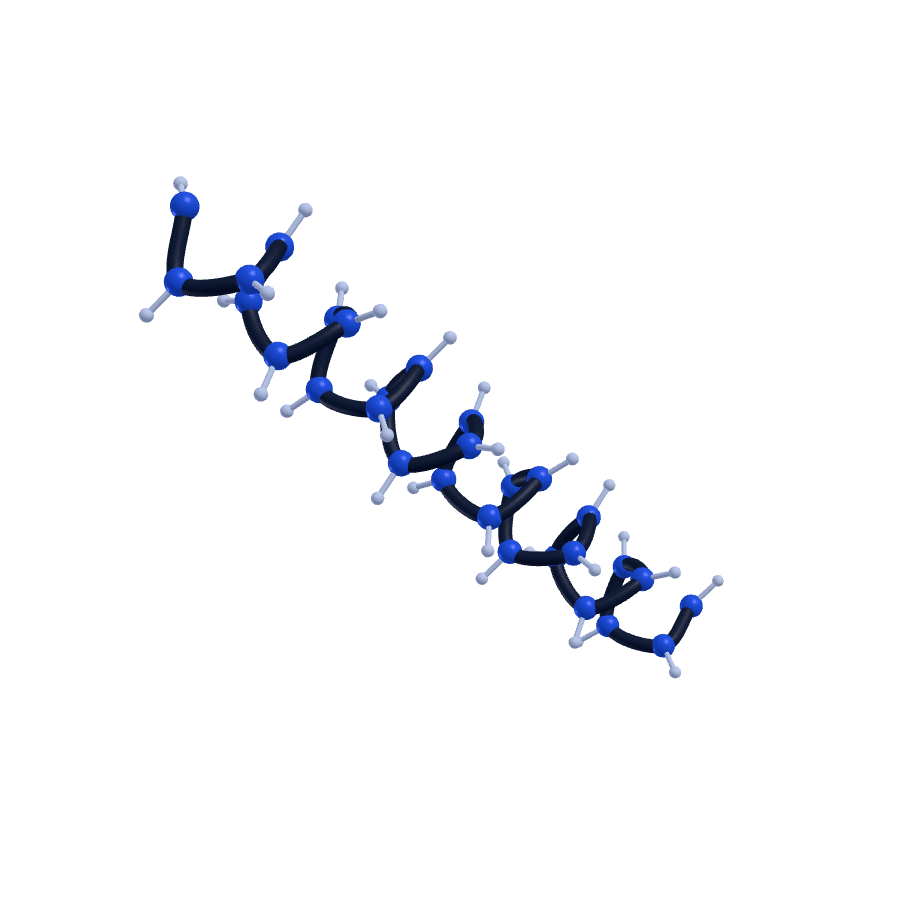
Pemvidutide is a lipidated peptide designed to activate the GLP-1 and glucagon receptors in a fixed ratio, given weekly by subcutaneous injection. The glucagon arm is the point of difference: glucagon raises energy expenditure and acts directly on hepatocytes to reduce liver fat, which is why the GLP-1/glucagon duals have concentrated on liver disease rather than competing head-on in obesity.
It has no PubChem record, which is normal for a peptide at this stage of development, so this page carries no formula or CAS number for it.
How it is thought to work
GLP-1 receptor activation reduces appetite and slows gastric emptying; glucagon receptor activation in the liver increases fatty-acid oxidation and lipolysis and raises resting energy expenditure. In MASH the hypothesis is that the two together clear liver fat and quiet inflammation faster than GLP-1 alone. The resolution endpoint in IMPACT is consistent with that. Whether reduced inflammation at 24 weeks later translates into fibrosis regression is the question the programme has not answered.
What is still unknown
- Whether fibrosis improves over a longer trial — 24 weeks may be too short, and may not be.
- How it compares with semaglutide, which has a published phase 3 in MASH; no head-to-head exists.
- Long-term safety, and whether the glucagon component affects glycaemia in people with diabetes.
The molecule and how long it lasts
No PubChem record: the structure of this investigational peptide has not been deposited
- Route
- Subcutaneous injection, once weekly
- Half-life
- Consistent with weekly dosing; no figure recorded by LYO from a source it has read
From a published human pharmacokinetic study: IMPACT phase 2b trial (Lancet, 2025)
Regulatory status
Investigational.
Investigational, phase 2b complete. Products sold under the name are not the trial drug.
No MHRA licence.
Investigational only.
No Drug Identification Number.
Unapproved anywhere, so S0 (non-approved substances).
Questions people actually ask
Did pemvidutide work in MASH?
Why does the glucagon receptor matter?
Is pemvidutide available?
One page per claimed effect
- BDoes Pemvidutide help with MASH resolution without worsening fibrosis?1 phase 2b RCT (n=212, 24 wk)
- BDoes Pemvidutide help with fibrosis improvement?1 phase 2b RCT (n=212, 24 wk)
- CDoes Pemvidutide help with weight loss?Phase 2 programme
- BHow common is GI side effects with Pemvidutide?1 phase 2b RCT (n=212)
References
- 1Noureddin M, et al. Pemvidutide, a GLP-1/glucagon dual receptor agonist, in patients with metabolic dysfunction-associated steatohepatitis (IMPACT): a randomised, double-blind, placebo-controlled, phase 2b trial.Lancet, 2025212 randomised, biopsy-confirmed MASH with F2–F3 fibrosis, 24 weeks. NCT05989711. Resolution endpoint met; fibrosis endpoint not met.
Change log
- 2026-10-29Initial publication. Grade B on a published phase 2b: resolution endpoint met at both doses, fibrosis endpoint missed at both.