What the human research shows
Historically important, clinically superseded. Its two headline trials are both honest negatives: no cardiovascular benefit, and no effect on Parkinson's progression despite a promising phase 2.
Evidence profile0–5
- Metabolic & weightA3.3
- CardiovascularA0.0
- Muscle & growth—0.0
- Healing & repair—0.0
- Neuro & sleep—0.0
- Immune & inflammation—0.0
- Sexual & hormonal—0.0
- Skin & appearance—0.0
- Ageing & longevity—0.0
| Outcome | Grade | Effect size | Human studies | Where the evidence comes from |
|---|---|---|---|---|
| Blood glucose (HbA1c) | AEstablished | Moderate | DURATION and AMIGO programmes | Approval-grade HbA1c reductions with both formulations; the licensed indication since 2005.3 |
| Body weight | AEstablished | Small | Multiple RCTs | Modest, consistent weight loss of a few kilograms in diabetes trials. Not approved for weight management.3 |
| Major cardiovascular events (type 2 diabetes) | AEstablished | Not measurable | 1 large RCT (n=14,752, median 3.2 yr) | Non-inferior to placebo for safety, but not superior: the 9% relative reduction missed statistical significance. The class benefit shown by liraglutide, semaglutide and dulaglutide was not demonstrated for exenatide.1 |
| Parkinson's disease progression | BProbable | Not measurable | 1 phase 3 RCT (n=194, 96 wk) — negative; 1 phase 2 positive | After a positive 62-person phase 2 in 2017, the 194-person phase 3 found motor scores worsened equally on exenatide and placebo over 96 weeks. The Lancet's editors have since issued an Expression of Concern on the phase 3 paper; the notice does not change the result, but readers should know it exists.245 |
| Adverse effectsadverse | AEstablished | Moderate | EXSCEL and programme | Nausea and other gastrointestinal effects, injection-site nodules with the weekly formulation. Pancreatitis, pancreatic cancer and thyroid carcinoma did not differ from placebo in EXSCEL.1 |
Literature searched to 10 September 2026. Human studies only; animal and cell work informs the mechanism section and nothing else.
Registered trials
ClinicalTrials.gov lists 164+ interventional studies naming Exenatide as an intervention — 121 completed, 1 recruiting, and 68 with results posted to the registry.
A registration is not a result. Anyone can register a study, and many never report — so this list shows what has been attempted, not what has been shown. The graded evidence above is the answer to whether something works.
156 further studies are registered. Participant counts marked * are the sponsor's estimate, not a final enrolment. Source: ClinicalTrials.gov, read directly from the registry and refreshed weekly.
What it is
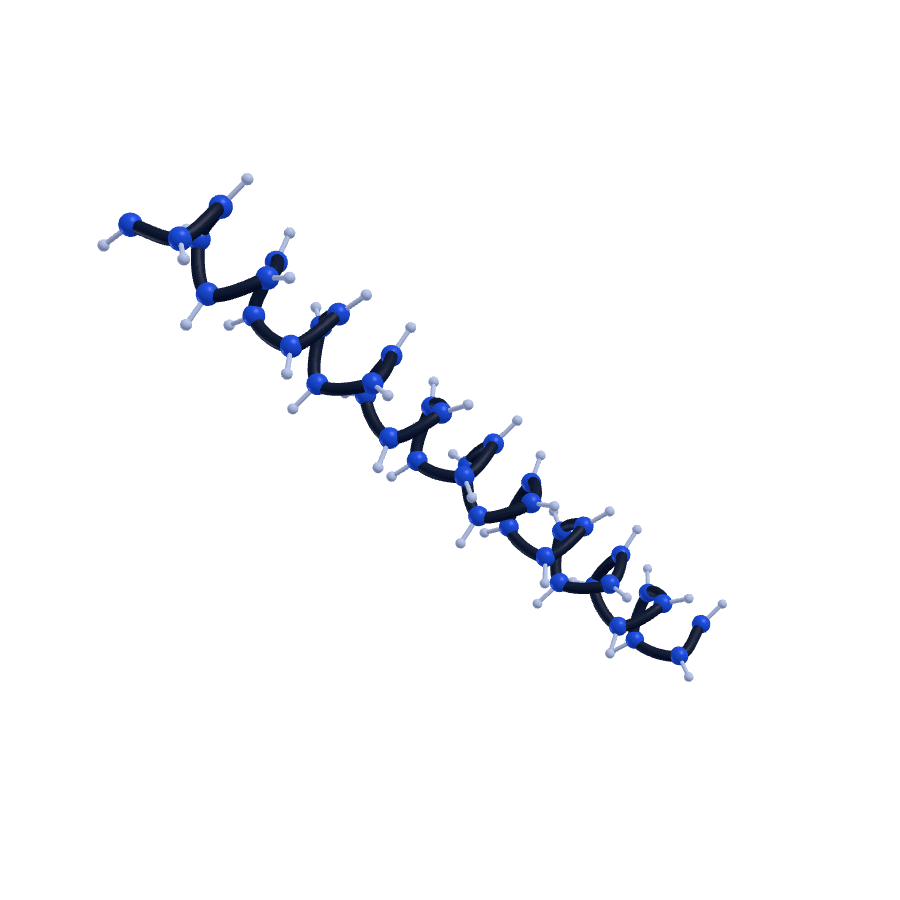
Exendin-4 was found in the venom of the Gila monster, a lizard, in 1992; it happens to activate the human GLP-1 receptor and resist the enzyme that destroys native GLP-1. Synthetic exendin-4 became Byetta, the first GLP-1 receptor agonist, in 2005, and a once-weekly microsphere version followed as Bydureon.
Everything the class became — weekly dosing, large weight loss, cardiovascular protection — was built after it. Its use has declined as those later drugs arrived, and the research interest in it has shifted to the brain.
How it is thought to work
It activates the GLP-1 receptor: more insulin when glucose is high, less glucagon, slower gastric emptying, reduced appetite. Because GLP-1 receptors also exist in the brain and the peptide has neuroprotective effects in animal models, it was taken into Parkinson's trials — where the effect did not appear.
What is still unknown
- Why the phase 2 Parkinson's result was not reproduced — subgroup effects and target engagement in the brain are both open questions the phase 3 authors raise.
- What the Lancet's Expression of Concern on the phase 3 paper concerns; the notice gives no detail.
The molecule and how long it lasts
- Formula
- C184H282N50O60S
- Molecular weight
- 4187 g/mol
- CAS number
- 141758-74-9
- PubChem
- CID 45588096
PubChem record, read 23 September 2026.
- Route
- Subcutaneous injection, twice daily before meals
- Half-life
- About 2.4 hours
- Licensed regimen (Byetta)
- 5 mcg twice daily within 60 minutes before morning and evening meals; may increase to 10 mcg twice daily after 1 month
From the approved product's prescribing information: Byetta prescribing information (DailyMed) The regimen is the label's own wording, reproduced as a regulatory fact.
Regulatory status
Centrally authorised for type 2 diabetes (Byetta 2006; Bydureon 2011).
FDA-approved 2005 (Byetta) and 2012 (Bydureon) for type 2 diabetes.
MHRA-licensed for type 2 diabetes.
On the ARTG for type 2 diabetes.
Health Canada-authorised for type 2 diabetes.
GLP-1 receptor agonists are not on the Prohibited List.
Questions people actually ask
Does exenatide help Parkinson's disease?
Does exenatide protect the heart like semaglutide?
Is exenatide still used?
One page per claimed effect
- ADoes Exenatide help with blood glucose?DURATION and AMIGO programmes
- ADoes Exenatide help with body weight?Multiple RCTs
- ADoes Exenatide help with major cardiovascular events?1 large RCT (n=14,752, median 3.2 yr)
- BDoes Exenatide help with parkinson's disease progression?1 phase 3 RCT (n=194, 96 wk) — negative; 1 phase 2 positive
- AHow common is adverse effects with Exenatide?EXSCEL and programme
References
- 1Holman RR, Bethel MA, Mentz RJ, et al. Effects of once-weekly exenatide on cardiovascular outcomes in type 2 diabetes.N Engl J Med, 2017EXSCEL; 14,752 patients; HR 0.91, P=0.06 for superiority.
- 2Vijiaratnam N, Girges C, Auld G, et al. Exenatide once a week versus placebo as a potential disease-modifying treatment for people with Parkinson's disease in the UK: a phase 3, multicentre, double-blind, parallel-group, randomised, placebo-controlled trial.Lancet, 2025Exenatide-PD3; 194 participants; 96 weeks; no effect. See ref 5.
- 3Exenatide (Byetta, Bydureon) product information and the AMIGO / DURATION programmes.FDA / EMA product informationLicensed indications and the glucose and weight data.
- 4Athauda D, Maclagan K, Skene SS, et al. Exenatide once weekly versus placebo in Parkinson's disease: a randomised, double-blind, placebo-controlled trial.Lancet, 2017Phase 2; 62 participants; positive on the off-medication motor score — the result the phase 3 was designed to confirm.
- 5The Editors of The Lancet. Expression of Concern: Exenatide once a week versus placebo as a potential disease-modifying treatment for people with Parkinson's disease in the UK.Lancet, 2026Notice attached to ref 2. No abstract; the reason is not stated in the notice.
Change log
- 2026-09-10Initial publication. Grade A on the approval programme and EXSCEL; Parkinson's carries a null phase 3 (grade B, effect none) with the Expression of Concern noted.